skip to main |
skip to sidebar
It's been almost two years since I traveled to Wales to write about handcrafted ciders and beers. By now, the saplings in Andy Hallet's cider orchard probably look a lot more like trees. I imagine the hop bines that Len and Sarah Davies planted on their Kilkiffeth Farm in the Gwaun Valley have matured, too. The one change that surprised me though, is the fact that in the capital city of Cardiff I can now get a Welsh IPA made by Brains, the country's largest brewer, in their new dedicated craft brewhouse.
Dubbed Barry Island IPA, I want to believe it was somehow inspired by Gavin & Stacey, a short-lived BBC comedy partially set in the seaside town of Barry. My fondness for this quirky show actually led me to drive out to the island, walk on the promenade, and snap a few pictures just before dusk at the end of my trip. In fact, the beer earned its name because one of the brewers, Simon Martin, is a Barry resident. Well apparently, much like the TV series, Barry Island IPA was a hit, selling out in record time at the Great Welsh Beer and Cider Festival.
Hopefully this means that Mr. Martin and Bill Dobson, the head brewer at Brains, will collaborate on another experimental beer soon. Meanwhile, the new IPA will go on tap at Brains pubs for a limited time, where discerning drinkers can decide if they like the attributes of citrus and grapefruit supplied by Summit, Zeus, and Cascade hops. I know I would have enjoyed a pint of this American-style ale while I was staying at Maltsters, an upscale pub and inn just outside of central Cardiff. But even if Barry Island turns out to be a one-off, I'd still say it's about time I went back to Wales.
For several years now, brewpubs, microbreweries and nanobreweries have opened across the U.S. at an almost unprecedented rate. In fact, this year's sold out Great American Beer Festival (which starts today), is likely to include quite a few attendees who have transitioned from beer enthusiasts to full-fledged professionals. Next year, as many as 725 breweries are poised to join the craft beer movement. And while this growth is certainly remarkable, the excitement isn't limited to the 50 states. All over the globe, the tastes of drinkers are evolving, and brewers everywhere are working hard to keep up with demand.
Elsewhere in the Western Hemisphere, South America has joined the flavor revolution, and signs of change have begun to appear in Asia, too. Which isn't to say that the traditional brewing nations are standing idly by while the rest of the world races toward the future. In the U.K. for instance, where reports of shuttering pubs might be cause for concern among real ale campaigners, more than a few entrepreneurs have recently ventured into the business of beer.
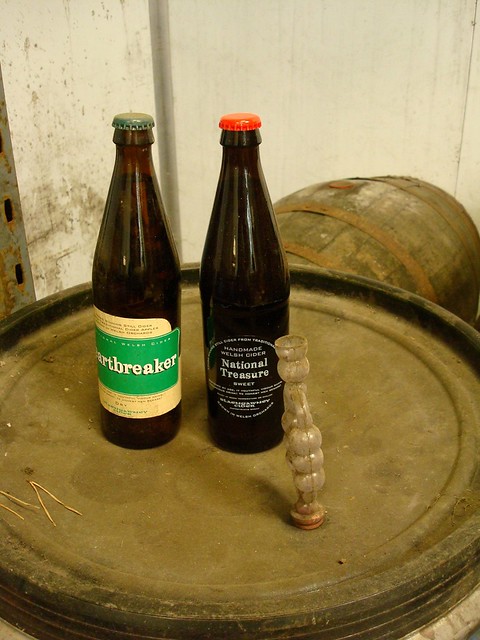
I saw evidence of this phenomenon myself on a trip through Wales last September. Hand crafted cider had determined my driving route, but along the way I discovered determined Welsh brewers selling their small batch beers at farm shops, food festivals, and in some cases, right from the source. One of my favorites was the Gwaun Valley Brewery, a family operation in Pembrokeshire that opened in July 2009 near the town of Fishguard. I dropped by on my way to St Davids, and spent some time chatting with Sarah Davies while sampling the three beers brewed by her husband, Len. As a porter guy, I especially liked the mild Dark Ale (4.2% ABV) made with chocolate malt and local spring water.
Last September I spent a week in Wales. It wasn't my first trip to this mountainous country, but in a very real sense I was seeing Wales anew. Because while I did spend a night in Cardiff and even managed a short hike in Brecon Beacons National Park, I missed many of the things that people travel here for: castles, museums, rugby, or in a few rare cases, bog snorkeling. Instead, the purpose of my visit was to drink cider.
Beginning in Swansea, I drove through the rain to the westernmost end of Pembrokeshire, across the Cambrian Mountains into Powys, and then back south again into the Valleys. Over the course of seven days I met craft cider makers and drinkers, along with a number of friendly Welsh bartenders and innkeepers. Somewhat unexpectedly, I also became a bit of a cider connoisseur myself. If you're curious about the drink and its origins, read about my trip in the current issue of DRAFT magazine or consider attending the world's first International Craft Cider Festival at Llancaiach Fawr Manor in August.
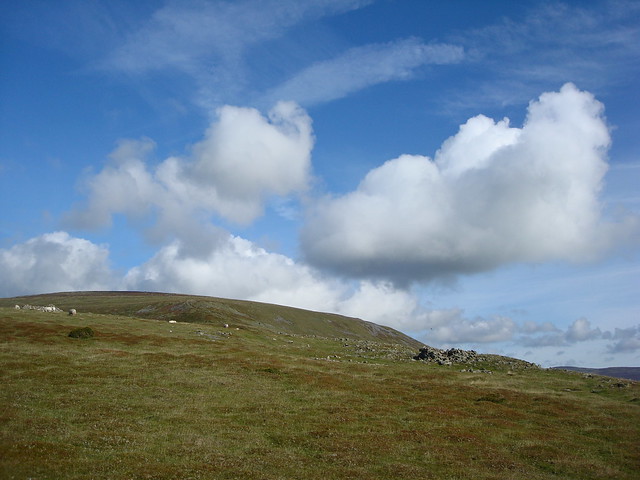
For the first time in five days it had stopped raining. Above me, the Welsh sky was a vivid cerulean blue, set off against the evergreen slopes of the Black Mountains. The air meanwhile, smelled of spruce and sheep droppings. Not necessarily the most welcome aroma first thing in the morning, but I didn’t care. I was content to simply stretch my legs for an hour or two. Balancing on the steps of a stile that led over an old farm wall, I paused to consider the smartest thing I’d done all week: slow down.
Thus far, my impressions of the little country squeezed between England and the Irish Sea had been formed from the driver’s seat of a rented car. Morning after dreary morning I’d picked at plates of fried eggs, fried sausage, fried mushrooms, and yes, fried tomatoes, before setting off under cloudy skies on a peculiar mission. As a beer writer and aspiring brewer, I had designed a trip around a handful of cider makers in southern Wales. The problem was, my busy itinerary made no allowances for leisurely mornings or accidental discoveries. And so, for five straight days I wolfed down hearty if unhealthy meals in order to keep my appointments with apple growers.
Today however, was different. Encouraged by the muted yellow glow creeping under the curtain of my room at the Bear Inn in Crickhowell, I decided to forgo the complimentary breakfast and postpone my afternoon plans. Instead of loading up on calories, I would splurge on a change of scenery. This was my chance to see Wales before she put on her Wellies. Remembering a map of the area I’d picked up at Reception the night before, I took a look at the town plan and discovered that the Beacons Way, a one-hundred-mile hiking trail across Brecon Beacons National Park ran quite close to the hamlet. Estimating the distance from my hotel to the trailhead, I figured I could make it to the nearest mountain and back before checkout time. Crug Hywel. My tongue stumbled on the words as I sounded out its Celtic syllables. But a symbol on the map intrigued me; during the Iron Age a hill fort stood atop the 1,480-foot summit of Table Mountain. I wondered whether any part of the prehistoric fortification survived.
Not sure what I’d find but wanting to take advantage of a bright autumn morning, I set out with a bottle of water and a package of shortbread to quiet my stomach. While I climbed the small massif, the sun rose in the sky, its rays warming my skin under the black T-shirt I wore. Underfoot the thick carpet of moss and grass was wet from consecutive days of foul weather. Soon my socks were damp, too. Pushing through the garden of ferns growing on the mountain’s slopes, I decided to eat a few of the plump blackberries I had picked earlier on. Popping a piece of fruit into my mouth, I savored its sweet taste as I walked. Part of me dreaded returning to the car.

Suddenly I heard noisy breathing behind me. Something moist brushed against the hand that held my now empty water bottle. Turning around, I found myself nose to nose with a hungry ruminant. She took a step backward, hesitantly. Happy to spend some time with a local, I broke off a piece of shortbread and slowly offered it to my new friend. Breakfast at Table Mountain would be for two.




 Posts
Posts

