
Showing posts with label archaeology. Show all posts
Showing posts with label archaeology. Show all posts
Exploring Quang Ngai for Perceptive Travel
Cambodia's Temple City
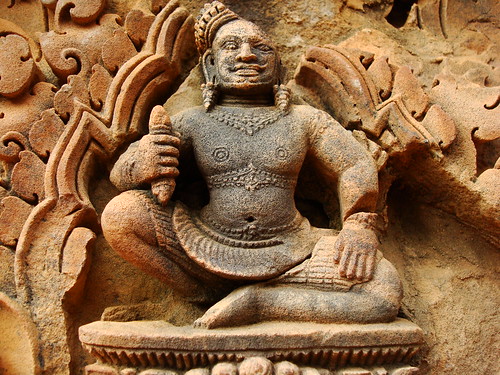
Time Traveling
 I'm kind of a nerd about history. And I blame my parents. Although I neglected to keep careful records at the time, I have a hunch that every family vacation we took from elementary school onwards, was designed to deliver us to the maximum number of museums in two weeks or less. It's almost as if they didn't really want my younger sister and I to stop learning during our fleeting summer holidays.
The twisted thing about their preferred manner of road tripping is that as an adult, I've partially adopted it myself. I mean, it's fairly easy for me to breeze through London's British Museum or even skip the Musée d'Orsay in Paris, but many of my most vivid travel memories are rooted in the past: wandering through rows of megalithic stones on a misty afternoon at Carnac, climbing the steep staircase of Chichen-Itza's Temple of Kukulkan, standing over the calm blue waters of Loch Tay on a reconstructed crannog.
But a fondness for ruins can go too far. Especially when that enthusiasm is expressed by millions of tourists. In fact, according to the Adventure Travel Trade Association, "increased visits [to archaeological sites] have led to damage at sites and often portions of sites have to be cordoned off from the public to prevent further deterioration." In the good news department, the ATTA partnered with the Archaeological Institute of America to create a "Guide to Best Practices for Archaeological Tourism." Read my interview with the two authors in the current issue of inTravel.
Subscribe to:
Posts (Atom)

 Posts
Posts

