Showing posts with label history. Show all posts

Seminar Speaker at the DC Craft Beer Festival

On Saturday, November 22nd I'll be speaking about the history of brewing and the current beer scene in the Northeast at the Walter E. Washington Convention Center in Washington, DC. Copies of my book will be for sale at a discount following a brief Q&A. This ticketed event is open to the public and includes beer samples from as many as 75 breweries. Food from a variety of vendors will also be available for purchase.

Following my talk at both sessions will be Michael Tonsmeire, author of American Sour Beers: Innovative Techniques for Mixed Fermentations. Although Michael and I haven't met, I've been a fan of his homebrewing blog, The Mad Fermentationist, for a long time. Follow this link for a little preview of what we'll each be talking about and stop by the Craft Concierge Center if you want to geek out about Gose, Gueuze or Gruit (you can't drink sours all the time). To purchase tickets to the DC Craft Beer Festival, visit the event's website

Sights and Bites Along Cape Cod's Old King's Highway

Every summer, thousands of drivers get caught in the crawling queue that backs up the Mid-Cape Highway, chipping away at patience and time better spent at the beach or on the water. Starting in Sandwich on the Upper Cape, dodge the traffic and take a scenic detour down the Old King's Highway, a quieter road that hugs the coast out to Provincetown. From cranberry bogs to picturesque church steeples, there’s much more to see on Route 6A and plenty of places to pull off for a quick snack or leisurely diversion.

Founded in 1969 and recognizable by its wrought iron roadside statue, Titcomb’s Bookshop has evolved from a small antiquarian book dealer into a three-story business with an international following. Stop in to flip through A History of Chowder, grab a game for the kids, or pick up a paperback to bring to Sandy Neck Beach Park just up the road. Lifeguarded from Memorial Day to Labor Day, the beach is accessible with a parking sticker or a day pass ($15-20). Go for a dip, read under your umbrella, or take a short hike on the nature trail to look for signs of deer, reptiles, and wading birds. After a little sun, continue into Barnstable for a visit to Cape Cod Beer, a craft brewery that proudly advertises “a vacation in every pint.” Cape Cod Red, a full-flavored amber ale is their bestseller, but on a hot day, Beach Blonde, a golden-hued easy drinker might be a better choice. Time your stop with a tour and tasting (Monday-Saturday), or grab a growler to go (from $11).

Cider Culture Reborn in Frankfurt


To most people, Frankfurt is known as a center of business and banking. Rarely is this city on the Main River thought of as a place with a distinctive beer culture. Yet Germany’s “Mainhattan” as it is referred to on occasion, doesn’t lack for a culinary history of its own. Nor does it try to rival the nation’s great capitals of brewing: Bamberg, Munich, and Köln. Instead, the Frankfurt region simply devotes itself to cider, a beverage its residents call apfelwein, äbbelwoi, or stöffche in the local dialect.

Mentioned in the eighth century Capitulare de Villis and known to be a popular drink since the time of Charlemagne, it wasn’t until the eighteenth century that the first apple wine taverns began to appear, advertising their blends of this low-alcohol beverage by displaying a green wreath outside. Entrepreneurs like Wilheim Höhl and Philipp Possmann eventually capitalized on the popularity of apfelwein, expanded to meet a growing demand, and are now two of the biggest producers in the country. In the last decade though, a number of smaller artisanal cidermakers have emerged, aspiring to reconnect with the region’s agricultural heritage by working with native apple varieties such as Bohnapfel, Anhalter, and Winterrambour.

“Cider is culture,” Andreas Schneider told me during a visit last summer. “We are now growing more than 70 varieties of apples and more than 25 varieties of pears.” About eight miles north of Frankfurt—close enough to still see the skyline—Schneider concentrates on nurturing the orchard his parents planted in Nieder-Erlenbach in 1965. Today he’s the only cider maker in the immediate area that still grows, presses, and bottles his own fruits. Granted, his dry, single variety ciders lack the malted barley and Noble hops used in the beers brewed throughout Germany, but in other ways his cold fermented, small batch creations aren’t so different from the hand crafted ales and lagers found in German brewpubs and beer gardens.

Touring the Rhine-Main Region's Oldest Private Brewery

"Next week, it smells like beer." These were the words brewmaster Stefan Simon uttered as he led me up a wooden staircase to the malt house at Privatbrauerei Glaab. It wasn't a particularly surprising statement. I've heard similar expressions from brewers before, just not in Seligenstadt, Germany. To be honest, I'd scarcely heard of the town itself until I arrived on a sunny afternoon in late August. But after several days of touring the state of Hesse on a trip sponsored by the Frankfurt Rhine-Main Region, I was excited to be anyplace where I could taste beer and talk shop. Fortunately, Mr. Simon had graciously agreed to show me around the historic brewery. 

Founded in 1744, Glaabsbräu grew steadily over time, reaching the point of producing more than one million barrels a year by 1970. And they remained independent into the 80s and 90s, as other nationally-known brands fell victim to mergers and buy-outs. More recently, the company has scaled back, currently kegging and bottling closer to 33,000 barrels annually. Even so, their footprint in this little town of half-timbered houses is considerable, seeming to occupy nearly as much real estate as the former Benedictine monastery on the banks of the Main River.

"The focus now is on quality," Simon explained in thickly-accented English. "And time for maturation is longer these days."

As he led the way back downstairs to the open fermentation cellar and then into the lagering cellar below, he told me that their Pilsener (4.9% ABV) is the top seller overall while Glaabsbräu Radler (2.6% ABV) is "popular with ladies." He also filled me in on Vitamalz, an alcohol-free malt beverage developed in 1930 that Simon described as healthier than Coke. I knew something about the beverage, having washed down boiled sheep's head with a can of Egils Malt in Iceland, so I didn't press him for more information. Besides, I was mostly there for the beer.

Exploring Quang Ngai for Perceptive Travel

Early last year, intrigued by a headline in a Korean newspaper, I struck up an email correspondence with a historian in Hanoi. I was fascinated by his discovery of a nearly 80-mile long wall in central Vietnam, and eventually decided to travel to Quang Ngai province to see it myself. Perceptive Travel published my story about the trip in their September issue. To see a few more pictures of the wall and the countryside it passes though, check out this photo set on Flickr.

Straight Outta Okemah

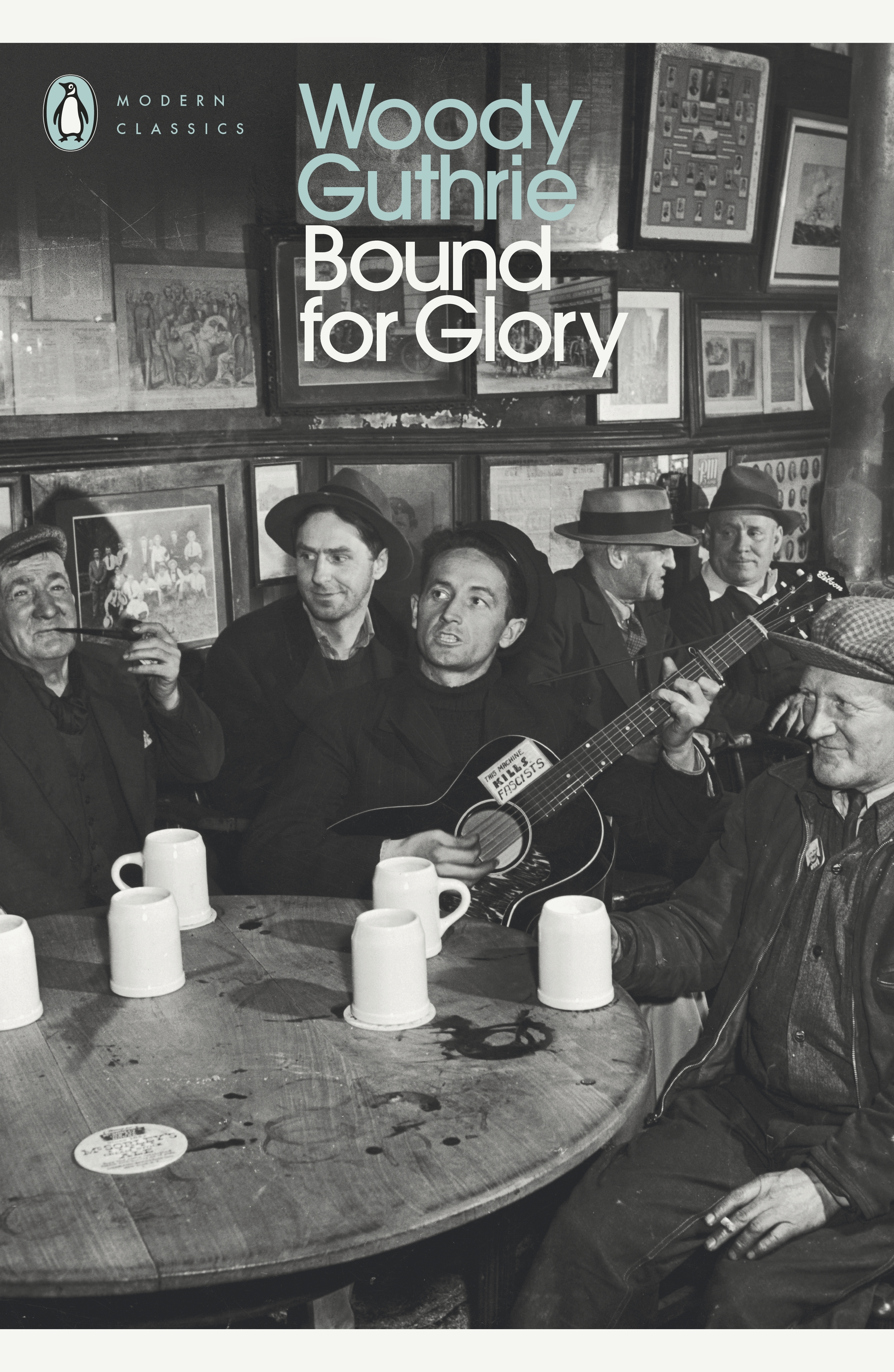
Driven West by drought, dust, and economic opportunity, a young Woodrow Wilson Guthrie set out from home in 1936, scribbling folk songs, letters, and memories that were published seven years later as the autobiographical novel Bound for Glory. "I was always a big hand to walk along and look at the things along the side of the road," he wrote. "Too curious to stand and wait for a ride. Too nervous to set down and rest. Too struck with the traveling fever to wait." 

In his book, Guthrie described the people he met as well as the societal ills he observed, but he also wrote about the beauty of America, a country the musician would cross again and again after his "traveling fever" originally took him from Texas to California by foot, car, and train. I first heard Dust Bowl Ballads in college, and since reading Bound for Glory I've decided that someday I'd like to follow in Guthrie's footsteps—using the book as a guide—to survey how much the landscape and lifestyle of the American Southwest has changed, and to learn what today's ribbon of highway might have in common with that of the late 1930s.

Until then, I'll have to explore his legacy in other ways. Fortunately, the Grammy Museum and Woody Guthrie Publications (with help from several other centennial sponsors) have joined forces to celebrate the life of one of the country's most influential singer-songwriters. All year long they've hosted conferences, theatrical performances, and concerts, and with a number of events remaining before the end of the year, there's still time to wish Woody a Happy Hundredth. I'd definitely like to make it to one of the last shows; hopefully other fans are planning to get their tickets, too.

Hiking Muka Head in Penang

For many travelers—including me—Penang is a place to go to eat. When I visited last spring, the tempting edibles on nearly every corner made it hard to resist spending my time snacking from dawn til dusk. Long considered a culinary paradise by foodies, this small Malaysian island in the Malacca Strait has seen its popularity spike since UNESCO added the historic city of George Town to their World Heritage List in 2008. And yet a short distance from the city and its heavenly food, Penang's green lung and Malaysia's smallest national park beckons to those in search of a bit of calm and quiet.

Occupying the northwestern corner of the island, the adjacent Teluk Bahang Forest Preserve and Penang National Park (Taman Negara Pulau Pinang) offer a number of hiking trails that lead to secluded beaches, mangrove forests, an unusual meromictic lake, and an impressive nineteenth century lighthouse. Along the way, park guests might also be lucky enough to spot Rhesus monkeys, a variety of exotic bird species, and one of the world's largest squirrels. I caught a glimpse of the latter from afar, and it was remarkable. Think cat-sized.

To reach the main entrance, take bus route 101 or 102 on Rapid Penang and exit at the Teluk Bahang roundabout. Entrance to the park is free and a small color brochure with map (in English and Bahasa Malaysia) is available at the interpretation center or from the Wildlife Department's website. You'll cross a small suspension bridge just beyond the gate, and then two trails guide hikers either northwest to the Muka Head light, or southwest across the peninsula to a pair of more remote beaches, one of which is a nesting-ground for green sea turtles. According to the map, this second route is longer and more difficult.

Strolling Around Suomenlinna

In many ways, Helsinki has the Swedish military to thank for its existence. During the eighteenth century, when the Kingdom of Sweden ruled much of what is now modern Finland, today's cultural and political capital was a relatively small town, with a population of roughly 1,000 citizens. Meanwhile, beginning in 1748, a massive stone fortress called Sveaborg (Viapori in Finnish) began to take shape on the nearby Susiluodot Islands in the Gulf of Finland. Built as a defense against Russia, the base at its peak contained close to six times as many people as the cluster of wooden buildings across the harbor. But Sveaborg and its garrison needed civilian goods and services, and over time they gave significance to the trading post on Sweden's eastern frontier.

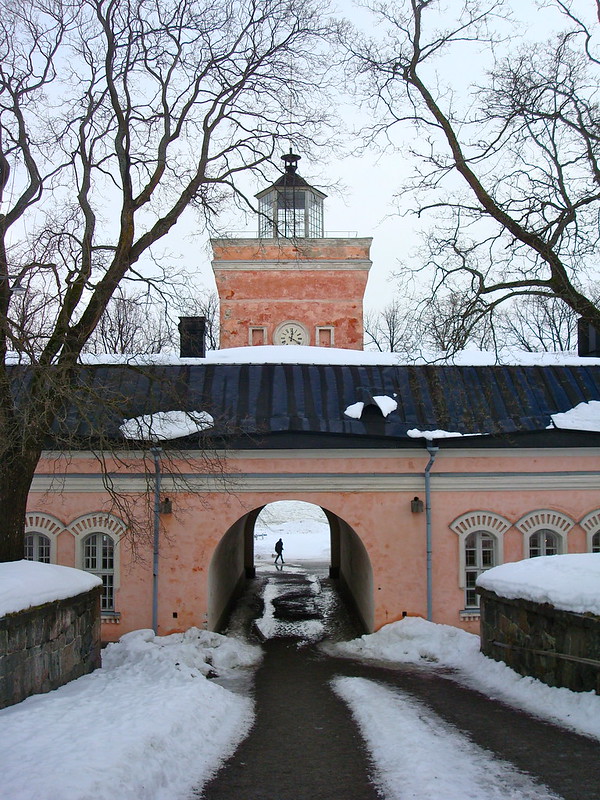
Today the tables have turned, and Suomenlinna, as the eight fortified islands are collectively known, has a fraction of its former population—about 850 at last count. On any given afternoon, most of the people wandering around the gravel footpaths and cobblestone avenues are tourists, visitors from other cities and countries eager to explore this UNESCO World Heritage site and maybe learn something about its history. Not long ago I was one of those wanderers, contentedly roaming around the rocky landscape as winter's snow began to melt. I brought my point and shoot camera over with me on the ferry, and shot a bunch of pictures as I covered the distance between the main quay and Bastion Zander, a mile walk to the south. The sprawling, painstakingly-restored complex is a scenic place to be sure, and even more inviting during the warmer summer months. I only wish the little ravintola panimo (restaurant brewery) had been open on the day of my visit. A pint of porter would've been good company while I waited for the boat back to Helsinki's Market Square.

Craft Beer and Museums: A Smart Pairing

On a Thursday evening in midwinter, the lobby of Burlington's ECHO Lake Aquarium and Science Center was packed. But the crowd anxiously awaiting the stroke of seven hadn't arrived for a new display or the chance to see baby Softshell turtles in the Animal Care Lab. No, everyone in line had turned up for a craft beer tasting. More specifically, they were there for FeBREWary: The Science of Beer, a two-hour special event that included presentations on beer history and chemistry along with access to more than two dozens bottles of stouts, saisons, pilsners, and pale ales.

Well before the last guest had even left the building, staff members were declaring FeBREWary a success, excitedly discussing the possibility of future beer nights at the aquarium. All across the United States, from Syracuse to Seattle, a growing number of institutions are discovering the tremendous appeal of craft beer and its ability to raise revenue and attract visitors. This weekend for example, marks the tenth anniversary of Hops and Props, a tasting event that features over 40 breweries and benefits Seattle's Museum of Flight. Meanwhile, at the end of March, the Milton J. Rubenstein Museum of Science & Technology in Syracuse will host the eighth annual TAP into the MOST.

Numerous animal parks organize "Brew at the Zoo" days. And fine art museums have taken notice, too. On March 9th, the Akron Art Museum in Ohio brings back their popular Art of Ale event, while the Oklahoma City Museum of Art has already begun to plan another ARTonTAP for October. Will history museums embrace this trend next? Maybe. In May, the New York Historical Society launches Beer Here: Brewing New York's History, a temporary exhibit that surveys "the social, economic, political, and technological history of the production and consumption of beer over the past 350 years." Heady stuff, to be sure.

I'd really like to see an exhibit that places fermented beverages in a historical context, explaining the relationship between ancient ales and cultures of the past. To drink, the museum could offer Fraoch, a Scottish gruit made with heather and bog myrtle instead of hops. Or maybe they'd pour Dogfish Head's Egyptian-inspired Ta Henket and Birra del Borgo's Enkir, a saison brewed with a grain that's been found at Neolithic sites. I'll bet it would find a large audience, and beer travelers like me would probably race to the internet afterwards, feverishly searching for Egyptian holiday offers, Scottish heritage vacations, and archaeology tour packages.

A Year Afoot

For me, 2011 was anything but typical. After spending Christmas on Ko Samet in the Gulf of Thailand, I watched January quietly arrive from a sixth floor balcony in Bangkok. By February I had made two short trips to Cambodia—one to Siem Reap and another to the capital. A month later I was hiking up an active volcano in the Philippines and then in May, I huffed and puffed along a winding jungle trail in Penang, Malaysia (pictured at right) to reach Muka Head and its impressive nineteenth century lighthouse. Meanwhile, in the United States, FalconGuides published Best Hikes Near New York City, my first book since going freelance two years ago.

At the start of summer I was back on the carriage roads and footpaths of New York and New Jersey, leading groups of nature-deprived urbanites for Outdoor Bound. A friend's June wedding in Kentucky was my chance to explore a fraction of the Red River Gorge Geologic Area, although I didn't make it to the state's well known natural bridge. Then in September I spent some time in Vietnam's central provinces trying to learn what I could about the pre-colonial history of the region. I was only back on the East Coast for three weeks before I dashed off to Denver for the 30th annual Great American Beer Festival, a trip that also included a day hike through the red rocks at Roxborough State Park. Finally, just before Thanksgiving, a brief magazine assignment took me to Idaho, where I got a crash course in trout fishing and stopped at the Riverport Brewing Company.

All told, I covered a lot of territory last year, and from this vantage point, 2012 doesn't look like it will involve much sitting still. I've already begun to make plans for a trip to Europe, and once the snow melts in the northeast, I'll get going on my next book, another outdoor recreation guide. In fact, as I peer into the future and consider the amount of travel I'm likely to do in the next 12 months, I have to wonder whether 2011 was really so atypical after all.

Beer Discoveries in the Pacific Northwest

By the time Lewis and Clark and the Corps of Discovery reached present day Idaho in September of 1805, their cache of food was running on empty. Worse yet, the expedition finished the last of their whiskey on July 4th. Desperate and near starvation, they resorted to eating dog. And while I'm sure they were grateful for the salmon and camas root provided by friendly Nez Percé several days later, I bet a brewery at the confluence of the Snake and Clearwater Rivers would have been a welcome sight for a band of exhausted explorers.

The Riverport Brewing Company in Clarkston, Washington is just across the Snake from Lewiston, Idaho. It's only been open for three years, but head brewer Pete Broyles already plans to expand; after a somewhat slow start, draft sales are growing. At last, craft beer has been discovered along the Lewis and Clark Trail. "We get people in here from a lot of different places," Pete told me during a recent visit to his spacious taproom on Ninth Street. Scanning the room, the patrons looked to be mostly local, but even an hour before closing on a Monday, business was steady. Halfway through the six glass sample board ($5) I knew it was more than free popcorn keeping people coming back for more beer.

Starting with the seasonal specialty, a wet-hopped IPA called 9th Street Whip, I next tried the biscuity, gently bitter Cedar Rock Pale Ale, an American style red ale called B-Run, the dry, piney Seven Devils IPA, Old Man River Oatmeal Stout, and my favorite, Bedrock Bock. Malty, slightly creamy and reminiscent of fruitcake, this garnet-colored brew stood out from the pack, tempting me to spend a buck for another four ounce sample. Then again, it could have been the sign behind the bar egging me on: Last call is for sissies. Considering the trout fishing I would be doing later that week, I probably should have picked up a growler ($18.75 or $8 for refills). Because you never know when you'll run out of provisions.

Road Tripping From Bangkok

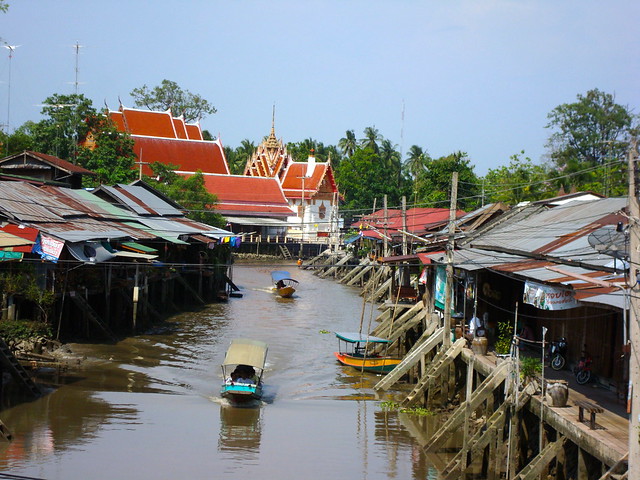
Every year millions of tourists flock to the Kingdom of Thailand, eager to see the Grand Palace, snorkel in the Andaman Sea, or maybe expand their culinary horizons. Well, whether or not they're aware of it, most of these people end up covering the same well-worn tourist trail: Bangkok, Chiang Mai, Phuket, Ko Samui, and Ko Phi Phi. Which isn't to say that these places aren't worth visiting, it's just that there's so much more to this country that you'll never really see from the window seat of a puddle jumper. I made more than a few overland journeys during the months I spent in Thailand, but one of my favorite trips was a drive south from the capital along the Gulf coast to Khao Sam Roi Yot National Park. Over the course of a long weekend, I learned a bit more about the region's history, tried a ton of incredible food at the Amphawa floating market (pla meuk yang anyone?), and documented my stops with a smattering of photographs.

Trailing the Wilderness Prophet

In early June of 1869, a then 31-year old John Muir arrived in the foothills of the Sierra Nevada Mountains where he would spend the next few months with a flock of sheep, their shepherd Billy, and a friendly St. Bernard named Carlo. Enchanted by what he saw, Muir filled his notebook with notes and sketches, and in 1911 published them as My First Summer in the Sierra. Last month Houghton Mifflin Harcourt released a 100th Anniversary Illustrated Edition of the book, with lavish color photography by Scot Miller. It's an attractive volume, and one that will likely inspire fans of the Scottish-American naturalist to visit his beloved Yosemite National Park.

Muir left his mark on California and the West in many ways though, and it's possible to travel to some of the other places that were significant to him during his lifetime, too. I wrote about five of them for the San Francisco Chronicle, but many more certainly exist. Quite a few are worth seeing. Wherever you ultimately decide to go yourself, consider this sentence from My First Summer: "Nature as a poet, an enthusiastic workingman, becomes more and more visible the farther and higher we go; for the mountains are fountains—beginning places, however related to sources beyond mortal ken."
Photography courtesy of the John Muir National Historic Site

The Daang Kastila Trail

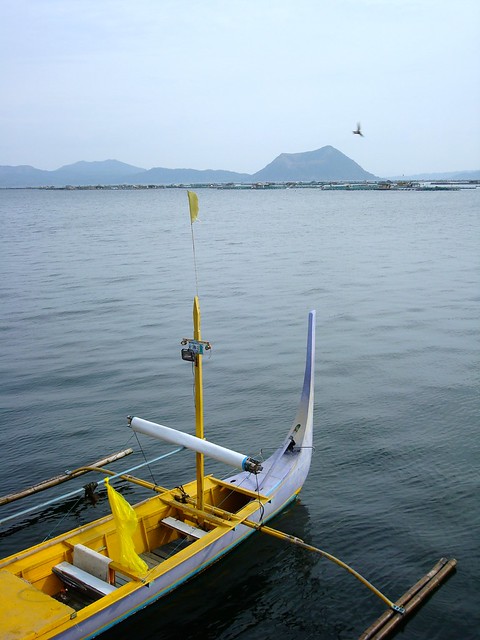
The boat knifed across the lake, sending a steady spray of water over the gunwales and drenching the two passengers huddled near the rear. Gradually, the hazy gray shape I'd seen in the distance became a landmass, and my girlfriend and I would soon reach its shore. Up ahead, at the water's edge, other small, colorful boats waited for the return of their captains like dogs leashed outside a bodega. Beyond the rickety docks, a large sign welcomed new arrivals to Taal Lake and drab single-storey buildings clustered together to form some semblance of a town. Before long, we hoped, we'd be staring down into the beating heart of this volcanic island.

What we didn't know at the time was that Taal is one of the most active volcanoes in the Philippines, and one of the most destructive. In 1911, one hundred years before our visit, a massive eruption killed more than a thousand people and caused extensive damage to surrounding areas in the province of Batangas. We had been drawn here by a geographic oddity: an island on a lake inside an island on a lake. Roughly five kilometers across, Volcano Island is essentially a collection of craters and cones created by over 30 eruptions since 1572, when Father Gaspar de San Augustin wrote "there is a volcano of fire which is wont to spit forth many and very large rocks, which are glowing and destroy the crops of the natives." The island has grown in size by 25% in the centuries since this first account, and to reach it, travelers must cross Taal Lake, a body of water that is itself a caldera, or massive crater.

For 1,500 pesos (about $35) we had been brought this far from the bus stop in Tagaytay. Upon landing, the third passenger on our boat—a native of the island's village—explained that we would need to pay several hundred pesos more to rent scrawny ponies to carry us up the side of the volcano. And that was in addition to the tourist's fee of 50 pesos per person. The young women staffing the welcome center reiterated the supposed terms of entrance to us again, but eventually gave up when we kept insisting on hiking to the top. Although my girlfriend and I knew little about the volcano's history, we were well aware that several paths led to the edge of the smaller of the two crater lakes.

Given that it was already late afternoon, we chose to follow the Daang Kastila Trail, the busiest and most direct route to the center of the island. Ticket stubs in hand, we walked back outside and proceeded up the dusty track to the summit. Moving past a small corral, we followed a train of ponies through the village where dogs, chickens, and children scrambled to get out of the way of oncoming traffic. No signs marked the trail, but it wasn't difficult to find—groups of mounted tourists trotted by regularly, busily texting friends or twisting in their saddles to snap a photo during their bumpy descent. We completed the climb in less than an hour, and fortunately managed to time our return trip with the sunset. 

As eerie as it was to feel heat radiating from beneath my boots and to catch the occasional whiff of sulfur on the breeze, I'm glad to have hiked Daang Kastila, especially when I did. According to the Philippine Institute of Volcanology and Seismology, Taal has recently experienced a series of volcanic earthquakes and the crater lake has become more acidic, even as its temperature has risen by nearly four degrees Fahrenheit. As of last week, Volcano Island was off limits to tourists. Before making your own plans to undertake a volcano hike in the Philippines, be sure to consult the Department of Tourism's website for relevant travel advisories.

A Spring Cleaning

Two weeks ago I found myself running for my life. The day before, my friends and I had turned up in Sangkhlaburi, a sleepy little town near the Burmese border at the northern end of the Khao Laem Reservoir. Only we were arriving during the one time that the entire country of Thailand happens to be wide awake: the Thai New Year. Better known as Songkran, this famously boisterous holiday can trace many of its traditions back to the fourteenth century and the kingdom of Ramathibodi in Ayutthaya.

Flash forward to the present however, and I'm sprinting from a pack of heavily armed, Hawaiian shirt-wearing assailants in a futile attempt to stay dry. Because while Thais do observe the holiday in a variety of ways, the celebration today is defined by a prolonged, nationwide water fight. And I hadn't brought anything to defend myself with. Far from menacing, the kids in town nonetheless knew how to use their squirt guns and water buckets, and took great pleasure in drenching a conspicuous group of farang. View more pictures from the Songkran Festival in my Kanchanaburi photo set.

Breakfast at Table Mountain

For the first time in five days it had stopped raining. Above me, the Welsh sky was a vivid cerulean blue, set off against the evergreen slopes of the Black Mountains. The air meanwhile, smelled of spruce and sheep droppings. Not necessarily the most welcome aroma first thing in the morning, but I didn’t care. I was content to simply stretch my legs for an hour or two. Balancing on the steps of a stile that led over an old farm wall, I paused to consider the smartest thing I’d done all week: slow down. 
 
Thus far, my impressions of the little country squeezed between England and the Irish Sea had been formed from the driver’s seat of a rented car. Morning after dreary morning I’d picked at plates of fried eggs, fried sausage, fried mushrooms, and yes, fried tomatoes, before setting off under cloudy skies on a peculiar mission. As a beer writer and aspiring brewer, I had designed a trip around a handful of cider makers in southern Wales. The problem was, my busy itinerary made no allowances for leisurely mornings or accidental discoveries. And so, for five straight days I wolfed down hearty if unhealthy meals in order to keep my appointments with apple growers.  


Today however, was different. Encouraged by the muted yellow glow creeping under the curtain of my room at the Bear Inn in Crickhowell, I decided to forgo the complimentary breakfast and postpone my afternoon plans. Instead of loading up on calories, I would splurge on a change of scenery. This was my chance to see Wales before she put on her Wellies. Remembering a map of the area I’d picked up at Reception the night before, I took a look at the town plan and discovered that the Beacons Way, a one-hundred-mile hiking trail across Brecon Beacons National Park ran quite close to the hamlet. Estimating the distance from my hotel to the trailhead, I figured I could make it to the nearest mountain and back before checkout time. Crug Hywel. My tongue stumbled on the words as I sounded out its Celtic syllables. But a symbol on the map intrigued me; during the Iron Age a hill fort stood atop the 1,480-foot summit of Table Mountain. I wondered whether any part of the prehistoric fortification survived. 

Not sure what I’d find but wanting to take advantage of a bright autumn morning, I set out with a bottle of water and a package of shortbread to quiet my stomach. While I climbed the small massif, the sun rose in the sky, its rays warming my skin under the black T-shirt I wore. Underfoot the thick carpet of moss and grass was wet from consecutive days of foul weather. Soon my socks were damp, too. Pushing through the garden of ferns growing on the mountain’s slopes, I decided to eat a few of the plump blackberries I had picked earlier on. Popping a piece of fruit into my mouth, I savored its sweet taste as I walked. Part of me dreaded returning to the car.
 

At the halfway point I stopped to listen. Unseen birds called to each other from either side of the footpath and somewhere a dog barked repeatedly, alerting anyone within earshot of a stranger’s presence. Soon I would rest, but I still had a short distance to go. Steadying myself with the aid of the stile’s wooden post, worn smooth by years of passers-by, I swung my leg over the stone barrier in front of me, and focused my gaze on the flat landform ahead: Table Mountain.  

Half an hour later I reached a fork in the trail and followed the left branch as it curved behind the landmass, leading through another minefield of manure. In spite of the passage of time, Crug Hywel remained well defended. Carefully selecting my last few steps, I wished I had brought another pair of shoes. I couldn’t let footwear derail me this close to my destination though. I scrambled over the eroded rampart, eager to soak up the view and investigate any prehistoric ruins. 

The top of the hill was already occupied. Everywhere I looked sheep milled about in small groups, rested in pairs, or leisurely grazed on the grassy summit. They scattered when I got too close, but otherwise seemed uninterested in bipedal company. I thought of the flock of tourists back at the Bear Inn, staring out at a tiny courtyard from a drab dining room. Sure, I was missing breakfast, but the chance to see the countryside more than made up for any lost calories. I drained the rest of my water bottle and bit into the first of my buttery shortbread cookies. Even though I wasn’t particularly hungry yet, the crumbly snack tasted good—as good as some of the more extravagant meals I’ve enjoyed in my travels. Breakfast on the road might be just as important as it is at home, but not necessarily because of the food we order. What counts, I decided then, is where we choose to eat it.
 

Suddenly I heard noisy breathing behind me. Something moist brushed against the hand that held my now empty water bottle. Turning around, I found myself nose to nose with a hungry ruminant. She took a step backward, hesitantly. Happy to spend some time with a local, I broke off a piece of shortbread and slowly offered it to my new friend. Breakfast at Table Mountain would be for two.

The 5 Best-Kept Secrets About Ko Phi Phi

One of the most popular destinations in Thailand, Ko Phi Phi Don might also be one of world’s best-known islands. Every day ferries deposit scores of sun-worshippers and partygoers on the shores of this limestone landmass in the Andaman Sea. I made my own trip there with some friends a few years ago, and plan to go back before 2011 is over. It really deserves the hype. And although you don't have to stay long to appreciate its appeal, Phi Phi also has a few secrets to reveal to those who come looking. 
  1. The Soundtrack. Forget the beach—well, not entirely—and acquaint yourself with the marine life inhabiting the lagoons of Ko Phi Phi Leh, Phi Phi Don’s little brother next door. While tour groups crowd the strip of sugary white sand seen in The Beach, grab fins and a snorkel to hear one of the most remarkable sounds beneath the waves: hundreds of blue parrotfish munching and crunching on coral.
  2. The View. Sure, cocktails and camaraderie are great for a while, but don’t fall into the trap of spending all your time in Ton Sai Village. Swap out your flip flops for sturdier footwear and head uphill for stunning views above Ao Loh Dalum and Ao Ton Sai. The walk to the top is no more than 25 minutes and adventurous visitors can descend the east side of the island to reach a trio of secluded beaches. 
  3. The Scenery. Sunbathing and swimming definitely have their merits, and Phi Phi doesn’t lack for nightlife. Yet with its tranquil coves, busy docks, plentiful sea birds, and favorable lighting, it’s also a photographer’s dream. Do some scouting when you arrive, and then wake up early the next morning for an hour or two of shooting.  
  4. Peace and Quiet. Given the crowds, Phi Phi might not seem like a place to get away from it all. But many day-trippers and overnighters stick to the sandbar connecting the cliffs of Ko Nok with those of Ko Nai. For a more relaxed environment, hire a longboat to Laem Tong at the north end of the island, where the accommodations offer a refreshing alternative to the busy bungalows in the south. 
  5. Its History. Not far from Laem Tong a community of chao ley, or sea gypsies, have established a small village just beyond the hotels. For several hundred years these nomadic people have made a living fishing, collecting shells, and bird-nesting in the waters of the Andaman. The chao ley retain a distinct language and culture in spite of efforts by the Thai government to promote assimilation.

Cambodia's Temple City

Last weekend I made my first trip to Cambodia. Like countless other travelers, my primary reason for visiting was to see Angkor Archaeological Park, an enormous complex containing more than 300 Hindu and Buddhist monuments built between the 9th and 13th centuries. What struck me about the site though, other than the scale of the architecture itself, were the thousands of Khmer people eking out a living in the shadow of a ruined city; a former capital considered to have been one of the largest and most prosperous in Southeast Asia. Follow this link to view my photos from Angkor Wat.

Rooms With Views

National Park Week—your chance to visit any of the 392 national parks in the United States for free—comes to an end in three short days. Of course, many of the best weeks for exploring America's natural heritage are still ahead. Park attendance around the country typically spikes during the summer months.

During a trip to Massachusetts earlier this month, I spent a couple of nights at the Fort Hill Bed and Breakfast, a historic farmhouse that innkeepers Gordon and Jean Avery have turned into an absurdly comfortable place to stay within the Cape Cod National Seashore. Besides offering unobstructed views of Nauset Marsh and the ocean beyond, Fort Hill is steps from the Red Maple Swamp Trail and a short distance from the Salt Pond Visitor Center. Hiking, biking, swimming, and surfing are just some of the activities available to visitors who stay at this unique B&B.

Lunching on Lundi

According to Andrew Zimmern, co-creator and host of the Travel Channel's Bizarre Foods, the taste of lundi most resembles a "delicately mild, finely grained piece of elk (or ostrich even) that had been waved over a pot of clam juice." Sound appetizing? Well, I suppose that all depends on your willingness to eat lundi, or puffin, as well as your opinion of clam juice.

I'll have the chance to come to my own conclusions about puffin meat—along with quite a few other smoked, salted, and pickled "delicacies"—when I make my first trip to Iceland in February. The main purpose of this short visit is to collect some firsthand information on traditional Icelandic foods and to interview a few people about Viking customs, but I also hope to see some of the country's famously alien landscapes while I'm there. Of course, I wouldn't mind learning more about the music from the moon either.
Photo by the Icelandic Tourist Board