Showing posts with label sustainable tourism. Show all posts

Around the Baltic for Rails to Trails

Every once in a while an entire autumn afternoon will slip by as I gaze out the window, daydreaming about Scandinavia. For years I've told myself that one more trip will cure me of the urge to see another corner of this region, yet even before I get back home again I'm thinking about my next visit. But until I stumble into a pile of money, I'm going to have to content myself with infrequent tours and meals at bus terminals instead of swank restaurants like Rene Redzepi's Noma. Lucky for me cafeteria dining can also make for a good story.

It's been eight months since my last visit, a trip that included several days in Helsinki where the Finns were close to finishing their Baana cycleway. In the winter 2013 issue of Rails to Trails, I write about this new rail trail as well as longer routes in Denmark, Estonia, and Norway. The ice and snow on the ground kept me from biking around Finland's capital city, but hopefully I'll be able to do some two-wheeled exploring when I eventually make it back. Then again, a blogger by the name of Hendrik has me thinking that I might want to do some hiking too.

Summer Hiking: 5 Reasons to Go Now

Another summer is almost upon us. And as warmer temperatures and longer days begin to knock on doors across the country, people from Seattle to Sarasota will once again plan weekends and vacations around national parks and outdoor activities. Of the numerous options available, hiking remains popular from year to year. By their own estimate, the American Hiking Society, an advocacy organization that focuses on trail building, trail funding, and legislative issues that affect hiking, reports that roughly 330,000 people participated in one of 2,063 National Trails Day® events in 2011. This year's celebration (or trailgating party if you prefer) takes place on Saturday, June 2nd. If you haven't signed up for an event near you, it's not too late. Plus, here are a few other good reasons to grab your trekking poles, fill up your hydration pack, and lace up your boots this summer:
  1. It Makes You Smarter. According to a recent article in Backpacker magazine, "lab studies prove that even 30 minutes of nature make a difference in cognitive test scores; [Dr. David] Strayer’s hunch is that those benefits accumulate. And that makes backpackers uniquely positioned to reap the rewards." In fact, the results of a University of Michigan study showed that participants boosted their cognitive test scores by 20 percent after spending 50 minutes walking through an arboretum.
  2. You'll Probably Learn Something. Expanding on the point above, it's worth noting that spending time in the woods or the mountains gives you the chance to hone skills that you might not use as much in your day job. Like compass reading. Or flora and fauna identification. For instance, when made into a tisane or tea, a handful of needles from the Eastern white pine act as a great source of Vitamins A and C and serve as an effective decongestant.
  3. Exercise Is Good For You. This won't be surprising, but exercise burns more calories than sitting still. It's often more fun, too. Depending on your weight, hiking for an hour burns 430-650 calories, while a backpacking can expend as much as 760 calories in the same amount of time. Bonus: more exercise equals more chocolate (see below).
  4. You Could Make a Friend. Hiking is often safer—and usually more fun—in small groups. Fortunately, there are plenty of clubs and companies that organize outings lasting anywhere from a single day to more than a week. Determine your fitness level, find a blank space on your social calendar, and plan your trip. On the East Coast, local groups like the New York-New Jersey Trail Conference offer ways to meet other hikers, while out west, the Pacific Crest Trail Association is a good resource.
  5. Packing Chocolate Is Encouraged. I don't have any statistics to back this up, but I'm willing to bet nine out of ten hikers are chocolate lovers. Or at least fans of the occasional chocolate beer. When I'm leading groups with Discover Outdoors, I make sure I always have a few Dagoba tasting squares (preferably Xocolatl) in my pack. You know, for emergencies.

Hiking Muka Head in Penang

For many travelers—including me—Penang is a place to go to eat. When I visited last spring, the tempting edibles on nearly every corner made it hard to resist spending my time snacking from dawn til dusk. Long considered a culinary paradise by foodies, this small Malaysian island in the Malacca Strait has seen its popularity spike since UNESCO added the historic city of George Town to their World Heritage List in 2008. And yet a short distance from the city and its heavenly food, Penang's green lung and Malaysia's smallest national park beckons to those in search of a bit of calm and quiet.

Occupying the northwestern corner of the island, the adjacent Teluk Bahang Forest Preserve and Penang National Park (Taman Negara Pulau Pinang) offer a number of hiking trails that lead to secluded beaches, mangrove forests, an unusual meromictic lake, and an impressive nineteenth century lighthouse. Along the way, park guests might also be lucky enough to spot Rhesus monkeys, a variety of exotic bird species, and one of the world's largest squirrels. I caught a glimpse of the latter from afar, and it was remarkable. Think cat-sized.

To reach the main entrance, take bus route 101 or 102 on Rapid Penang and exit at the Teluk Bahang roundabout. Entrance to the park is free and a small color brochure with map (in English and Bahasa Malaysia) is available at the interpretation center or from the Wildlife Department's website. You'll cross a small suspension bridge just beyond the gate, and then two trails guide hikers either northwest to the Muka Head light, or southwest across the peninsula to a pair of more remote beaches, one of which is a nesting-ground for green sea turtles. According to the map, this second route is longer and more difficult.

The Truth About Elephant Trekking

Few experiences can compare with meeting one of the world’s largest vegetarians. Up to ten feet tall at the shoulder, Elephas maximus, better known as the Asian elephant, is the very definition of a gentle giant, happy to accept a spiny pineapple or a bunch of ripe bananas from an awestruck two-legged visitor. According to biologists, perhaps as many as 100,000 members of this species occupied Southeast Asia in the early 1900s, but in the century since, these animals have seen their range steadily shrink as logging, slash and burn agriculture, and a growing human population encroach on the tropical and subtropical forests pachyderms depend on for survival. Poaching and habitat fragmentation further threaten the small numbers that exist in the wild in Thailand today, now largely limited to national parks such as Khao Yai and Khao Cha Mao, as well as isolated tracts of land along the Cambodian, Laotian, and Myanmar borders.

While their numbers in the wild have decreased, their popularity as a tourist attraction has only grown, due in part to the government ban on logging that effectively put many domesticated elephants out of work. At present, the Tourism Authority of Thailand (TAT) lists nearly four dozen tour operators that offer short rides or longer treks. Clearly elephants are big business. But what kind of business exactly? These highly social animals require lots of fresh water and about 330 pounds
(150 kg) of food per day, not to mention quite a bit of space. So how are they trained and cared for? A phrase on the TAT website offers a telling if disappointing clue: “the treatment of Thai elephants varies from elephant camp to elephant camp, some using more humane methods to look after their elephants than others.”

According to Timothy Gorski, director of the documentary How I Became an Elephant, the boom in elephant tourism began in the 1980s and has risen with "the so-called ‘eco-tourism’ phenomenon. Elephant treks are being marketed as eco-friendly conservation tours.” Problematically though, the definition of eco-tourism often differs from company to company, and training methods—rarely witnessed but captured in Gorski’s documentary—are often cruel. The pajaan, a practice that involves caging a young elephant and depriving it of food, sleep, and even contact with its mother, is one such method. In addition, some say that health and safety regulations are minimal and inadequately enforced. As a result, Catherine Bodry, co-author of the last edition of Lonely Planet Thailand, maintains that the long-term well being of elephants in Thailand is largely up to tourists and the general public. But if the future of the Asian elephant depends on public awareness and action, education must be a part of any trek. Unfortunately, this isn’t something that every camp provides.

Fishing Wild Rivers

Standing on the boat ramp in the early light of dawn, I shimmied into a borrowed pair of long johns. According to my guide Brent, I couldn't rely on a wool sweater and a thermos of black coffee to keep me warm during a full day on the Salmon River. And so before we pushed off into the swift current, I slipped on another layer. Shivering through my first steelhead fishing excursion didn't seem like a particularly wise decision.

Two weeks ago I visited Idaho for the first time. Like many trips I've made over the years, this one ended too soon. Setting out from Lewiston near the Washington state line, I ended up more than 100 miles south in Riggins, a little town named after the area's first mailman. But I hadn't traveled to Idaho's whitewater capital to learn about western postal history. I was there to see the Salmon, the longest wild or free-flowing river in the lower 48.

Getting out on the water however, wasn't something I planned to attempt on my own. Especially considering the limited time and resources at my disposal. Fortunately, the night before I climbed into a drift boat with Brent, I had met with Amy Sinclair of Exodus Wilderness Adventures at the Back Eddy Grill. As I savored a bison burger and a bottle of rich Black Butte Porter, she talked me through the basics of obtaining a fishing license and dressing for Idaho's cool autumn temperatures, explaining that she'd have a bag of extra clothes waiting for me in the morning. 

The next day, wind whipped through the narrow gorge and John Day Mountain cast its long shadow over the river for hours after sunrise, but I remained warm. This, I discovered, was an important part of enjoying any fall fishing trip. Sure, hooking four good-sized steelhead in the first two hours added to the fun, but comfort was key. In fact, I think I'll pack my thermal underwear the next time I go to Idaho.

Over the Hudson for Rails to Trails

It was an overcast morning last autumn when I boarded the train to Poughkeepsie. Arriving at the Queen City of the Hudson, I walked uphill from the station to Parker Avenue, where I soon found the entrance to the world's longest pedestrian bridge, the Walkway Over the Hudson. I had made the journey north from New York before, but that day I was on assignment for Rails to Trails, researching my second piece for the magazine.

In the two years since the 1.3-mile long recreational trail opened to the public, it's won awards from the Society for Industrial Archeology, the Environmental Protection Agency, and the International Bridge Conference. And with a new connection to the Hudson Valley Rail Trail on the west side of the Walkway, the park is an ideal place to get some exercise or take the dog for a walk. Both ends of the bridge are also wheelchair accessible. But the dramatic views up and down the river make it worth visiting even if you're not inclined to take Metro North to Poughkeepsie for a workout. Read more about the Walkway—easily one of my favorite places in the Hudson Valley—in the fall issue of Rails to Trails.

Jersey Jaunts with Junior

School's out and summer's here. If you have children, this probably means that you're looking for ways to keep them busy and out of trouble. One relatively easy option is to get kids outdoors: take them to a park, teach them how to canoe or kayak, or show them how to pitch a tent. You'll be able to bond over the experience and they'll have fun learning something that doesn't involve homework and pop quizzes.

For parents in New York and New Jersey, my story in the July issue of New Jersey Family explains how to prepare for a camping trip with kids, and suggests seven places to go for under $65 a night. I also offer a short list of camping packing essentials and recommend several books that will take the guesswork out of planning a weekend in the woods. The Best in Tent Camping: New Jersey (part of a series published by Menasha Ridge Press) is a good bet for purists in search of scenic and serene campsites while Camp Out!: The Ultimate Kids' Guide is written for the younger reader who wants to help mom and dad plan for an overnight in the backwoods or the backyard.

The Daang Kastila Trail

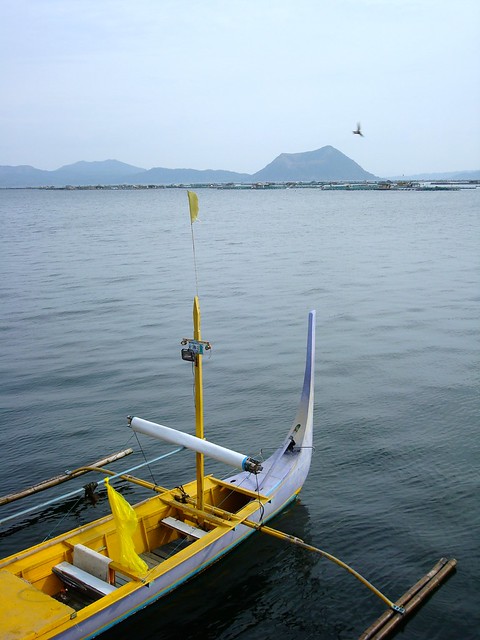
The boat knifed across the lake, sending a steady spray of water over the gunwales and drenching the two passengers huddled near the rear. Gradually, the hazy gray shape I'd seen in the distance became a landmass, and my girlfriend and I would soon reach its shore. Up ahead, at the water's edge, other small, colorful boats waited for the return of their captains like dogs leashed outside a bodega. Beyond the rickety docks, a large sign welcomed new arrivals to Taal Lake and drab single-storey buildings clustered together to form some semblance of a town. Before long, we hoped, we'd be staring down into the beating heart of this volcanic island.

What we didn't know at the time was that Taal is one of the most active volcanoes in the Philippines, and one of the most destructive. In 1911, one hundred years before our visit, a massive eruption killed more than a thousand people and caused extensive damage to surrounding areas in the province of Batangas. We had been drawn here by a geographic oddity: an island on a lake inside an island on a lake. Roughly five kilometers across, Volcano Island is essentially a collection of craters and cones created by over 30 eruptions since 1572, when Father Gaspar de San Augustin wrote "there is a volcano of fire which is wont to spit forth many and very large rocks, which are glowing and destroy the crops of the natives." The island has grown in size by 25% in the centuries since this first account, and to reach it, travelers must cross Taal Lake, a body of water that is itself a caldera, or massive crater.

For 1,500 pesos (about $35) we had been brought this far from the bus stop in Tagaytay. Upon landing, the third passenger on our boat—a native of the island's village—explained that we would need to pay several hundred pesos more to rent scrawny ponies to carry us up the side of the volcano. And that was in addition to the tourist's fee of 50 pesos per person. The young women staffing the welcome center reiterated the supposed terms of entrance to us again, but eventually gave up when we kept insisting on hiking to the top. Although my girlfriend and I knew little about the volcano's history, we were well aware that several paths led to the edge of the smaller of the two crater lakes.

Given that it was already late afternoon, we chose to follow the Daang Kastila Trail, the busiest and most direct route to the center of the island. Ticket stubs in hand, we walked back outside and proceeded up the dusty track to the summit. Moving past a small corral, we followed a train of ponies through the village where dogs, chickens, and children scrambled to get out of the way of oncoming traffic. No signs marked the trail, but it wasn't difficult to find—groups of mounted tourists trotted by regularly, busily texting friends or twisting in their saddles to snap a photo during their bumpy descent. We completed the climb in less than an hour, and fortunately managed to time our return trip with the sunset. 

As eerie as it was to feel heat radiating from beneath my boots and to catch the occasional whiff of sulfur on the breeze, I'm glad to have hiked Daang Kastila, especially when I did. According to the Philippine Institute of Volcanology and Seismology, Taal has recently experienced a series of volcanic earthquakes and the crater lake has become more acidic, even as its temperature has risen by nearly four degrees Fahrenheit. As of last week, Volcano Island was off limits to tourists. Before making your own plans to undertake a volcano hike in the Philippines, be sure to consult the Department of Tourism's website for relevant travel advisories.

Serving Up Change, Peacefully

Of course I found my favorite place in Siem Reap during my last few hours there. After three full days of touring Angkor Wat, clambering over ancient piles of brick and sandstone, my friends and I needed to refuel before making the eight hour land journey back to Bangkok. So, avoiding the Old Market's tourist-clogged streets and alleys, we crossed over to the eastern side of the Siem Reap River and followed Wat Bo Road to Peace Cafe.

Seconds after stepping into the shaded garden we knew we'd made the right choice. The vegetarian menu was excellent (I ordered an extra thick peanut butter shake and a panini with roasted red pepper and hummus) as well as affordable. Nothing was more than $4 and most dishes were in the $2 range. And while I decided against alcohol with lunch, I couldn't help noticing that they served beer, too. What impressed us most of all though, was their dedication to education and sustainable social enterprise.

Besides preparing healthy food, Peace Cafe runs Khmer cooking courses using fresh herbs grown in their garden. Khmer language lessons and yoga are offered five days a week and Pilates classes are held on Tuesdays and Fridays. Monk Chats on Wednesday and Saturday evenings serve as an informal (and free) introduction to Buddhism. Plus, anyone looking to leave with a Cambodian souvenir—edible or otherwise—will be happy to know about Peace Cafe's bakery and Fair Trade Shop. I would've stayed longer, but we had to catch a taxi to the Thai border. I do plan to make it back however. For more vegetarian dining suggestions in Siem Reap and elsewhere, visit HappyCow.

Rails to Trails Cover Feature

Back in the spring, I spent a couple of days on Cape Cod, talking to locals, sampling the seafood, and riding from Wellfleet to South Dennis on their 22-mile rail trail. I was on assignment for Rails to Trails magazine, exploring the area for their Fall 2010 issue

Although I didn't make it all the way out to P-town, cyclists with more time than I had should also check out the Cape Cod National Seashore trail network. There are nearly ten miles of additional bike paths within the park's boundaries. And finally, as I have mentioned before, if you're planning a trip out to one of the towns on the Cape, consider booking a stay at the Fort Hill Bed and Breakfast in Eastham. The views, the hosts, and the three-course breakfasts (more energy for long rides) are truly exceptional.

Of Blogs and Books

If you happen to read this blog with any regularity, you may have noticed that my postings have tapered off of late. Well, I decided to explain myself this afternoon, lest I face accusations of laziness and/or abandonment. The actual reason I haven't kept up with my blogging is simple—I'm writing a book. More than that, I've even got a publisher for it.

My hiking guide won't be released until next year, but in the meantime I have a lot of research, writing, and mapping to do. So although I will continue to add links to my stories and interviews as they appear online, I won't have time to update this site as often as I have in the past. While you're waiting for me to get around to blogging again, why not spend some time outdoors yourself? Because whether you live near Seattle, WA or Washington, DC, there are dozens of trails a short car, bus, or train ride away. Go ahead, take a hike.

Rooms With Views

National Park Week—your chance to visit any of the 392 national parks in the United States for free—comes to an end in three short days. Of course, many of the best weeks for exploring America's natural heritage are still ahead. Park attendance around the country typically spikes during the summer months.

During a trip to Massachusetts earlier this month, I spent a couple of nights at the Fort Hill Bed and Breakfast, a historic farmhouse that innkeepers Gordon and Jean Avery have turned into an absurdly comfortable place to stay within the Cape Cod National Seashore. Besides offering unobstructed views of Nauset Marsh and the ocean beyond, Fort Hill is steps from the Red Maple Swamp Trail and a short distance from the Salt Pond Visitor Center. Hiking, biking, swimming, and surfing are just some of the activities available to visitors who stay at this unique B&B.

July, August, and Winter

According to the second episode of The National Parks: America's Best Idea, that's how the first U.S. soldiers charged with protecting Yellowstone described its seasons. Apparently patrolling two million acres of northwestern Wyoming during the coldest months of the year wasn't exactly a plum assignment. But chasing poachers through waist deep snow probably wouldn't delight many people, then or now.

Thanks to Ken Burns and the recession, the parks have seen their popularity grow dramatically in 2009. The AP recently reported that nationwide attendance is actually at a ten-year high and may well set a new record. While I did some camping and hiking in Zion and Bryce Canyon (pictured) last summer, I've only managed to visit a national recreation area and America's first national scenic trail so far this year. Fortunately, I still have three months to explore another corner of our country's remarkable natural landscape. I'm thinking it might be best to go somewhere before the weather gets too frosty however.

Time Traveling

I'm kind of a nerd about history. And I blame my parents. Although I neglected to keep careful records at the time, I have a hunch that every family vacation we took from elementary school onwards, was designed to deliver us to the maximum number of museums in two weeks or less. It's almost as if they didn't really want my younger sister and I to stop learning during our fleeting summer holidays.

The twisted thing about their preferred manner of road tripping is that as an adult, I've partially adopted it myself. I mean, it's fairly easy for me to breeze through London's British Museum or even skip the Musée d'Orsay in Paris, but many of my most vivid travel memories are rooted in the past: wandering through rows of megalithic stones on a misty afternoon at Carnac, climbing the steep staircase of Chichen-Itza's Temple of Kukulkan, standing over the calm blue waters of Loch Tay on a reconstructed crannog.

But a fondness for ruins can go too far. Especially when that enthusiasm is expressed by millions of tourists. In fact, according to the Adventure Travel Trade Association, "increased visits [to archaeological sites] have led to damage at sites and often portions of sites have to be cordoned off from the public to prevent further deterioration." In the good news department, the ATTA partnered with the Archaeological Institute of America to create a "Guide to Best Practices for Archaeological Tourism." Read my interview with the two authors in the current issue of inTravel.

Lesser-Traveled Roads

Besides plenty of surf and scrumpy, Cornwall happens to have an abundance of quiet, traffic-free cycle trails. Last fall I followed part of one called the First and Last from Penzance to Land's End and back. Along the way I snapped dozens of photos with my digital still camera; seven of them ended up in a slideshow for World Hum.

For those who haven't considered a visit to westernmost England, perhaps these images will persuade you to think again. If biking doesn't sound appealing though, take your pick of half a dozen Rail Ale Trails instead.

Mind Over Water

Growing up in the suburbs, I was an avid reader of Surfer magazine. You know, for the articles. Looking back now, I can honestly say that the images printed on its glossy pages actually kindled a different type of desire however. The saturated photos of glassy tubes and empty sets made me want to trade my basketball hoop for a six-foot length of fiberglass-encased foam. But among the many realities clouding my pre-teen fantasy was the fact that I'd need my mom to shuttle me to and from the beach—a two hour drive each way.

Twenty years later, still convinced that nothing could match the sheer exhilaration of a painful wipeout in icy surf, I decided to take matters into my own hands. Mom wouldn't even have to know. Naturally I spent some time carefully researching the best place to learn the Polynesian art of he'e nalu. Unable to afford an expensive journey to one of the legendary spots scattered around the globe, I settled on the next best thing: Penzance. Figuring the North Atlantic couldn't be that cold in mid-September, I then scheduled a lesson with Global Boarders in Cornwall.

Transitions Abroad recently published my account of the experience. Hopefully I succeeded in channeling a bit of the enthusiasm I used to have for the sport.
For the record, I enjoyed every minute of it, even the water temperature.

Outdoor Adventures

Summer has arrived—let the vacation planning begin. Given that I have considerably more time than money these days, I'm looking forward to taking at least a couple of camping and hiking trips between now and Labor Day. Lacing up a pair of boots and slinging an internal frame pack on your back isn't everyone's idea of a good time, but if an outdoor adventure happens to be the type of holiday you have in mind, then check out the current issue of TravelMuse Magazine online.

I contributed two features: Sleeping Under the Stars, a guide to planning a camping vacation, as well as Zion National Park Centennial, which covers some of the events and a few of the top attractions you can expect to find on a summer visit to this part of southern Utah.

All Geared Up

Well, the rain appears to have relented here in New York City—at least temporarily—the weekend forecast calls for more showers. But I'll take the reprieve, however brief. After four straight days of gray skies and wet streets, even a few hours of morning sun is enough lift your spirits and get you out of the house. Especially during National Bike Month.

I haven't taken my 12-speed out for a spin around the neighborhood yet this spring, but I'm a firm believer in a bicycle friendly America, and often pedal to points of interest in Europe. It's a fun, easy way to practice sustainable tourism, and one more thing you can do to make sure part of your travel budget is going back to the local community.

During a recent visit to Cornwall for instance, I rented a Trek for £10 at The Cycle Centre and took it from Penzance to Land's End and back. I thoroughly enjoyed the ride itself, and didn't feel the least bit guilty about ordering extra bacon with my English breakfast the next day.