Showing posts with label hiking. Show all posts

How to Get Lost

Wayfinding. A strange and arcane skill that seems antithetical to the very essence of exploration and adventure. With increasingly sophisticated GPS units, steady improvements to map databases online, and a growing number of apps designed for hikers, it would appear that the halcyon days of blindly wandering into the wilderness are numbered. Sure, older generations will continue to remember the profound pleasures of getting truly, completely lost, but in a matter of years, their grandchildren likely won't understand. Technology will render the experience obsolete. 

Fortunately for the nostalgic hiker who longs to feel that pit in the stomach that forms upon realizing you're definitely off course and probably won't be able to successfully reorient yourself, there are a few easy tricks for losing the way. Better yet, there's a good chance you've already done one of more of the following, so remembering all five should be relatively easy to accomplish. Even if you don't though, it's still possible to confuse yourself enough to increase the odds of stumbling through miles of underbrush, hoping to somehow get your bearings again.
  1. Don't Bring a Map. In fact, don’t even look at one before you leave home. Assume your smartphone will suffice and will hold its charge long enough to get you into the woods and back out again. Think twice before packing a bulky guidebook or wasting money on an expensive plastic compass
  2. Ignore Trail Blazes. Count on well worn paths to lead you straight to your destination and bank on the smaller side trails being shortcuts when you get tired. Tell yourself you’ll definitely remember all of the turns and intersections when as you retrace your route in the opposite direction at the end of the day. Trust that markers will be easy to spot and a breeze to follow on your first try.
  3. Go Easy on the Water. Let’s face it, you probably won’t get that thirsty on a short day hike. Plus, water bottles and hydration packs weigh a ton and will just slow you down. Few, if any poor decisions ever result from heat exhaustion or dehydration.
  4. Keep Moving Forward. If you’re uncertain about that last turn or bend in the trail, don’t turn around, push on. You’ll definitely bump into other hikers who will be able to redirect you. The worst thing you can do is stay put. Besides, you’ll probably cross a few big roads on any hike lasting more than a few hours. Bailing out is for quitters—you’ve got peaks to bag and you need the photos to prove it.
  5. Leave No Trace. Don’t worry about telling anyone where you’re going, you’ll be back before they even notice you’re gone. Leaving a note for a loved one or a roommate seems silly when you’re planning to be back for dinner anyway. And don't forget: rangers ruthlessly mock hikers who check in at a park office or visitor center.

Summer Hiking: 5 Reasons to Go Now

Another summer is almost upon us. And as warmer temperatures and longer days begin to knock on doors across the country, people from Seattle to Sarasota will once again plan weekends and vacations around national parks and outdoor activities. Of the numerous options available, hiking remains popular from year to year. By their own estimate, the American Hiking Society, an advocacy organization that focuses on trail building, trail funding, and legislative issues that affect hiking, reports that roughly 330,000 people participated in one of 2,063 National Trails Day® events in 2011. This year's celebration (or trailgating party if you prefer) takes place on Saturday, June 2nd. If you haven't signed up for an event near you, it's not too late. Plus, here are a few other good reasons to grab your trekking poles, fill up your hydration pack, and lace up your boots this summer:
  1. It Makes You Smarter. According to a recent article in Backpacker magazine, "lab studies prove that even 30 minutes of nature make a difference in cognitive test scores; [Dr. David] Strayer’s hunch is that those benefits accumulate. And that makes backpackers uniquely positioned to reap the rewards." In fact, the results of a University of Michigan study showed that participants boosted their cognitive test scores by 20 percent after spending 50 minutes walking through an arboretum.
  2. You'll Probably Learn Something. Expanding on the point above, it's worth noting that spending time in the woods or the mountains gives you the chance to hone skills that you might not use as much in your day job. Like compass reading. Or flora and fauna identification. For instance, when made into a tisane or tea, a handful of needles from the Eastern white pine act as a great source of Vitamins A and C and serve as an effective decongestant.
  3. Exercise Is Good For You. This won't be surprising, but exercise burns more calories than sitting still. It's often more fun, too. Depending on your weight, hiking for an hour burns 430-650 calories, while a backpacking can expend as much as 760 calories in the same amount of time. Bonus: more exercise equals more chocolate (see below).
  4. You Could Make a Friend. Hiking is often safer—and usually more fun—in small groups. Fortunately, there are plenty of clubs and companies that organize outings lasting anywhere from a single day to more than a week. Determine your fitness level, find a blank space on your social calendar, and plan your trip. On the East Coast, local groups like the New York-New Jersey Trail Conference offer ways to meet other hikers, while out west, the Pacific Crest Trail Association is a good resource.
  5. Packing Chocolate Is Encouraged. I don't have any statistics to back this up, but I'm willing to bet nine out of ten hikers are chocolate lovers. Or at least fans of the occasional chocolate beer. When I'm leading groups with Discover Outdoors, I make sure I always have a few Dagoba tasting squares (preferably Xocolatl) in my pack. You know, for emergencies.

The Hiker's Pantry: Beer Brittle

Last week I discovered my new favorite trail snack. It's probably not the healthiest thing you can toss in your backpack, but considering it was an impulse purchase I picked up after a tour of Cape Cod Beer's Hyannis brewery, I don't think I chose too poorly. Bonus: this particular confection comes in both sweet and spicy varieties. Sierra Nevada Brewing Company, for example, adds jalapeño to their version. 

The beer brittle I bought was made by Cabot's Candy of Provincetown, Massachusetts, and included a pinch of cayenne pepper along with peanuts, sugar, corn syrup, butter, Cape Cod beer, milk, baking soda, salt, vanilla, and cinnamon. In terms of nutrition, my eight ounce package was 210 calories including 11 grams of fat (2 g saturated), 2 grams of fiber, 17 grams of sugar, and 4 grams of protein per serving. If you're the sort of person who knows how to use a kitchen, you can also make your own—the Homebrew Chef has a simple recipe. Just remember, if you do decide to carry beer brittle on your next day hike, the Leave No Trace principles remind us to pack the empty bag back out with our other trash. Oh, and no matter how excited you might be to try this or any other trail treat, don't forget to bring a map.

Hiking Muka Head in Penang

For many travelers—including me—Penang is a place to go to eat. When I visited last spring, the tempting edibles on nearly every corner made it hard to resist spending my time snacking from dawn til dusk. Long considered a culinary paradise by foodies, this small Malaysian island in the Malacca Strait has seen its popularity spike since UNESCO added the historic city of George Town to their World Heritage List in 2008. And yet a short distance from the city and its heavenly food, Penang's green lung and Malaysia's smallest national park beckons to those in search of a bit of calm and quiet.

Occupying the northwestern corner of the island, the adjacent Teluk Bahang Forest Preserve and Penang National Park (Taman Negara Pulau Pinang) offer a number of hiking trails that lead to secluded beaches, mangrove forests, an unusual meromictic lake, and an impressive nineteenth century lighthouse. Along the way, park guests might also be lucky enough to spot Rhesus monkeys, a variety of exotic bird species, and one of the world's largest squirrels. I caught a glimpse of the latter from afar, and it was remarkable. Think cat-sized.

To reach the main entrance, take bus route 101 or 102 on Rapid Penang and exit at the Teluk Bahang roundabout. Entrance to the park is free and a small color brochure with map (in English and Bahasa Malaysia) is available at the interpretation center or from the Wildlife Department's website. You'll cross a small suspension bridge just beyond the gate, and then two trails guide hikers either northwest to the Muka Head light, or southwest across the peninsula to a pair of more remote beaches, one of which is a nesting-ground for green sea turtles. According to the map, this second route is longer and more difficult.

A Year Afoot

For me, 2011 was anything but typical. After spending Christmas on Ko Samet in the Gulf of Thailand, I watched January quietly arrive from a sixth floor balcony in Bangkok. By February I had made two short trips to Cambodia—one to Siem Reap and another to the capital. A month later I was hiking up an active volcano in the Philippines and then in May, I huffed and puffed along a winding jungle trail in Penang, Malaysia (pictured at right) to reach Muka Head and its impressive nineteenth century lighthouse. Meanwhile, in the United States, FalconGuides published Best Hikes Near New York City, my first book since going freelance two years ago.

At the start of summer I was back on the carriage roads and footpaths of New York and New Jersey, leading groups of nature-deprived urbanites for Outdoor Bound. A friend's June wedding in Kentucky was my chance to explore a fraction of the Red River Gorge Geologic Area, although I didn't make it to the state's well known natural bridge. Then in September I spent some time in Vietnam's central provinces trying to learn what I could about the pre-colonial history of the region. I was only back on the East Coast for three weeks before I dashed off to Denver for the 30th annual Great American Beer Festival, a trip that also included a day hike through the red rocks at Roxborough State Park. Finally, just before Thanksgiving, a brief magazine assignment took me to Idaho, where I got a crash course in trout fishing and stopped at the Riverport Brewing Company.

All told, I covered a lot of territory last year, and from this vantage point, 2012 doesn't look like it will involve much sitting still. I've already begun to make plans for a trip to Europe, and once the snow melts in the northeast, I'll get going on my next book, another outdoor recreation guide. In fact, as I peer into the future and consider the amount of travel I'm likely to do in the next 12 months, I have to wonder whether 2011 was really so atypical after all.

South Mountain Reservation Guided Hike

Join me at South Mountain Reservation on Saturday, June 4th for a guided hike in Millburn, New Jersey. Beginning on the Lenape Trail, this moderately difficult, scenic route offers sweeping views across Newark Bay to Staten Island and passes by Hemlock Falls before turning back to the Locust Grove parking lot. Get a little exercise, support a local park, and celebrate America's 200,000 miles of trails. Hikers should bring sturdy footwear and a reusable water bottle; granola bars will be provided. Please note that this event is rain or shine. 

For additional day trip ideas in New York, New Jersey, and Connecticut, pick up a copy of my new guidebook, Best Hikes Near New York City.

Trailing the Wilderness Prophet

In early June of 1869, a then 31-year old John Muir arrived in the foothills of the Sierra Nevada Mountains where he would spend the next few months with a flock of sheep, their shepherd Billy, and a friendly St. Bernard named Carlo. Enchanted by what he saw, Muir filled his notebook with notes and sketches, and in 1911 published them as My First Summer in the Sierra. Last month Houghton Mifflin Harcourt released a 100th Anniversary Illustrated Edition of the book, with lavish color photography by Scot Miller. It's an attractive volume, and one that will likely inspire fans of the Scottish-American naturalist to visit his beloved Yosemite National Park.

Muir left his mark on California and the West in many ways though, and it's possible to travel to some of the other places that were significant to him during his lifetime, too. I wrote about five of them for the San Francisco Chronicle, but many more certainly exist. Quite a few are worth seeing. Wherever you ultimately decide to go yourself, consider this sentence from My First Summer: "Nature as a poet, an enthusiastic workingman, becomes more and more visible the farther and higher we go; for the mountains are fountains—beginning places, however related to sources beyond mortal ken."
Photography courtesy of the John Muir National Historic Site

Best Hikes Near NYC Book Trailer

Mostly because I'd never used iMovie before, making my first book trailer took longer than it should have. But in spite of the time I devoted to it, I doubt anyone is going to mistake me for an auteur anytime soon. That said, I do hope this short video will encourage locals as well as visitors to consider day hikes as another fun way to experience greater New York this summer. To purchase a copy of my new hiking guide, I recommend supporting local business by shopping at an independent bookstore near you.


The Daang Kastila Trail

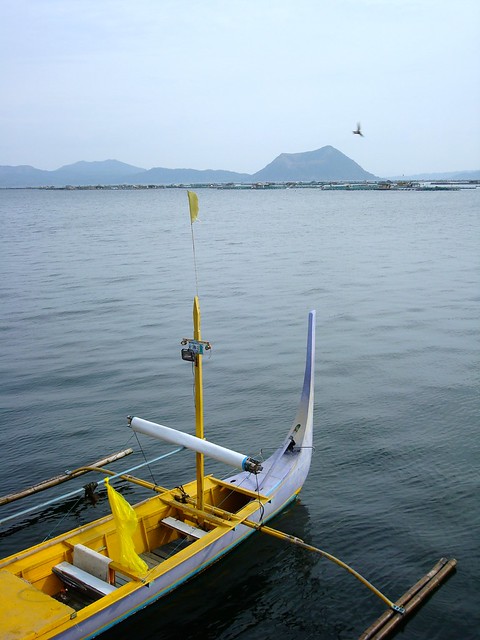
The boat knifed across the lake, sending a steady spray of water over the gunwales and drenching the two passengers huddled near the rear. Gradually, the hazy gray shape I'd seen in the distance became a landmass, and my girlfriend and I would soon reach its shore. Up ahead, at the water's edge, other small, colorful boats waited for the return of their captains like dogs leashed outside a bodega. Beyond the rickety docks, a large sign welcomed new arrivals to Taal Lake and drab single-storey buildings clustered together to form some semblance of a town. Before long, we hoped, we'd be staring down into the beating heart of this volcanic island.

What we didn't know at the time was that Taal is one of the most active volcanoes in the Philippines, and one of the most destructive. In 1911, one hundred years before our visit, a massive eruption killed more than a thousand people and caused extensive damage to surrounding areas in the province of Batangas. We had been drawn here by a geographic oddity: an island on a lake inside an island on a lake. Roughly five kilometers across, Volcano Island is essentially a collection of craters and cones created by over 30 eruptions since 1572, when Father Gaspar de San Augustin wrote "there is a volcano of fire which is wont to spit forth many and very large rocks, which are glowing and destroy the crops of the natives." The island has grown in size by 25% in the centuries since this first account, and to reach it, travelers must cross Taal Lake, a body of water that is itself a caldera, or massive crater.

For 1,500 pesos (about $35) we had been brought this far from the bus stop in Tagaytay. Upon landing, the third passenger on our boat—a native of the island's village—explained that we would need to pay several hundred pesos more to rent scrawny ponies to carry us up the side of the volcano. And that was in addition to the tourist's fee of 50 pesos per person. The young women staffing the welcome center reiterated the supposed terms of entrance to us again, but eventually gave up when we kept insisting on hiking to the top. Although my girlfriend and I knew little about the volcano's history, we were well aware that several paths led to the edge of the smaller of the two crater lakes.

Given that it was already late afternoon, we chose to follow the Daang Kastila Trail, the busiest and most direct route to the center of the island. Ticket stubs in hand, we walked back outside and proceeded up the dusty track to the summit. Moving past a small corral, we followed a train of ponies through the village where dogs, chickens, and children scrambled to get out of the way of oncoming traffic. No signs marked the trail, but it wasn't difficult to find—groups of mounted tourists trotted by regularly, busily texting friends or twisting in their saddles to snap a photo during their bumpy descent. We completed the climb in less than an hour, and fortunately managed to time our return trip with the sunset. 

As eerie as it was to feel heat radiating from beneath my boots and to catch the occasional whiff of sulfur on the breeze, I'm glad to have hiked Daang Kastila, especially when I did. According to the Philippine Institute of Volcanology and Seismology, Taal has recently experienced a series of volcanic earthquakes and the crater lake has become more acidic, even as its temperature has risen by nearly four degrees Fahrenheit. As of last week, Volcano Island was off limits to tourists. Before making your own plans to undertake a volcano hike in the Philippines, be sure to consult the Department of Tourism's website for relevant travel advisories.

Breakfast at Table Mountain

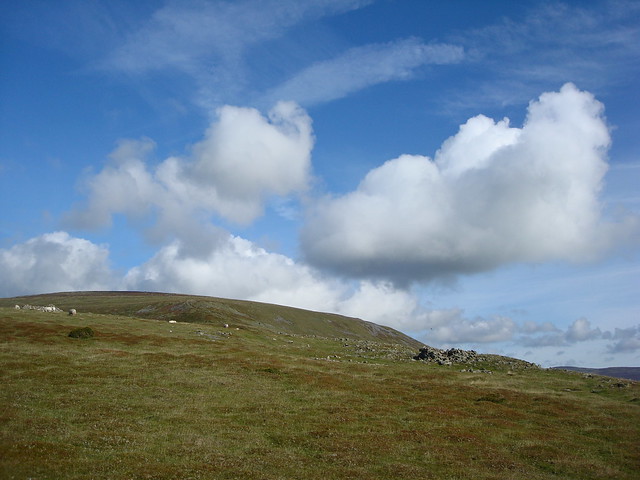
For the first time in five days it had stopped raining. Above me, the Welsh sky was a vivid cerulean blue, set off against the evergreen slopes of the Black Mountains. The air meanwhile, smelled of spruce and sheep droppings. Not necessarily the most welcome aroma first thing in the morning, but I didn’t care. I was content to simply stretch my legs for an hour or two. Balancing on the steps of a stile that led over an old farm wall, I paused to consider the smartest thing I’d done all week: slow down. 
 
Thus far, my impressions of the little country squeezed between England and the Irish Sea had been formed from the driver’s seat of a rented car. Morning after dreary morning I’d picked at plates of fried eggs, fried sausage, fried mushrooms, and yes, fried tomatoes, before setting off under cloudy skies on a peculiar mission. As a beer writer and aspiring brewer, I had designed a trip around a handful of cider makers in southern Wales. The problem was, my busy itinerary made no allowances for leisurely mornings or accidental discoveries. And so, for five straight days I wolfed down hearty if unhealthy meals in order to keep my appointments with apple growers.  


Today however, was different. Encouraged by the muted yellow glow creeping under the curtain of my room at the Bear Inn in Crickhowell, I decided to forgo the complimentary breakfast and postpone my afternoon plans. Instead of loading up on calories, I would splurge on a change of scenery. This was my chance to see Wales before she put on her Wellies. Remembering a map of the area I’d picked up at Reception the night before, I took a look at the town plan and discovered that the Beacons Way, a one-hundred-mile hiking trail across Brecon Beacons National Park ran quite close to the hamlet. Estimating the distance from my hotel to the trailhead, I figured I could make it to the nearest mountain and back before checkout time. Crug Hywel. My tongue stumbled on the words as I sounded out its Celtic syllables. But a symbol on the map intrigued me; during the Iron Age a hill fort stood atop the 1,480-foot summit of Table Mountain. I wondered whether any part of the prehistoric fortification survived. 

Not sure what I’d find but wanting to take advantage of a bright autumn morning, I set out with a bottle of water and a package of shortbread to quiet my stomach. While I climbed the small massif, the sun rose in the sky, its rays warming my skin under the black T-shirt I wore. Underfoot the thick carpet of moss and grass was wet from consecutive days of foul weather. Soon my socks were damp, too. Pushing through the garden of ferns growing on the mountain’s slopes, I decided to eat a few of the plump blackberries I had picked earlier on. Popping a piece of fruit into my mouth, I savored its sweet taste as I walked. Part of me dreaded returning to the car.
 

At the halfway point I stopped to listen. Unseen birds called to each other from either side of the footpath and somewhere a dog barked repeatedly, alerting anyone within earshot of a stranger’s presence. Soon I would rest, but I still had a short distance to go. Steadying myself with the aid of the stile’s wooden post, worn smooth by years of passers-by, I swung my leg over the stone barrier in front of me, and focused my gaze on the flat landform ahead: Table Mountain.  

Half an hour later I reached a fork in the trail and followed the left branch as it curved behind the landmass, leading through another minefield of manure. In spite of the passage of time, Crug Hywel remained well defended. Carefully selecting my last few steps, I wished I had brought another pair of shoes. I couldn’t let footwear derail me this close to my destination though. I scrambled over the eroded rampart, eager to soak up the view and investigate any prehistoric ruins. 

The top of the hill was already occupied. Everywhere I looked sheep milled about in small groups, rested in pairs, or leisurely grazed on the grassy summit. They scattered when I got too close, but otherwise seemed uninterested in bipedal company. I thought of the flock of tourists back at the Bear Inn, staring out at a tiny courtyard from a drab dining room. Sure, I was missing breakfast, but the chance to see the countryside more than made up for any lost calories. I drained the rest of my water bottle and bit into the first of my buttery shortbread cookies. Even though I wasn’t particularly hungry yet, the crumbly snack tasted good—as good as some of the more extravagant meals I’ve enjoyed in my travels. Breakfast on the road might be just as important as it is at home, but not necessarily because of the food we order. What counts, I decided then, is where we choose to eat it.
 

Suddenly I heard noisy breathing behind me. Something moist brushed against the hand that held my now empty water bottle. Turning around, I found myself nose to nose with a hungry ruminant. She took a step backward, hesitantly. Happy to spend some time with a local, I broke off a piece of shortbread and slowly offered it to my new friend. Breakfast at Table Mountain would be for two.

Hiking the Big Apple

Almost exactly a year ago today, I was approached by a publisher to author a book. As a former nonfiction editor, I spent close to a decade helping dozens of writers develop their titles, and occasionally I wondered about my own aptitude for writing something more than a few thousand words in length. Of course, none of the projects I envisioned ended up becoming my first book. Instead, my career as an author will begin on April 1st (no, I'm not kidding) with Best Hikes Near New York City

In the end, it took the better part of six months to research, map, photograph, and transcribe the notes I scribbled on the trail. My blog certainly suffered for a while, and I saw less of my friends. It turns out a ten-mile walk in the woods at the height of summer isn't everyone's idea of a good time. Looking back though, I'm still glad I took the job and I hope I've produced a guide that's useful and unique. If you're going to be in the New York area later this year, watch this space for news about guided trips* to a few of my favorite parks. 

*Please note that any and all hikes I lead will absolutely end at a bar serving pints of local craft beer.

Pairing Beer with the Great Outdoors

On a steamy afternoon in mid-July, waiting out a thundershower at the Peekskill Brewery, I had an idea. Nothing earth-shattering mind you, but I jotted it down in the notebook I was carrying with me at the time. Which means that when the rain finally stopped it didn't drift off with the storm clouds. Perhaps it's the heat in Bangkok, or maybe I'm just pining for a pint of  Peekskill's dry, sessionable Hop Common, but I was reminded of that same idea again today. 

What if craft brewers positioned themselves to be the drink of choice for certain outdoor activities the way Coors, Miller, and Budweiser jockey to be the "official beer" of popular sports like baseball and football? Sure, the customer pool of NFL fans is considerably larger than the potential market for say, windsurfers, but then again, this audience will probably be more receptive to a product that isn't necessarily mainstream. Although last year, Anheuser-Busch made an attempt to court outdoor enthusiasts by choosing professional kayaker Eric Jackson as the face of their new American Ale. 

Which got me thinking—what would the beer sponsorship landscape look like if regional brewers got in on the action? How would they attract new drinkers if they were trying to partner with the Hawaii Surfing Association, or the American Hiking Society? Personally, I could see a scenario along these lines:
  • Long Trail Ale, an easy drinking altbier made for long distance hikers. 
  • For the dedicated cyclist, New Belgium's popular amber ale, Fat Tire.  
  • Kona's Longboard Island Lager, a drink to grab after a day in the surf.
  • Russian River's Damnation—meant for the kayaker who charges into rapids at full speed. 
  • Malty Hibernation Ale from Great Divide, a warming winter beer for serious snowboarders.
  • The dry-hopped Hazed and Confused, brewed for bold rock climbers by Boulder Beer Company. 
  • Lake Erie Monster, a hoppy windsurfing lover's IPA from Great Lakes Brewing Company.
  • Fresh Powder Milk Stout, Lake Placid's ode to skiing the Adirondacks.  
So, what do you think? Is there a perfect craft beer out there for your outdoor activity of choice?

Of Blogs and Books

If you happen to read this blog with any regularity, you may have noticed that my postings have tapered off of late. Well, I decided to explain myself this afternoon, lest I face accusations of laziness and/or abandonment. The actual reason I haven't kept up with my blogging is simple—I'm writing a book. More than that, I've even got a publisher for it.

My hiking guide won't be released until next year, but in the meantime I have a lot of research, writing, and mapping to do. So although I will continue to add links to my stories and interviews as they appear online, I won't have time to update this site as often as I have in the past. While you're waiting for me to get around to blogging again, why not spend some time outdoors yourself? Because whether you live near Seattle, WA or Washington, DC, there are dozens of trails a short car, bus, or train ride away. Go ahead, take a hike.

Rooms With Views

National Park Week—your chance to visit any of the 392 national parks in the United States for free—comes to an end in three short days. Of course, many of the best weeks for exploring America's natural heritage are still ahead. Park attendance around the country typically spikes during the summer months.

During a trip to Massachusetts earlier this month, I spent a couple of nights at the Fort Hill Bed and Breakfast, a historic farmhouse that innkeepers Gordon and Jean Avery have turned into an absurdly comfortable place to stay within the Cape Cod National Seashore. Besides offering unobstructed views of Nauset Marsh and the ocean beyond, Fort Hill is steps from the Red Maple Swamp Trail and a short distance from the Salt Pond Visitor Center. Hiking, biking, swimming, and surfing are just some of the activities available to visitors who stay at this unique B&B.

City vs. Country: Norwegian Edition

I made up my mind soon after arriving in Norway for the second time. The sparsely peopled, rugged nation simply couldn’t be understood—or fully appreciated for that matter—by exclusively observing life in its urban centers. I had to ditch the traffic, skip the shopping, and head for the hills.

Not wanting to go it alone, I began to mentally scroll through the names of people I might persuade to join me. Almost immediately my friend Cathrine came to mind. Which makes sense I guess, given that I was sitting at her kitchen table when the idea hit me. So, breaking the ice with an idle comment about the favorable weather, I then suggested a hiking trip as we took the last bites of our breakfast one morning. “Are you sure you don’t want to see anything else in the city?” she asked skeptically.

A lover of restaurants, nightlife, and motorized transportation, I could see why Cathrine might initially be reluctant to trade these things for the pleasure of shivering next to me in a nylon tent. I let it drop. But at the end of an evening in which her drinking companions regaled us with tales of hunting moose and scaling peaks, she agreed that a woodsy weekend could be a nice change of pace. Especially after several aimless afternoons wandering the streets of Oslo. I have since decided to float all future hair-brained ideas across the seductive tides of a whisky snifter. A coffee mug only brings folly into sharper focus.

Discussing our adventures-to-be on the way home from the bar, we finally settled on Jotunheimen, a national park about 165 miles north of the capital. Home to the two tallest mountains in Northern Europe, it promised forbidding glaciers, punishing climbs, and the outside chance of spotting a frost giant. Fortunately she knew an actor who spent lots of time in higher altitudes and could lend us equipment, a good map, and his skills as an outdoorsman. Things we didn’t have, but might want to bring along—at least in her friend Haakon's opinion anyway.

Piling into a borrowed station wagon on an overcast afternoon, we sped north and westward, intending to set up camp that night and get an early start the next day. It wasn’t long after we awoke, shouldered our cumbersome packs, and set out however, that Cathrine and I came to the realization that we were in way over our heads. As in several feet. The pained look of concern we both wore on our faces became easier to read by the hour.

The day had begun with bright sun, hot food, and a brisk pace, but after a long morning of laboring across a field of car-sized boulders, my fondness for Mother Nature was flagging faster than my stamina. Pausing to catch my breath for the umpteenth time, I listened to Cathrine’s boots crunch against the smaller stones behind me and wondered where all the other hikers were. We hadn’t seen so much as a trace of another person since we broke camp, let alone evidence that anything living had come this way in a long, long time.

Another hour or so passed without much conversation, eventually delivering us to the day’s first real obstacle. As we paused at the edge of a steep snowfield, Haakon nonchalantly announced that the next step would be ascending a twenty-foot rock face without the aid of climbing gear. It dawned on me then that to your average Norwegian actor, the verb “to hike” bears virtually no resemblance to the definition commonly used throughout the rest of the world; i.e. a long walk, especially in the country, for pleasure or exercise.

Where I come from, a typical summer weekend is more likely to involve feats of eating than a test of anyone’s physical fitness. Not so in Norway. Calmly talking us through the handholds, he called down from the relative safety of the ledge above with a very matter-of-fact warning: “If you slip here, you’ll die.” Stupidly, I glanced down. While I stood there contemplating the likelihood of surviving a fall, I could feel the sweat pooling in the crevices of my waterproof clothing. The altitude amplified my exhaustion, and at that instant, my mind understood but one thing about Norway: the view from 7,000 feet can turn you into a city person very quickly.

July, August, and Winter

According to the second episode of The National Parks: America's Best Idea, that's how the first U.S. soldiers charged with protecting Yellowstone described its seasons. Apparently patrolling two million acres of northwestern Wyoming during the coldest months of the year wasn't exactly a plum assignment. But chasing poachers through waist deep snow probably wouldn't delight many people, then or now.

Thanks to Ken Burns and the recession, the parks have seen their popularity grow dramatically in 2009. The AP recently reported that nationwide attendance is actually at a ten-year high and may well set a new record. While I did some camping and hiking in Zion and Bryce Canyon (pictured) last summer, I've only managed to visit a national recreation area and America's first national scenic trail so far this year. Fortunately, I still have three months to explore another corner of our country's remarkable natural landscape. I'm thinking it might be best to go somewhere before the weather gets too frosty however.

Munro Bagging

Rainy days in June remind me of Scotland. Two years ago I had just returned from ten days in Caledonia and as I gaze out my window at the rain falling over Brooklyn right now, I'm reminded of the gray afternoon I spent struggling up Ben Nevis, Britain's highest peak. Nevis also happens to be the tallest of the "Munros" (mountains with elevations topping 3,000 feet), and it's a climb made all the more challenging by the unpredictable nature of the weather at the summit.

To quote one of the safety notes printed on the Harvey map I bought at the tourist office in Fort William: "Always be prepared to turn back in the face of a sudden deterioration of weather." In hindsight I'm happy to have bagged this, the most famous of the Munros, but I can't say I enjoyed the hike all that much. The visibility went from bad to worse and what started as a light drizzle became a steady shower that left me soaked from head to toe. Which might have been tolerable had I not been greeted at the top by wind and snow. Mind you, I did pass a older gentleman in shorts and a running singlet on my way back down, but I'm pretty sure he was insane. In any case, my Scottish folly led to the single best night of sleep I've had in my life.

Of course some people are of the opinion that the real reason to visit Scotland isn't the hill walking, the haggis, the golf, or even the abundance of whisky distilleries. As I argued in an article for Transitions Abroad, it's the beer.

Outdoor Adventures

Summer has arrived—let the vacation planning begin. Given that I have considerably more time than money these days, I'm looking forward to taking at least a couple of camping and hiking trips between now and Labor Day. Lacing up a pair of boots and slinging an internal frame pack on your back isn't everyone's idea of a good time, but if an outdoor adventure happens to be the type of holiday you have in mind, then check out the current issue of TravelMuse Magazine online.

I contributed two features: Sleeping Under the Stars, a guide to planning a camping vacation, as well as Zion National Park Centennial, which covers some of the events and a few of the top attractions you can expect to find on a summer visit to this part of southern Utah.