On Sunday, August 10th at 2:00 pm I'll be speaking about brewery tourism, the Northeast beer scene, and my new book at Shmaltz Brewing Company in Clifton Park, New York. Part of their summer-long Books on Tap series, this ticketed event is open
to the public and includes food samples from The Ruck in nearby Troy. For
more information call (518) 406-5430 or visit the Eventbrite website.
Jeremy Cowan, founder and owner of Shmaltz, will serve as moderator and will also lead tours following our conversation. Although we've crossed paths at various festivals, I haven't had the chance to sit down and talk with him since I led a panel on beer tourism at the New York Travel Festival last April. It will be my first visit to his brewery and I'm looking forward to the event. If you live in the Capital Region, or are planning to be in the area during the second weekend of August, grab a ticket now for a fun beer tasting, discussion, and book signing.
Showing posts with label good eats. Show all posts
Sights and Bites Along Cape Cod's Old King's Highway
Founded in 1969 and recognizable by its wrought iron roadside statue, Titcomb’s Bookshop has evolved from a small antiquarian book dealer into a three-story business with an international following. Stop in to flip through A History of Chowder, grab a game for the kids, or pick up a paperback to bring to Sandy Neck Beach Park just up the road. Lifeguarded from Memorial Day to Labor Day, the beach is accessible with a parking sticker or a day pass ($15-20). Go for a dip, read under your umbrella, or take a short hike on the nature trail to look for signs of deer, reptiles, and wading birds. After a little sun, continue into Barnstable for a visit to Cape Cod Beer, a craft brewery that proudly advertises “a vacation in every pint.” Cape Cod Red, a full-flavored amber ale is their bestseller, but on a hot day, Beach Blonde, a golden-hued easy drinker might be a better choice. Time your stop with a tour and tasting (Monday-Saturday), or grab a growler to go (from $11).
A Tale of Two Poutines
It was the best of ideas, it was the worst of ideas, it was a day of wisdom, it was a day of foolishness. This is how my epic tale of poutine consumption begins. Because how else would you describe a person's decision to eat, in under an hour mind you, two generous servings of a dish consisting of gravy-soaked french fries and squeaky chunks of cheese curd? Which isn't to say I regretted it. I've always tended to agree with Oscar Wilde's philosophy on life: "Everything in moderation, including moderation."
Late last year, Tourism New Brunswick, an office of the provincial government, invited me to spend a few days in Moncton, Saint John, and the capital of Fredericton, also known as the City of Stately Elms. By the time I turned up at Greater Moncton International Airport, warm weather had already gone south for the winter, and the nightly news forecast small amounts of snow for the duration of my visit. So, realizing that I'd be spending more time indoors than out, I prepared to experience New Brunswick with knife and fork in hand. And from my first meal to my last, I wasn't the least bit disappointed.
At Tide & Boar Gastropub, Chef Michel Savoie served a charcuterie board with house-made pate, smoked salmon, boar sausage, smoked beef brisket, Bay of Fundy scallops, and my first taste of dulse, a red seaweed common to the cuisine of the Maritimes. Plus, after sharing a bottle of Unibroue's Grande Reserve 17 with Chef Savoie and owner Chad Steeves, I can confidently say that this Belgian-style dark ale has the ability to make a memorable meal even better. Next, Chef Jesse Vergen at Saint John Ale House dazzled my senses with a tasting menu that began with enormous oysters on the half shell and finished with a fried pumpkin pie pastry dusted with cinnamon sugar. Moosehead Cask Ale was my beer of choice that evening.
Late last year, Tourism New Brunswick, an office of the provincial government, invited me to spend a few days in Moncton, Saint John, and the capital of Fredericton, also known as the City of Stately Elms. By the time I turned up at Greater Moncton International Airport, warm weather had already gone south for the winter, and the nightly news forecast small amounts of snow for the duration of my visit. So, realizing that I'd be spending more time indoors than out, I prepared to experience New Brunswick with knife and fork in hand. And from my first meal to my last, I wasn't the least bit disappointed.
At Tide & Boar Gastropub, Chef Michel Savoie served a charcuterie board with house-made pate, smoked salmon, boar sausage, smoked beef brisket, Bay of Fundy scallops, and my first taste of dulse, a red seaweed common to the cuisine of the Maritimes. Plus, after sharing a bottle of Unibroue's Grande Reserve 17 with Chef Savoie and owner Chad Steeves, I can confidently say that this Belgian-style dark ale has the ability to make a memorable meal even better. Next, Chef Jesse Vergen at Saint John Ale House dazzled my senses with a tasting menu that began with enormous oysters on the half shell and finished with a fried pumpkin pie pastry dusted with cinnamon sugar. Moosehead Cask Ale was my beer of choice that evening.
Sticky Rice Ingenuity in Laos
My friends in Thailand told me I wouldn't like the food in Laos. Thai food was better they said; Laotian dishes were bland and couldn't compare to the flavorful, fiery cuisine of Isaan, just over the Mekong River. Not knowing any better, I trusted them: these same people had led me to some of my favorite meals ever. And so, as I boarded the overnight train from Bangkok's Hua Lamphong station, I lowered my expectations. Maybe my first trip to the Lao People's Democratic Republic would be a complete bust.Fortunately, my friends were wrong. Very wrong, in fact. Eating my way through Vientiane while on assignment for Travel + Leisure Southeast Asia, I discovered charming restaurants serving intriguing national dishes (Lao Kitchen), vendors hawking delicious street food (I'm still a sucker for warm, sugary roti), and, to my surprise, a Belgian beer bar, too (Chokdee Cafe). My favorite find however, might have been an unassuming little family-run business in Phiawat Village called Kung's Cafe.
I arrived around 1pm, just as the lunchtime regulars were returning to work. Choosing a table close to an oscillating fan, I ordered ginger chicken with rice, iced coffee with coconut milk to combat the heat, and to satisfy my curiosity, the mango sticky rice pancake. Dense, chewy, and expertly browned, the large doughy envelope arrived curled around a juicy chunk of fresh tropical fruit and drizzled with sweet Laos honey. Big enough to share and good enough for seconds, Kung's sticky rice pancake was the highlight of my last day in Vientiane. I raved about it to my Thai friends as soon as I got back to Bangkok.
Cider Culture Reborn in Frankfurt
To most people, Frankfurt is known as a center of business and banking. Rarely is this city on the Main River thought of as a place with a distinctive beer culture. Yet Germany’s “Mainhattan” as it is referred to on occasion, doesn’t lack for a culinary history of its own. Nor does it try to rival the nation’s great capitals of brewing: Bamberg, Munich, and Köln. Instead, the Frankfurt region simply devotes itself to cider, a beverage its residents call apfelwein, äbbelwoi, or stöffche in the local dialect.
Mentioned in the eighth century Capitulare de Villis and known to be a popular drink since the time of Charlemagne, it wasn’t until the eighteenth century that the first apple wine taverns began to appear, advertising their blends of this low-alcohol beverage by displaying a green wreath outside. Entrepreneurs like Wilheim Höhl and Philipp Possmann eventually capitalized on the popularity of apfelwein, expanded to meet a growing demand, and are now two of the biggest producers in the country. In the last decade though, a number of smaller artisanal cidermakers have emerged, aspiring to reconnect with the region’s agricultural heritage by working with native apple varieties such as Bohnapfel, Anhalter, and Winterrambour.
“Cider is culture,” Andreas Schneider told me during a visit last summer. “We are now growing more than 70 varieties of apples and more than 25 varieties of pears.” About eight miles north of Frankfurt—close enough to still see the skyline—Schneider concentrates on nurturing the orchard his parents planted in Nieder-Erlenbach in 1965. Today he’s the only cider maker in the immediate area that still grows, presses, and bottles his own fruits. Granted, his dry, single variety ciders lack the malted barley and Noble hops used in the beers brewed throughout Germany, but in other ways his cold fermented, small batch creations aren’t so different from the hand crafted ales and lagers found in German brewpubs and beer gardens.
Touring the Rhine-Main Region's Oldest Private Brewery
Founded in 1744, Glaabsbräu grew steadily over time, reaching the point of producing more than one million barrels a year by 1970. And they remained independent into the 80s and 90s, as other nationally-known brands fell victim to mergers and buy-outs. More recently, the company has scaled back, currently kegging and bottling closer to 33,000 barrels annually. Even so, their footprint in this little town of half-timbered houses is considerable, seeming to occupy nearly as much real estate as the former Benedictine monastery on the banks of the Main River.
"The focus now is on quality," Simon explained in thickly-accented English. "And time for maturation is longer these days."
As he led the way back downstairs to the open fermentation cellar and then into the lagering cellar below, he told me that their Pilsener (4.9% ABV) is the top seller overall while Glaabsbräu Radler (2.6% ABV) is "popular with ladies." He also filled me in on Vitamalz, an alcohol-free malt beverage developed in 1930 that Simon described as healthier than Coke. I knew something about the beverage, having washed down boiled sheep's head with a can of Egils Malt in Iceland, so I didn't press him for more information. Besides, I was mostly there for the beer.
A Dispatch From Finland's Capital of Cool
Someday I'll travel to Scandinavia without a winter coat. I can't wait to leave my hat and gloves at home either. And who knows? Maybe I'll even throw a pair of shorts in my luggage, just in case. Lately though, I keep choosing the coldest months to visit Europe's northernmost countries.
First it was Iceland in February. I managed to keep warm with Brennivín and lots of coffee, but when the wind picked up off Faxaflói during the abbreviated afternoons, there was no mistaking the season. And then this year, during the second week of March, I flew to Finland to research a story on Helsinki, the 2012 World Design Capital. And while the ice in the harbor was beginning to show some signs of melting (dashing my hopes of walking to the Suomenlinna Sea Fortress), I always remembered to bundle up before venturing from the cozy confines of my hotel room.
The piece I wrote on Helsinki's stylish ways appears in the August/September issue of DestinAsian magazine. To see more of Finland, its chilly landscapes, and the delicious meals that distracted me from the temperature outside, check out my photo set on Flickr. As far as my next trip to Scandinavia goes, I'm not exactly sure when I'll be back. Yet a quick look at my calendar tells me that I don't seem to have much planned for January 2013.
First it was Iceland in February. I managed to keep warm with Brennivín and lots of coffee, but when the wind picked up off Faxaflói during the abbreviated afternoons, there was no mistaking the season. And then this year, during the second week of March, I flew to Finland to research a story on Helsinki, the 2012 World Design Capital. And while the ice in the harbor was beginning to show some signs of melting (dashing my hopes of walking to the Suomenlinna Sea Fortress), I always remembered to bundle up before venturing from the cozy confines of my hotel room.
The piece I wrote on Helsinki's stylish ways appears in the August/September issue of DestinAsian magazine. To see more of Finland, its chilly landscapes, and the delicious meals that distracted me from the temperature outside, check out my photo set on Flickr. As far as my next trip to Scandinavia goes, I'm not exactly sure when I'll be back. Yet a quick look at my calendar tells me that I don't seem to have much planned for January 2013.
Drinking the Boot
Two important ingredients have helped Italian brewers bring things to a rolling boil: first, a willingness to experiment that can arguably be traced back to the US, and secondly, a generous dose of their own renowned food culture. Uninhibited by a deep-rooted tradition of brewing and inspired by local ingredients, Italy has enthusiastically pushed the envelope, increasing the net variety of European beers by leaps and bounds in the process. From the foothills of the Alps in the North to the Strait of Messina in the South, innovators and nonconformists are using beans, berries, tobacco, flowers, vegetables, and herbs to produce some truly original creations.
Chestnut beers, for example, can be found at many a microbrewery and gastropub; more than 30 versions—including Palanfrina, an intense tipple made with chestnut flowers, honey, and jam, as well as the meaty nut itself—now exist nationwide. It shouldn’t surprise then, to learn that Birrificio Troll, the rustic, unassuming brewpub where this dark ale originates, is just as singularly Italian as the beers that emerge from their kettles. Local herbs and spices from the surrounding mountain slopes typically appear in the beers, while the smoked trout, pork tenderloin, and other dishes from the kitchen usually marinate in beer before winding up on the grill. Travel to the source to try Daü, a peppery saison, or the minty Christmas ale Stella di Natale, unless you'd rather track a bottle at a shop like Johnny’s Off License in Rome.
To refer to an Italian craft brew as a farmhouse beer is often apt in more than one way. Birrificio L'Olmaia, for instance, began in Siena on a farm distinguished by three old elm trees in its courtyard (olmo is elm in Italian). Moreno Ercolani has since moved his operation to Montepulciano, but continues to use native ingredients, like the hibiscus flowers that give Karkadè its rosy hue. And then there’s Loverbeer. Started by Valter Loverier in 2010, this inventive brewery manages to bridge the worlds of beer and wine, using wine barrels, wine musts, local grapes, and other fruits to produce unusual beers that cause bloggers like Alessio Leone of Hoppy Hour to wax rhapsodic. BeerBera relies on Barbera wine grapes for its spontaneous fermentation, while Damaschine plums lend a prune-like sourness to BeerBrugna.
Further south, Birra Karma in Campania uses local Sorrento lemons in their fittingly-named Lemon Ale, while Centesimale is brewed with Pallagrello wine must and Annurca apples, an ancient variety of the tree fruit which gives this distinctive beverage a quality best described as zesty and juicy. Meanwhile, Birrificio Almond 22, another newcomer at the vanguard of the country’s craft beer movement, is regarded by many as one the best in central Italy. Andrea Turco, who runs the popular website Cronache di Birra, goes so far as to suggests a pilgrimage to Abruzzo for their Pink IPA, made with peppercorns of the same color. Find it (along with nearly every other style of Almond 22) at La Taverna Di Paola, a comfortable, wood-paneled establishment in Brescia between Milan and Verona.
And then of course there’s Birra del Borgo, the company founded by Leonardo di Vicenzo that joined forces with Birra Baladin and Dogfish Head to open Manhattan’s own birreria, a rooftop laboratory that showcases Italian edibles and seasonings in draft-only releases. As their popularity has grown, some of di Vicenzo’s beers have found their way to the United States, including Castagnale, a smokier take on chestnut ale, and Genziana, a spiced amber ale that relies on gentian roots for its unique character. But at the elegant restaurant Taberna in Palestrina outside of Rome, it’s possible to try cuisine-inspired creations like Perle ai Porci (Pearls for Pigs), an oyster stout made with fresh oysters and local clams—shells and all.
For a wider sampling of the country’s best however, Open Baladin, serving faithful customers since September 2009, is a contemporary temple to Roman beer with no less than 40 Italian taps. Its modern main space gets loud and crowded, so take your pint to one of the more intimate rooms upstairs to taste in peace. Don’t forget a menu though, the homemade potato chips with licorice powder probably shouldn't be missed.
New York's Beer-Bathed Cheeses
I'm certainly not the first person to make this observation, so I'll just rephrase what's already been said: Beer and cheese, long kept apart by the somewhat defensive motives of wine, have found each other again. And they couldn't be happier. As numerous craft brewers have argued, the two complement each other harmoniously, avoiding the clashes in flavor prompted by some wine pairings. To quote Greg Koch, CEO and co-founder of Stone Brewing Co, "Sorry pseudo-wine experts; the jig is up. Beer is, and always will be, the supreme cheese pairing beverage."
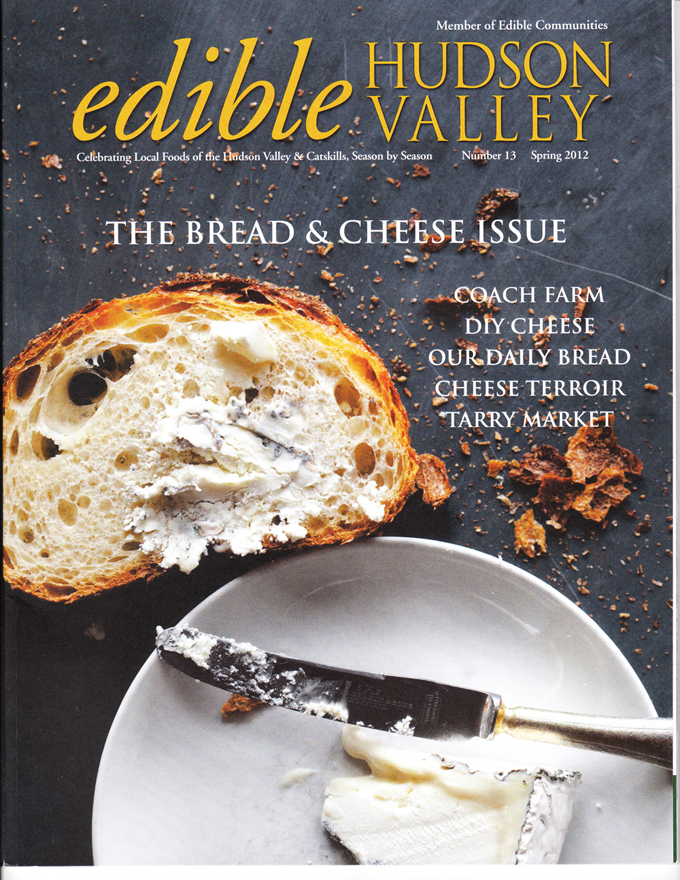
But beer and cheese work well together in other ways, too, as I wrote in the spring issue of Edible Hudson Valley. Beginning centuries ago in Europe, brewers and cheesemakers bathed wheels of cheese in ale solutions to extend the shelf life of their products. With the advent of artificial refrigeration, longevity became less of a concern, and larger dairies turned to mass production. Now that more consumers have embraced the local food movement though, washed rind cheeses are reappearing as small farms like Dutchess County's Sprout Creek seek collaborations with receptive beer companies:
"Today, these practices of washing the rind are more typically employed by creameries looking to contribute additional flavor to the products they distribute to wholesalers and local cheesemongers. In Jefferson, Harpersfield Dairy makes a semi-hard cow’s milk cheese washed in local Ommegang Abbey Ale that has broadened the perception of what cheese could be for many. Further west, in Mecklenburg, Bronson Hill Cheesery makes an aged raw cow’s milk cheese with Ithaca Beer Company’s Gorges Smoked Porter. And in Poughkeepsie, Sprout Creek Farm recently experimented with various brews from Brooklyn’s Sixpoint to create a new seasonal cheese exclusively for sale at Whole Foods Markets in the Northeast."
Summer Hiking: 5 Reasons to Go Now
Another summer is almost upon us. And as warmer temperatures and longer days begin to knock on doors across the country, people from Seattle to Sarasota will once again plan weekends and vacations around national parks and outdoor activities. Of the numerous options available, hiking remains popular from year to year. By their own estimate, the American Hiking Society, an advocacy organization that focuses on trail building, trail funding, and legislative issues that affect hiking, reports that roughly 330,000 people participated in one of 2,063 National Trails Day® events in 2011. This year's celebration (or trailgating party if you prefer) takes place on Saturday, June 2nd. If you haven't signed up for an event near you, it's not too late. Plus, here are a few other good reasons to grab your trekking poles, fill up your hydration pack, and lace up your boots this summer:
- It Makes You Smarter. According to a recent article in Backpacker magazine, "lab studies prove that even 30 minutes of nature make a difference in cognitive test scores; [Dr. David] Strayer’s hunch is that those benefits accumulate. And that makes backpackers uniquely positioned to reap the rewards." In fact, the results of a University of Michigan study showed that participants boosted their cognitive test scores by 20 percent after spending 50 minutes walking through an arboretum.
- You'll Probably Learn Something. Expanding on the point above, it's worth noting that spending time in the woods or the mountains gives you the chance to hone skills that you might not use as much in your day job. Like compass reading. Or flora and fauna identification. For instance, when made into a tisane or tea, a handful of needles from the Eastern white pine act as a great source of Vitamins A and C and serve as an effective decongestant.
- Exercise Is Good For You. This won't be surprising, but exercise burns more calories than sitting still. It's often more fun, too. Depending on your weight, hiking for an hour burns 430-650 calories, while a backpacking can expend as much as 760 calories in the same amount of time. Bonus: more exercise equals more chocolate (see below).
- You Could Make a Friend. Hiking is often safer—and usually more fun—in small groups. Fortunately, there are plenty of clubs and companies that organize outings lasting anywhere from a single day to more than a week. Determine your fitness level, find a blank space on your social calendar, and plan your trip. On the East Coast, local groups like the New York-New Jersey Trail Conference offer ways to meet other hikers, while out west, the Pacific Crest Trail Association is a good resource.
- Packing Chocolate Is Encouraged. I don't have any statistics to back this up, but I'm willing to bet nine out of ten hikers are chocolate lovers. Or at least fans of the occasional chocolate beer. When I'm leading groups with Discover Outdoors, I make sure I always have a few Dagoba tasting squares (preferably Xocolatl) in my pack. You know, for emergencies.
The Hiker's Pantry: Beer Brittle
Last week I discovered my new favorite trail snack. It's probably not the healthiest thing you can toss in your backpack, but considering it was an impulse purchase I picked up after a tour of Cape Cod Beer's Hyannis brewery, I don't think I chose too poorly. Bonus: this particular confection comes in both sweet and spicy varieties. Sierra Nevada Brewing Company, for example, adds jalapeño to their version.
The beer brittle I bought was made by Cabot's Candy of Provincetown, Massachusetts, and included a pinch of cayenne pepper along with peanuts, sugar, corn syrup, butter, Cape Cod beer, milk, baking soda, salt, vanilla, and cinnamon. In terms of nutrition, my eight ounce package was 210 calories including 11 grams of fat (2 g saturated), 2 grams of fiber, 17 grams of sugar, and 4 grams of protein per serving. If you're the sort of person who knows how to use a kitchen, you can also make your own—the Homebrew Chef has a simple recipe. Just remember, if you do decide to carry beer brittle on your next day hike, the Leave No Trace principles remind us to pack the empty bag back out with our other trash. Oh, and no matter how excited you might be to try this or any other trail treat, don't forget to bring a map.
The Winter Blues
We're one month into the new year already and so far the Northeast hasn't felt particularly wintry. Lately I've even found myself half wishing to be somewhere colder, or at least a little snowier. I didn't have this problem two years ago when I went to Iceland to research a story for Wend magazine. It was appropriately frigid during my time in the capital city. But before returning to Keflavik International Airport on my last day there, I made a short detour to a much warmer place that's practically become an obligatory stop for every visitor to Reykjavik: The Blue Lagoon.
Although the word lagoon is usually used in a tropical context, I suppose this popular geothermal spa, being a relatively shallow pool of water, technically isn't misnamed. What struck me about this quintessentially Icelandic attraction though, as much as the heat and the sense of calm that pervaded the whole complex, was the color. Even on an overcast day in February, the water seemed to glow, appearing a bright cyan or aqua against the drab surrounding landscape. Walking around after a dip in the famously therapeutic geothermal seawater, I snapped a handful of photographs that take me back to that day every time I look at them. Here's the set on Flickr.
The Blue Lagoon's 30 Euro entrance fee (about $39.40) isn't exactly inexpensive—especially when you add on another €5 for towel rental—but cheap holidays to Iceland do exist. Plan to travel in February or March and you'll get better fares and packages on Icelandair as well as lower hotel rates in Reykjavik. Sure, it'll be cold and dark, but spend enough time at a neighborhood bar, or better yet, a burger joint, and you're bound to meet a friendly Icelander or two.
Road Tripping From Bangkok
Chicken and Beer in Bacolod City
The place was called Chicken House. My host, Lyn Balboa, had taken me there to try chicken inasal, a dish many Negrense, or Filipinos from the island of Negros, consider a delicacy. This is because it's the best barbecued poultry you will ever taste. Succulent, immensely flavorful (thanks to a lengthy marinade), and served with vinegar, it's a must try for anyone traveling to Bacolod City, the capital of Negros. Unsurprisingly, chicken inasal also goes well with beer.
Most of the suds you're likely to drink in the Philippines are made by the same giant brewery: San Miguel. By their own estimate they control about 95 percent of the domestic beer market. What I didn't know before visiting the City of Smiles however, is that for the past three years, one entrepreneur has quietly been producing his own beers and distributing them locally. As luck would have it, Lyn knew the brewer and invited him to join us at the Chicken House.
"I had this dream ever since college," Felix Hagad told me as he sat down at our table, "it's been a slow process and I had to make my friends taste bad beer in the beginning. I couldn't get it to bubble enough."
Fortunately for his friends—and globetrotting beer travelers like me— those days are well behind him. I didn't try the Bogsbrew Classic (somewhat confusingly offered as an IPA, a Canadian blonde ale, a European lager, and a Mexican-style cerveza), but I liked his Primo all-grain beer, a cloudy, light bodied drink that weighs in at about 4.5 % ABV. I detected a trace of hops in the nose, and it ended with a sweet finish, probably owing to the wild bee honey and organic muscovado sugar that Felix adds to his wort. Overall, Primo is mellow and sessionable, although it could benefit from a bit more carbonation.
Nevertheless, the popularity of his craft brews has only increased since he realized his dream, even attracting the attention of a Canadian beer blogger. "Business is picking up," Felix wrote in a recent email. "I now have to brew an extra batch of Primo in between my normal cycle of brewing malt extract beer." With a furniture manufacturing company to run in addition to Bogs, it must be challenging to keep up with the growing demand for his Filipino beers. And yet something tells me I'm not the only inasal devotee who wants to see his labor of love succeed.
A Layover for Beer Lovers
My first visit to Berlin lasted all of 15 hours. Looking for flights from Bangkok to New York a few weeks earlier, I had found a decent fare on airberlin that involved a layover at Tegel Airport (TXL). Initially I was reluctant to purchase the one-way ticket, thinking a mere overnight stay in the German capital wouldn't necessarily be the best introduction to a city I hadn't been to before. But then an Internet search led me to Brauhaus in Spandau, a hotel and brewpub roughly 20 minutes from the airport by taxi.
For dinner I ordered currywurst (as if skipping Berlin's culinary emblem was ever an option) and a Havelbräu, named for the river that flows nearby. Dirty blond with a bready aroma and a creamy mouthfeel, this kellerbier or unfiltered lager is relatively strong (5.2% ABV) but low in bitterness with a somewhat sweet finish. It went well with the platter of fries that accompanied my sausage and made for a refreshing drink on an early spring evening. Available year round, Havelbräu might not be reason enough to plan a Tegel layover before Berlin's new Brandenburg Airport opens next year, but it isn't a bad way to break up a long trip either.
Southeast Asia's Little Italy
Last Sunday was a strange day. Following an afternoon spent puttering around the oldest national park in Thailand, I ended up eating dinner at one of the country's newest attractions: Palio Khao Yai, a "walking street shopping center in Italian-style village mall." Got that? A personal recommendation had led my friends and I to hunt for a burger joint south of the town of Pak Chong, and after mistakenly driving past a vaguely European complex, we found ourselves paying 20 baht each to enter this warren of terracotta-colored buildings. Call it the Little Italy of Southeast Asia.
As out of place as it seemed architecturally, what struck me about Palio was its obvious allure to amateur Thai photographers. While we were there, dozens of people streamed through the gate, usually in couples, and always with cameras. I smirked as they posed in front of the fountain in the piazza, and shook my head in disbelief as they led tiny dogs in sweaters down faux-cobblestone streets. Apparently the ability to shoot portraits against a "Tuscan" backdrop trumped the appeal of creatively-named cafes like Fries Me To The Moon.
Thailand's Ice Cream Innovation
With less than a week remaining in February, the temperatures have begun to creep up in Bangkok. This is of course, a sure sign of one thing and one thing only—the approach of the Hot Season. Gone are the tolerable eighty-degree days when a welcome breeze might stir the bougainvillea on a quiet soi in Ari. Slowly but unquestionably they're being replaced by oppressive humidity and baking heat. Needless to say, this isn't good news for anyone, least of all those of us who break a sweat just thinking about the long walk to the SkyTrain.
Fortunately, like the people themselves, Thai street food has adapted to the climatic extremes of Southeast Asia. And so, where a lemonade or a granita might do in another city, there's only one warm weather treat that can offer adequate relief for Bangkok's steamy afternoons: Coconut Ice Cream. Served in a cake cone or (preferably) on a hot dog roll, this inexpensive, frozen confection is typically cold enough to make your teeth ache with their first frigid bite. For the full experience, order it with roasted peanuts, sticky rice, sweetened gelatin, candied sweet potato, and to top it all off, a generous pour of condensed milk.
The Morning After: Manhattan
Sweet or savory, affordable or extravagant, I'm a big fan of brunch. For that reason, I was more than happy to accept another assignment from DRAFT magazine. Writing for their Morning After department, I set out to find a handful of restaurants in Manhattan with excellent brunch offerings. Choosing them was far from easy, but in the end I narrowed it down to three places.
One of them, Resto on East 29th Street, also happens to have an impressive list of beers that includes (among many other things) pale ales, dubbels, and saisons from Luxembourg, Belgium, and Cooperstown, New York. If you're a beer drinker and plan to be in the city for more than 24 hours, do yourself a favor and pay them a visit. You'll want to take your time with their menu. To find out what my other picks were, track down a copy of the magazine, or sign up for a free preview of the digital edition.
An Icelandic Feast
Last February I spent six days in Iceland. Unlike most visitors to Europe's westernmost country, I had chosen to travel to Reykjavik during the low season. In other words, the coldest, darkest month of the year. My seemingly strange timing wasn't an accident though—I had no illusions of galloping across a winter landscape to soak in a series of hot springs.
Instead, I would spend my Icelandic days and nights indoors. Eating. Here and there I had opportunities to taste-test one of my favorite foods. But the real reason for making the trip was to try putrefied shark, an infamous delicacy that has turned the stomach of Mr. No Reservations himself. Kaestur hákarl, as the dish is known locally, didn't exactly win me over either, but it taught me something about the mid-winter feast of Thorrablót. For more on my culinary saga, pick up the current issue of Wend magazine or read it online.
Serving Up Change, Peacefully
Of course I found my favorite place in Siem Reap during my last few hours there. After three full days of touring Angkor Wat, clambering over ancient piles of brick and sandstone, my friends and I needed to refuel before making the eight hour land journey back to Bangkok. So, avoiding the Old Market's tourist-clogged streets and alleys, we crossed over to the eastern side of the Siem Reap River and followed Wat Bo Road to Peace Cafe.
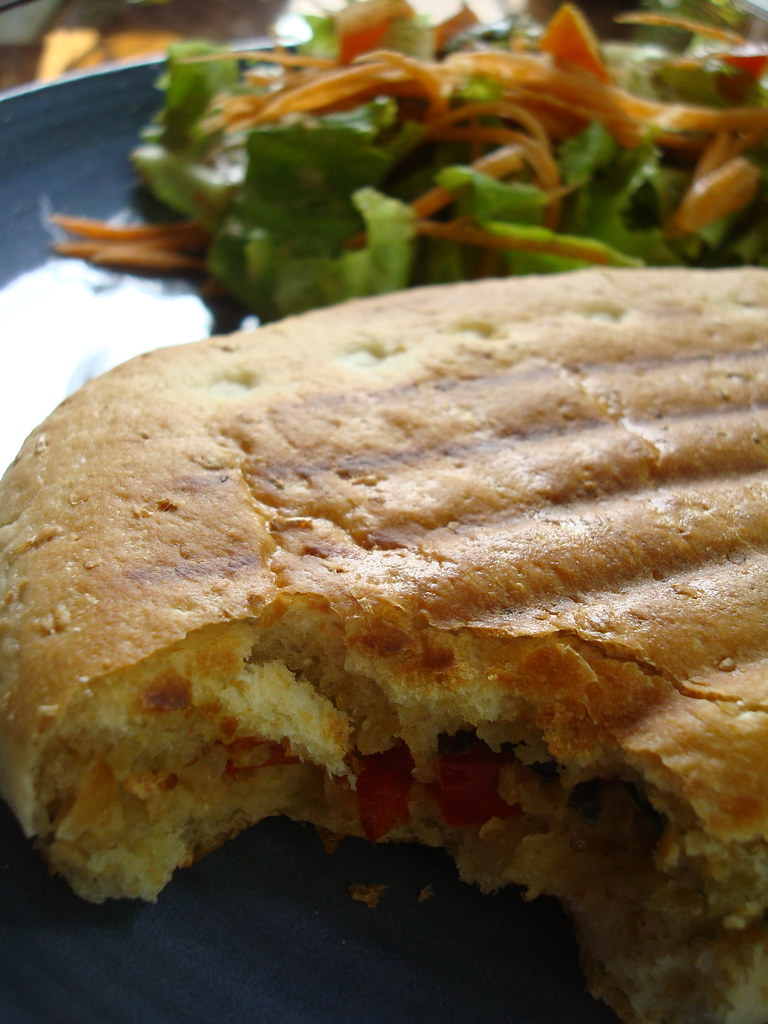
Seconds after stepping into the shaded garden we knew we'd made the right choice. The vegetarian menu was excellent (I ordered an extra thick peanut butter shake and a panini with roasted red pepper and hummus) as well as affordable. Nothing was more than $4 and most dishes were in the $2 range. And while I decided against alcohol with lunch, I couldn't help noticing that they served beer, too. What impressed us most of all though, was their dedication to education and sustainable social enterprise.
Subscribe to:
Posts (Atom)