Showing posts with label Europe. Show all posts

Cider Culture Reborn in Frankfurt


To most people, Frankfurt is known as a center of business and banking. Rarely is this city on the Main River thought of as a place with a distinctive beer culture. Yet Germany’s “Mainhattan” as it is referred to on occasion, doesn’t lack for a culinary history of its own. Nor does it try to rival the nation’s great capitals of brewing: Bamberg, Munich, and Köln. Instead, the Frankfurt region simply devotes itself to cider, a beverage its residents call apfelwein, äbbelwoi, or stöffche in the local dialect.

Mentioned in the eighth century Capitulare de Villis and known to be a popular drink since the time of Charlemagne, it wasn’t until the eighteenth century that the first apple wine taverns began to appear, advertising their blends of this low-alcohol beverage by displaying a green wreath outside. Entrepreneurs like Wilheim Höhl and Philipp Possmann eventually capitalized on the popularity of apfelwein, expanded to meet a growing demand, and are now two of the biggest producers in the country. In the last decade though, a number of smaller artisanal cidermakers have emerged, aspiring to reconnect with the region’s agricultural heritage by working with native apple varieties such as Bohnapfel, Anhalter, and Winterrambour.

“Cider is culture,” Andreas Schneider told me during a visit last summer. “We are now growing more than 70 varieties of apples and more than 25 varieties of pears.” About eight miles north of Frankfurt—close enough to still see the skyline—Schneider concentrates on nurturing the orchard his parents planted in Nieder-Erlenbach in 1965. Today he’s the only cider maker in the immediate area that still grows, presses, and bottles his own fruits. Granted, his dry, single variety ciders lack the malted barley and Noble hops used in the beers brewed throughout Germany, but in other ways his cold fermented, small batch creations aren’t so different from the hand crafted ales and lagers found in German brewpubs and beer gardens.

Touring the Rhine-Main Region's Oldest Private Brewery

"Next week, it smells like beer." These were the words brewmaster Stefan Simon uttered as he led me up a wooden staircase to the malt house at Privatbrauerei Glaab. It wasn't a particularly surprising statement. I've heard similar expressions from brewers before, just not in Seligenstadt, Germany. To be honest, I'd scarcely heard of the town itself until I arrived on a sunny afternoon in late August. But after several days of touring the state of Hesse on a trip sponsored by the Frankfurt Rhine-Main Region, I was excited to be anyplace where I could taste beer and talk shop. Fortunately, Mr. Simon had graciously agreed to show me around the historic brewery. 

Founded in 1744, Glaabsbräu grew steadily over time, reaching the point of producing more than one million barrels a year by 1970. And they remained independent into the 80s and 90s, as other nationally-known brands fell victim to mergers and buy-outs. More recently, the company has scaled back, currently kegging and bottling closer to 33,000 barrels annually. Even so, their footprint in this little town of half-timbered houses is considerable, seeming to occupy nearly as much real estate as the former Benedictine monastery on the banks of the Main River.

"The focus now is on quality," Simon explained in thickly-accented English. "And time for maturation is longer these days."

As he led the way back downstairs to the open fermentation cellar and then into the lagering cellar below, he told me that their Pilsener (4.9% ABV) is the top seller overall while Glaabsbräu Radler (2.6% ABV) is "popular with ladies." He also filled me in on Vitamalz, an alcohol-free malt beverage developed in 1930 that Simon described as healthier than Coke. I knew something about the beverage, having washed down boiled sheep's head with a can of Egils Malt in Iceland, so I didn't press him for more information. Besides, I was mostly there for the beer.

Around the Baltic for Rails to Trails

Every once in a while an entire autumn afternoon will slip by as I gaze out the window, daydreaming about Scandinavia. For years I've told myself that one more trip will cure me of the urge to see another corner of this region, yet even before I get back home again I'm thinking about my next visit. But until I stumble into a pile of money, I'm going to have to content myself with infrequent tours and meals at bus terminals instead of swank restaurants like Rene Redzepi's Noma. Lucky for me cafeteria dining can also make for a good story.

It's been eight months since my last visit, a trip that included several days in Helsinki where the Finns were close to finishing their Baana cycleway. In the winter 2013 issue of Rails to Trails, I write about this new rail trail as well as longer routes in Denmark, Estonia, and Norway. The ice and snow on the ground kept me from biking around Finland's capital city, but hopefully I'll be able to do some two-wheeled exploring when I eventually make it back. Then again, a blogger by the name of Hendrik has me thinking that I might want to do some hiking too.

Surf, Sand, and Beer: Island Hopping for Vagabondish

For me, one of the perks of travel is the chance to try ales and lagers that aren't available at my local bar or bottle shop. Every beer isn't always remarkable of course, but once in a while I return home still thinking about a memorable pint. Earlier this month, Vagabondish published a feature I wrote entitled Island Hopping for the Beer Lover. In it, I recommend eight places to go in Asia, Europe, the United States, and Australia. For more of my travel advice served with a general splash of beer, read this post from last year.

A Dispatch From Finland's Capital of Cool

Someday I'll travel to Scandinavia without a winter coat. I can't wait to leave my hat and gloves at home either. And who knows? Maybe I'll even throw a pair of shorts in my luggage, just in case. Lately though, I keep choosing the coldest months to visit Europe's northernmost countries. 

First it was Iceland in February. I managed to keep warm with Brennivín and lots of coffee, but when the wind picked up off Faxaflói during the abbreviated afternoons, there was no mistaking the season. And then this year, during the second week of March, I flew to Finland to research a story on Helsinki, the 2012 World Design Capital. And while the ice in the harbor was beginning to show some signs of melting (dashing my hopes of walking to the Suomenlinna Sea Fortress), I always remembered to bundle up before venturing from the cozy confines of my hotel room.

The piece I wrote on Helsinki's stylish ways appears in the August/September issue of DestinAsian magazine. To see more of Finland, its chilly landscapes, and the delicious meals that distracted me from the temperature outside, check out my photo set on Flickr. As far as my next trip to Scandinavia goes, I'm not exactly sure when I'll be back. Yet a quick look at my calendar tells me that I don't seem to have much planned for January 2013.

Drinking the Boot

Bacchus. Slow Food. Tuscany. Parmesan. Who doesn’t think of grapes and gourmet grub when they hear the word Italy? Well, for starters, quite a few Italians. As of this year, the country had well over 300 craft breweries scattered across its territory and more than a few people in the industry are confident that beer’s popularity will only continue to grow. 

Two important ingredients have helped Italian brewers bring things to a rolling boil: first, a willingness to experiment that can arguably be traced back to the US, and secondly, a generous dose of their own renowned food culture. Uninhibited by a deep-rooted tradition of brewing and inspired by local ingredients, Italy has enthusiastically pushed the envelope, increasing the net variety of European beers by leaps and bounds in the process. From the foothills of the Alps in the North to the Strait of Messina in the South, innovators and nonconformists are using beans, berries, tobacco, flowers, vegetables, and herbs to produce some truly original creations.

Chestnut beers, for example, can be found at many a microbrewery and gastropub; more than 30 versions—including Palanfrina, an intense tipple made with chestnut flowers, honey, and jam, as well as the meaty nut itself—now exist nationwide. It shouldn’t surprise then, to learn that Birrificio Troll, the rustic, unassuming brewpub where this dark ale originates, is just as singularly Italian as the beers that emerge from their kettles. Local herbs and spices from the surrounding mountain slopes typically appear in the beers, while the smoked trout, pork tenderloin, and other dishes from the kitchen usually marinate in beer before winding up on the grill. Travel to the source to try Daü, a peppery saison, or the minty Christmas ale Stella di Natale, unless you'd rather track a bottle at a shop like Johnny’s Off License in Rome.

To refer to an Italian craft brew as a farmhouse beer is often apt in more than one way. Birrificio L'Olmaia, for instance, began in Siena on a farm distinguished by three old elm trees in its courtyard (olmo is elm in Italian). Moreno Ercolani has since moved his operation to Montepulciano, but continues to use native ingredients, like the hibiscus flowers that give Karkadè its rosy hue. And then there’s Loverbeer. Started by Valter Loverier in 2010, this inventive brewery manages to bridge the worlds of beer and wine, using wine barrels, wine musts, local grapes, and other fruits to produce unusual beers that cause bloggers like Alessio Leone of Hoppy Hour to wax rhapsodic. BeerBera relies on Barbera wine grapes for its spontaneous fermentation, while Damaschine plums lend a prune-like sourness to BeerBrugna.

Further south, Birra Karma in Campania uses local Sorrento lemons in their fittingly-named Lemon Ale, while Centesimale is brewed with Pallagrello wine must and Annurca apples, an ancient variety of the tree fruit which gives this distinctive beverage a quality best described as zesty and juicy. Meanwhile, Birrificio Almond 22, another newcomer at the vanguard of the country’s craft beer movement, is regarded by many as one the best in central Italy. Andrea Turco, who runs the popular website Cronache di Birra, goes so far as to suggests a pilgrimage to Abruzzo for their Pink IPA, made with peppercorns of the same color. Find it (along with nearly every other style of Almond 22) at La Taverna Di Paola, a comfortable, wood-paneled establishment in Brescia between Milan and Verona. 

And then of course there’s Birra del Borgo, the company founded by Leonardo di Vicenzo that joined forces with Birra Baladin and Dogfish Head to open Manhattan’s own birreria, a rooftop laboratory that showcases Italian edibles and seasonings in draft-only releases. As their popularity has grown, some of di Vicenzo’s beers have found their way to the United States, including Castagnale, a smokier take on chestnut ale, and Genziana, a spiced amber ale that relies on gentian roots for its unique character. But at the elegant restaurant Taberna in Palestrina outside of Rome, it’s possible to try cuisine-inspired creations like Perle ai Porci (Pearls for Pigs), an oyster stout made with fresh oysters and local clams—shells and all.

For a wider sampling of the country’s best however, Open Baladin, serving faithful customers since September 2009, is a contemporary temple to Roman beer with no less than 40 Italian taps. Its modern main space gets loud and crowded, so take your pint to one of the more intimate rooms upstairs to taste in peace. Don’t forget a menu though, the homemade potato chips with licorice powder probably shouldn't be missed.

A Beer for Barry

It's been almost two years since I traveled to Wales to write about handcrafted ciders and beers. By now, the saplings in Andy Hallet's cider orchard probably look a lot more like trees. I imagine the hop bines that Len and Sarah Davies planted on their Kilkiffeth Farm in the Gwaun Valley have matured, too. The one change that surprised me though, is the fact that in the capital city of Cardiff I can now get a Welsh IPA made by Brains, the country's largest brewer, in their new dedicated craft brewhouse.

Dubbed Barry Island IPA, I want to believe it was somehow inspired by Gavin & Stacey, a short-lived BBC comedy partially set in the seaside town of Barry. My fondness for this quirky show actually led me to drive out to the island, walk on the promenade, and snap a few pictures just before dusk at the end of my trip. In fact, the beer earned its name because one of the brewers, Simon Martin, is a Barry resident. Well apparently, much like the TV series, Barry Island IPA was a hit, selling out in record time at the Great Welsh Beer and Cider Festival.  

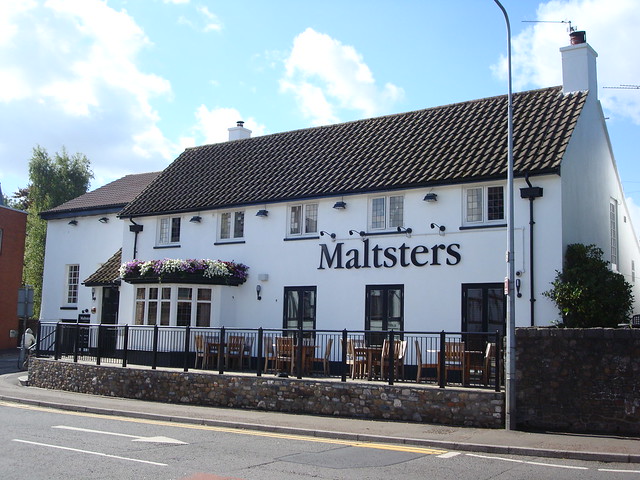
Hopefully this means that Mr. Martin and Bill Dobson, the head brewer at Brains, will collaborate on another experimental beer soon. Meanwhile, the new IPA will go on tap at Brains pubs for a limited time, where discerning drinkers can decide if they like the attributes of citrus and grapefruit supplied by Summit, Zeus, and Cascade hops. I know I would have enjoyed a pint of this American-style ale while I was staying at Maltsters, an upscale pub and inn just outside of central Cardiff. But even if Barry Island turns out to be a one-off, I'd still say it's about time I went back to Wales.

Liquid Souvenirs From Finland

I've never really been one to buy souvenirs on trips abroad. Usually I'm traveling light, on a budget, or (more frequently) both, and don't often feel the need to spring for trinkets and keepsakes. There are, of course, a few exceptions to this self-imposed rule. Local craft beer is one of them, and since I started regularly writing about it, I've been fortunate enough to receive the occasional bottle or two of gifted brew.

Returning from Finland in mid-March, I managed to fit several beers into my suitcase, two of which were given to me by Pekka Kääriäinen, founder and managing director of Lammin Sahti Oy, a small brewery in the town of Lammi in the southern part of the country. Pekka is best known for his sahti, but he's also made ales and ciders for over a decade. Thanks to his generosity, I tried Juhlaolut as well as another called Pöllö, which translates simply to "owl."

To my eyes, Juhlaolut (7% ABV) has the color of polished rosewood: brownish with red highlights. Transparent but possessing slightly more body than I expected, it produced virtually no head when poured from the bottle. The nose was subtle with a musty vegetal aroma and a somewhat dull suggestion of hops. As far as taste, this "celebration beer" struck me as fairly subdued, with a soft caramel sweetness through the center and a gentle bitterness around the edges. Overall, Juhlaolut is a pleasant beer and more quaffable than the alcohol content implies. There's something likable about its malty, woody character, but I'm not necessarily anxious for a second sampling.

Interestingly, Pöllö's label lists the same five ingredients (vesi, ohramallas, humala/vatten, humle) and yet I found this ale more enjoyable to drink. In terms of a style, I would probably compare Pöllö to a Classic English Bitter. The color of bright copper—medium to deep amber—it too created very little head when served, much like the celebration beer. After I emptied the bottle, only a minuscule ring of tight bubbles clung to the walls of my Nonic pint glass. I did pick up some hop aroma though, along with a walnut-like sweetness and a good whiff of bready malt.

Lightly carbonated and relatively low in gravity, Pöllö (4.5% ABV) has a toasty malt profile that balances against a modest level of hoppiness. It finishes a bit dry and struck me as very sessionable. And while similar in some ways to the Juhlaolut's flavor, I could see myself seeking out this beer again. On the other hand, I might be just as likely to go looking for one of Pekka's two varieties of cider on my next visit to the land of lakes and saunas.

Strolling Around Suomenlinna

In many ways, Helsinki has the Swedish military to thank for its existence. During the eighteenth century, when the Kingdom of Sweden ruled much of what is now modern Finland, today's cultural and political capital was a relatively small town, with a population of roughly 1,000 citizens. Meanwhile, beginning in 1748, a massive stone fortress called Sveaborg (Viapori in Finnish) began to take shape on the nearby Susiluodot Islands in the Gulf of Finland. Built as a defense against Russia, the base at its peak contained close to six times as many people as the cluster of wooden buildings across the harbor. But Sveaborg and its garrison needed civilian goods and services, and over time they gave significance to the trading post on Sweden's eastern frontier.

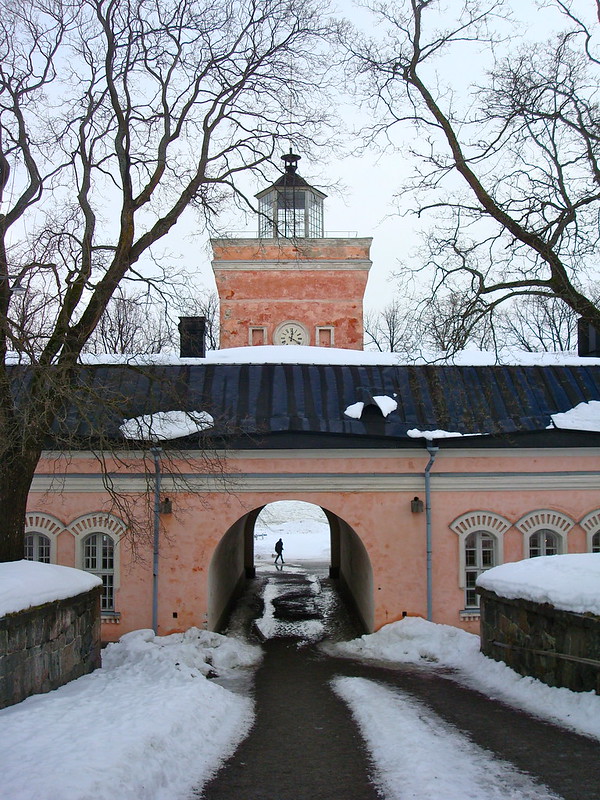
Today the tables have turned, and Suomenlinna, as the eight fortified islands are collectively known, has a fraction of its former population—about 850 at last count. On any given afternoon, most of the people wandering around the gravel footpaths and cobblestone avenues are tourists, visitors from other cities and countries eager to explore this UNESCO World Heritage site and maybe learn something about its history. Not long ago I was one of those wanderers, contentedly roaming around the rocky landscape as winter's snow began to melt. I brought my point and shoot camera over with me on the ferry, and shot a bunch of pictures as I covered the distance between the main quay and Bastion Zander, a mile walk to the south. The sprawling, painstakingly-restored complex is a scenic place to be sure, and even more inviting during the warmer summer months. I only wish the little ravintola panimo (restaurant brewery) had been open on the day of my visit. A pint of porter would've been good company while I waited for the boat back to Helsinki's Market Square.

Beer Tasting in Moose Country

There's a moose for almost every 53 people in Finland. And yet during a recent six day stay I didn't spot a single one. Plenty of snow and ice, but not so much as a glimpse of the enormous antlered herbivore. Well, except this guy. I photographed him in Hollola, a little town just outside of Lahti, near Lake Päijänne.

I had found my way to this medieval church village with the help of Pekka Kääriäinen, a well-known sahti advocate, entrepreneur, and head of the Finnish Association for Small Breweries. After spending the morning showing me all around his hometown, he'd insisted on introducing me to his friend Ilkka Sipilä, the owner of a place called Maaseuturavintola Hollolan Hirvi, or Hollolan Moose Countryside Restaurant. A place with a very small on-site brewery. And while it technically wasn't open for the season, the parking lot had been plowed, and Pekka assured me that it was no problem to drop by on a Friday afternoon in late winter. Plus, he explained over the pop music spilling from his car radio, sahti is still brewed the traditional way at Hollolan Hirvi—by adding heated stones to the mash tun instead of hot water—and I simply couldn't leave the country without meeting Ilkka.

Unfortunately, there wasn't a drop of the aromatic, juniper-infused farmhouse beer to be had when we arrived, so I settled for a taste of Tumma Hirvi, or Dark Moose (4.5% ABV), instead. Ordinarily a glass with set you back €6 (about $7.80), but turn up with a respected Finnish brewer and you'll likely get a complimentary pour. A thick, creamy beige head emerged as soon as my goblet was full, and leaning in to appreciate the smell, I found the nose reminded me of date cake or sticky toffee pudding. Five types of malt including caramel, Munich, and smoked malt, give this dark ale a full body and an ebony color with rosy highlights. Magnum hops are used for bittering, and Saaz to impart aroma. The finish is quite dry.

Ilkka demurred when I asked him about Tumma Hirvi's style, maintaining that he brewed for himself, not judges or beer freaks. "When we are brewing, we don't think about what category it should be," he told me. Depending on the season, farm guests can choose from a number of other unfiltered, unpasteurized beers as well as a meat-heavy menu of Finnish food. Beer-wise, I would've liked to sample Kivipukki (steinbock), American Moose (a pale ale), or French Moose (ale aged in cognac casks) and from the kitchen I might have ordered moose soup or a beer-marinated venison steak. I guess I'll have to try those on my next visit though.

Sure, lots of people think March is the month to look for cheap holidays to Goa or a quick escape to Ireland, but I say Finland deserves to be in the running, too. Bring a warm coat, a good pair of boots, and just in case you want to venture (naked) into a sauna, plenty of self confidence. If you're lucky, you might even see a moose. Travel to Hollolan Hirvi, and you'll definitely be able to taste one.

The Winter Blues

We're one month into the new year already and so far the Northeast hasn't felt particularly wintry. Lately I've even found myself half wishing to be somewhere colder, or at least a little snowier. I didn't have this problem two years ago when I went to Iceland to research a story for Wend magazine. It was appropriately frigid during my time in the capital city. But before returning to Keflavik International Airport on my last day there, I made a short detour to a much warmer place that's practically become an obligatory stop for every visitor to Reykjavik: The Blue Lagoon.

Although the word lagoon is usually used in a tropical context, I suppose this popular geothermal spa, being a relatively shallow pool of water, technically isn't misnamed. What struck me about this quintessentially Icelandic attraction though, as much as the heat and the sense of calm that pervaded the whole complex, was the color. Even on an overcast day in February, the water seemed to glow, appearing a bright cyan or aqua against the drab surrounding landscape. Walking around after a dip in the famously therapeutic geothermal seawater, I snapped a handful of photographs that take me back to that day every time I look at them. Here's the set on Flickr.

The Blue Lagoon's 30 Euro entrance fee (about $39.40) isn't exactly inexpensive—especially when you add on another €5 for towel rental—but cheap holidays to Iceland do exist. Plan to travel in February or March and you'll get better fares and packages on Icelandair as well as lower hotel rates in Reykjavik. Sure, it'll be cold and dark, but spend enough time at a neighborhood bar, or better yet, a burger joint, and you're bound to meet a friendly Icelander or two.

Two Minute Interview: Andy Chase

Many years ago I placed a short ad in the Village Voice. I'd recently moved to New York from a very small town in Ohio, and hoped to form a band with a drummer friend who had relocated to Manhattan at about the same time. We brought a batch of songs with us that I'd written in college, and planned to take the New York music scene by storm. As it turned out, fame and fortune proved elusive, but the ad worked, and a few weeks later we were collaborating with a talented guitarist/producer.

Apparently one of my favorite bands, the pop trio Ivy, also has the Voice to thank for introducing songwriters Adam Schlesinger and Andy Chase to one another. I mention this because together with Dominique Durand they've just released All Hours, their sixth full-length album of moody, hypnotic songs. In many ways, I think it improves on In the Clear, their last release for Nettwerk Records. Fresh off a short run of shows promoting the album, Chase made time to answer a few travel-related questions for my Two Minute Interview column.

Crafting Beer in the Preseli Hills

For several years now, brewpubs, microbreweries and nanobreweries have opened across the U.S. at an almost unprecedented rate. In fact, this year's sold out Great American Beer Festival (which starts today), is likely to include quite a few attendees who have transitioned from beer enthusiasts to full-fledged professionals. Next year, as many as 725 breweries are poised to join the craft beer movement. And while this growth is certainly remarkable, the excitement isn't limited to the 50 states. All over the globe, the tastes of drinkers are evolving, and brewers everywhere are working hard to keep up with demand.

Elsewhere in the Western Hemisphere, South America has joined the flavor revolution, and signs of change have begun to appear in Asia, too. Which isn't to say that the traditional brewing nations are standing idly by while the rest of the world races toward the future. In the U.K. for instance, where reports of shuttering pubs might be cause for concern among real ale campaigners, more than a few entrepreneurs have recently ventured into the business of beer.

I saw evidence of this phenomenon myself on a trip through Wales last September. Hand crafted cider had determined my driving route, but along the way I discovered determined Welsh brewers selling their small batch beers at farm shops, food festivals, and in some cases, right from the source. One of my favorites was the Gwaun Valley Brewery, a family operation in Pembrokeshire that opened in July 2009 near the town of Fishguard. I dropped by on my way to St Davids, and spent some time chatting with Sarah Davies while sampling the three beers brewed by her husband, Len. As a porter guy, I especially liked the mild Dark Ale (4.2% ABV) made with chocolate malt and local spring water.

Two Minute Interview: Bob Nanna

I first heard Braid while I was a student at Kenyon College. Unfortunately, the band released what would be their final album during the second semester of my sophomore year. The following fall, songs like "Killing a Camera" found their way into my weekly radio broadcast from WKCO's basement studio. At age twenty, the urgency and immediacy of Braid's music was important to me, and listening to Frame and Canvas now, I can still understand its appeal. After a 13 year absence, Braid reunited last year to record the Closer to Closed EP, available now for pre-order from Polyvinyl Records. Guitarist and vocalist Bob Nanna made time to talk about drug-sniffing dogs, the loneliness of the road, and his future touring aspirations in my fourth installment of the Two Minute Interview.
  1. As a band that's played 597 shows (and counting) in dozens of states and countries, how do you think travel has influenced your musical development? It definitely has but not in a direct musical way. So often when you're touring around the states or other countries even though the cultures can be drastically different, the music still is very similar, very familiar. If anything, all of the traveling makes us more rounded people in general, more rounded bandmates and songwriters, having new experiences all the time. 
  2. When you were abroad, were there specific things from the US that you missed more than others? When Braid was in Europe, we did almost three months over two trips in 1998. This was before the internet was ubiquitous. If you wanted to call home to talk to your girlfriend, family, spouse, etc, you had to wait in line at pay phones cause we ALL did. That was the worst thing. Just missing the people, especially during the tougher times. You couldn't just get on your cell phone or laptop and "Skype it out." You felt a lot more isolated. Things have changed!  
  3. Describe something surprising, humorous, or disappointing that happened in your travels. I used to keep really detailed journals of all of our tours and I still have them. I haven't looked back at them recently though. I do recall during our first European tour getting stopped at almost EVERY border crossing, having to unload the vans and let the dogs go sniffing. One particular crossing, I believe at the Czech Republic, we were searched and the guards found a grungy Ziploc bag of vitamins in Todd's bag. I remember him flexing his muscles at the guards and saying "Make you strong!"  
  4. Many groups compose songs while touring—during sound checks, in the van, etc. Is that also true for Braid? If so, which songs came to life that way? Yes, for sure. We haven't written songs on the road in awhile but we used to do it all of the time. If there was downtime at someone's house before a show, Chris and I would pull out the guitars and start working on something. "Never Will Come For Us" in particular was written primarily on the road. We would also do fun stuff like swap band members with touring partners to create different bands that would play a song at the evening's show. 
  5. As a fan, do you have any enduring concert-going memories? Who did you see and where? Of course! My favorite show ever was seeing Jawbreaker at McGregor's in Elmhurst, Illinois in 1992. I left that show completely moved and exhausted! Another memory I like was when Hey Mercedes all went to see The Notwist at the Metro in Chicago. We all paid full price for the tickets and stood together and just took it all in. 
  6. Do you look forward to touring, seeing new cities through the eyes of a working musician, or would you rather be writing and recording from the comforts of home? Have you been introduced to other great bands while on tour? I love traveling a little more than "touring" if that makes sense. If I could just tour around like a band and do everything a band does other than playing and selling merch, it'd be like heaven! So in that sense, yeah I look forward to getting out there, away from home for awhile, but I do find it easier to write in the comforts of home. Using the travels as inspiration of course. And we're always learning about new bands on tour. The aforementioned Notwist for example was introduced to us when we were in Germany in 1998. A friend gave us a cassette for the van and said "this is the best band in Germany right now." We listened to it constantly! 
  7. You returned to Canada, Europe, and Japan a few times as a band. What are some of the most memorable places you performed and why? Where would you go back first now? We were super fortunate to be able to travel to all of those places on numerous occasions so in terms of memories, I'd say the first time we were in each of them. I'm most proud of the outlying areas we were able to hit—Halifax, Croatia, Hawaii all come to mind. While I'd love to go back to those places, I'd be more interested in places Braid hasn't gone: Australia, Brazil, Alaska even!

A Layover for Beer Lovers

My first visit to Berlin lasted all of 15 hours. Looking for flights from Bangkok to New York a few weeks earlier, I had found a decent fare on airberlin that involved a layover at Tegel Airport (TXL). Initially I was reluctant to purchase the one-way ticket, thinking a mere overnight stay in the German capital wouldn't necessarily be the best introduction to a city I hadn't been to before. But then an Internet search led me to Brauhaus in Spandau, a hotel and brewpub roughly 20 minutes from the airport by taxi.

And so, shortly before Memorial Day, I found myself climbing the stairs to a clean, comfortable room overlooking the brewery's shady beer garden. I could hardly have wished for nicer accommodations. Including a generous breakfast the next morning, my bill came to 73 Euros (roughly $104), a price I would happily pay again to avoid spending the night in a dreary airport hotel. The beer voucher and complimentary package of Gold-Bears on my nightstand were nice touches, too.

For dinner I ordered currywurst (as if skipping Berlin's culinary emblem was ever an option) and a Havelbräu, named for the river that flows nearby. Dirty blond with a bready aroma and a creamy mouthfeel, this kellerbier or unfiltered lager is relatively strong (5.2% ABV) but low in bitterness with a somewhat sweet finish. It went well with the platter of fries that accompanied my sausage and made for a refreshing drink on an early spring evening. Available year round, Havelbräu might not be reason enough to plan a Tegel layover before Berlin's new Brandenburg Airport opens next year, but it isn't a bad way to break up a long trip either.

Welsh Craft Cider

Last September I spent a week in Wales. It wasn't my first trip to this mountainous country, but in a very real sense I was seeing Wales anew. Because while I did spend a night in Cardiff and even managed a short hike in Brecon Beacons National Park, I missed many of the things that people travel here for: castles, museums, rugby, or in a few rare cases, bog snorkeling. Instead, the purpose of my visit was to drink cider.

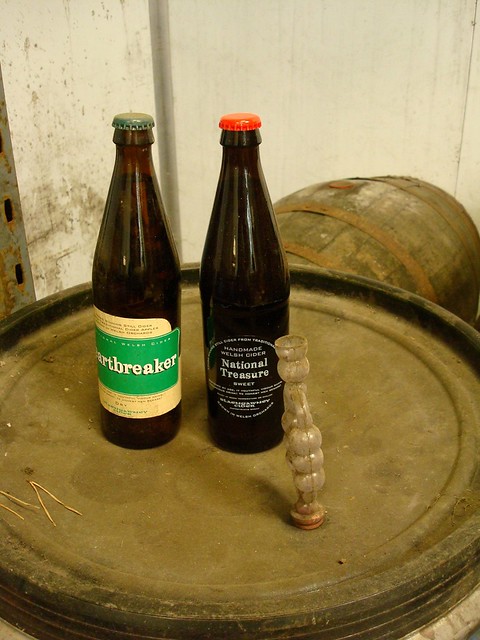
Beginning in Swansea, I drove through the rain to the westernmost end of Pembrokeshire, across the Cambrian Mountains into Powys, and then back south again into the Valleys. Over the course of seven days I met craft cider makers and drinkers, along with a number of friendly Welsh bartenders and innkeepers. Somewhat unexpectedly, I also became a bit of a cider connoisseur myself. If you're curious about the drink and its origins, read about my trip in the current issue of DRAFT magazine or consider attending the world's first International Craft Cider Festival at Llancaiach Fawr Manor in August.

Breakfast at Table Mountain

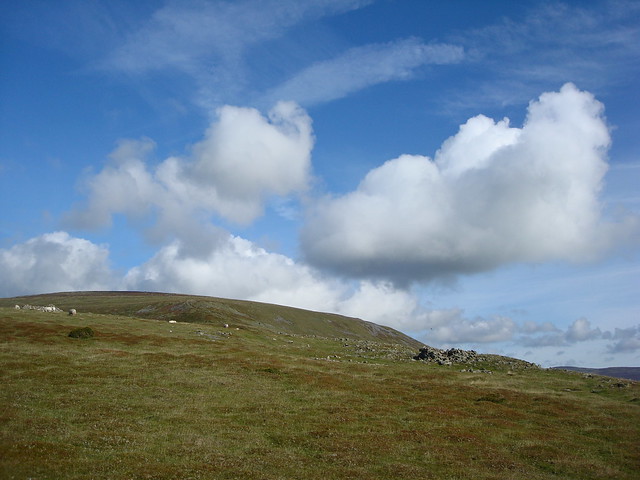
For the first time in five days it had stopped raining. Above me, the Welsh sky was a vivid cerulean blue, set off against the evergreen slopes of the Black Mountains. The air meanwhile, smelled of spruce and sheep droppings. Not necessarily the most welcome aroma first thing in the morning, but I didn’t care. I was content to simply stretch my legs for an hour or two. Balancing on the steps of a stile that led over an old farm wall, I paused to consider the smartest thing I’d done all week: slow down. 
 
Thus far, my impressions of the little country squeezed between England and the Irish Sea had been formed from the driver’s seat of a rented car. Morning after dreary morning I’d picked at plates of fried eggs, fried sausage, fried mushrooms, and yes, fried tomatoes, before setting off under cloudy skies on a peculiar mission. As a beer writer and aspiring brewer, I had designed a trip around a handful of cider makers in southern Wales. The problem was, my busy itinerary made no allowances for leisurely mornings or accidental discoveries. And so, for five straight days I wolfed down hearty if unhealthy meals in order to keep my appointments with apple growers.  


Today however, was different. Encouraged by the muted yellow glow creeping under the curtain of my room at the Bear Inn in Crickhowell, I decided to forgo the complimentary breakfast and postpone my afternoon plans. Instead of loading up on calories, I would splurge on a change of scenery. This was my chance to see Wales before she put on her Wellies. Remembering a map of the area I’d picked up at Reception the night before, I took a look at the town plan and discovered that the Beacons Way, a one-hundred-mile hiking trail across Brecon Beacons National Park ran quite close to the hamlet. Estimating the distance from my hotel to the trailhead, I figured I could make it to the nearest mountain and back before checkout time. Crug Hywel. My tongue stumbled on the words as I sounded out its Celtic syllables. But a symbol on the map intrigued me; during the Iron Age a hill fort stood atop the 1,480-foot summit of Table Mountain. I wondered whether any part of the prehistoric fortification survived. 

Not sure what I’d find but wanting to take advantage of a bright autumn morning, I set out with a bottle of water and a package of shortbread to quiet my stomach. While I climbed the small massif, the sun rose in the sky, its rays warming my skin under the black T-shirt I wore. Underfoot the thick carpet of moss and grass was wet from consecutive days of foul weather. Soon my socks were damp, too. Pushing through the garden of ferns growing on the mountain’s slopes, I decided to eat a few of the plump blackberries I had picked earlier on. Popping a piece of fruit into my mouth, I savored its sweet taste as I walked. Part of me dreaded returning to the car.
 

At the halfway point I stopped to listen. Unseen birds called to each other from either side of the footpath and somewhere a dog barked repeatedly, alerting anyone within earshot of a stranger’s presence. Soon I would rest, but I still had a short distance to go. Steadying myself with the aid of the stile’s wooden post, worn smooth by years of passers-by, I swung my leg over the stone barrier in front of me, and focused my gaze on the flat landform ahead: Table Mountain.  

Half an hour later I reached a fork in the trail and followed the left branch as it curved behind the landmass, leading through another minefield of manure. In spite of the passage of time, Crug Hywel remained well defended. Carefully selecting my last few steps, I wished I had brought another pair of shoes. I couldn’t let footwear derail me this close to my destination though. I scrambled over the eroded rampart, eager to soak up the view and investigate any prehistoric ruins. 

The top of the hill was already occupied. Everywhere I looked sheep milled about in small groups, rested in pairs, or leisurely grazed on the grassy summit. They scattered when I got too close, but otherwise seemed uninterested in bipedal company. I thought of the flock of tourists back at the Bear Inn, staring out at a tiny courtyard from a drab dining room. Sure, I was missing breakfast, but the chance to see the countryside more than made up for any lost calories. I drained the rest of my water bottle and bit into the first of my buttery shortbread cookies. Even though I wasn’t particularly hungry yet, the crumbly snack tasted good—as good as some of the more extravagant meals I’ve enjoyed in my travels. Breakfast on the road might be just as important as it is at home, but not necessarily because of the food we order. What counts, I decided then, is where we choose to eat it.
 

Suddenly I heard noisy breathing behind me. Something moist brushed against the hand that held my now empty water bottle. Turning around, I found myself nose to nose with a hungry ruminant. She took a step backward, hesitantly. Happy to spend some time with a local, I broke off a piece of shortbread and slowly offered it to my new friend. Breakfast at Table Mountain would be for two.

Two Minute Interview: Marcellus Hall

Sure, a brassy horn part can reliably put a smile on my face, but when it comes to my favorite songs, I'm partial to those with clever lyrics. Few other things stick with me as long as a creative phrase set to music. Shortly after moving to New York, I started listening to White Hassle, and often found myself walking around Manhattan with one of their wordier songs stuck in my head. It's been several years since the band has toured, and even longer since their last recording, but in February Glacial Pace released The First Line, the debut album from former White Hassle vocalist/guitarist Marcellus Hall. In this, the third Two Minute Interview, he spoke to me about Beavis and Butt-Head, stardom in Holland, and home-cooked meals in Italy.
  1. What are some of the most memorable places you've performed, and why? Where would you go back first? Railroad Jerk enjoyed brief inexplicable stardom in Holland for a time. That was fun. White Hassle performed at the Queen Mary in Long Beach, California for All Tomorrow's Parties. I remember the weather was perfect. Japan welcomed Railroad Jerk with sincere enthusiasm. I would love to return there some time. Some places in Italy were memorable. An Italian promoter's mother once cooked us a delicious lunch before we hit the road for the next town. A friend tells me that if I were to learn a lot of Eagles songs, Thailand would welcome me with open arms. 
  2. Describe something surprising, humorous, or disappointing that's happened in your travels. I recall poking fun at the European stereotype of Americans by playing that stereotype in a conversation with some Italians not long after September 11th, 2001. They were remarking on how it was the first time, besides Pearl Harbor, that the United States was attacked on its own soil. I assumed an earnest expression and said, "Oh no, that's not true. When America first started we were attacked repeatedly by the Indians!" The Italians' expressions of outrage, and uncertainty about whether I was serious or not, were priceless. Another funny experience was when Railroad Jerk and Chavez were touring Europe. Dave Varenka, Railroad Jerk's drummer, and I were traveling in a separate vehicle (there was a van and a car that we all took turns riding in). The show that night was in Ljubljana, the capital. When we got to the Slovenian border, Dave and I and our German driver were welcomed. The van, however, with Chavez and the other Railroad Jerk members, happened to go to the wrong entry point and was not allowed into the country. Without cell phones at the time, Dave and I and the anxious Slovenian promoter waited at the club unaware of what happened to the others. When the rock-hungry Slovenian fans began entering the club, the promoter turned to us and asked if we could somehow perform. It just so happened that Dave and I had just finished recording our debut album as a duo under the name White Hassle. We borrowed a guitar, an amp, some drums, and random pieces of metal and put on one of our best shows. The audience loved it and we were treated like kings. Chavez and the other members of Railroad Jerk, of course, were pissed. They had spent the night at some dreary hotel, while Dave and I rocked Ljubljana.
  3. When you were starting out with Railroad Jerk, or even with White Hassle, where did you dream of playing live? Our dreams were modest. Each step in the lives of both bands was a nice surprise. Just getting a record deal was unexpected. Railroad Jerk was featured on Beavis and Butt-Head and White Hassle got to record for the John Peel show in England. Those were exciting breaks. To play in front of a large audience was a dream that eventually came true. Opening up for some better known bands and playing festivals allowed that.
  4. As a fan, do you have any enduring concert-going memories? Who did you see? When I was in college (and just after that) I went to see a lot of bands that influenced me (for better or worse). Among them were Big Black, The Pixies, Pussy Galore, Killdozer, The Jesus Lizard, Galaxie 500, The Replacements, The Ramones, Sonic Youth, Black Flag, Jonathan Richman, Richard Thompson, Sugar Blue, The Beastie Boys, Dinosaur Jr., The Throwing Muses, Dave Thomas, Half Japanese, The Cramps, The Gun Club, Leonard Cohen, Nick Cave, Peter Tosh, Jimmy Cliff, Bunny Wailer, The Swans, Live Skull, Mudhoney, Soundgarden, White Zombie, and Firehose.
  5. Many groups compose songs on the road (during sound checks, in the van, etc.) and tracks like "One Drop of Rain" and "Don't Go" seem to be about distance, meetings, and partings. Did anything on The First Line come to life that way? Very few of the songs on The First Line came about on the road. On the other hand, the two tracks you mention are indeed about distance, meetings, and partings. The former is actually a true story.   
  6. Do you look forward to touring, seeing cities through the eyes of a working musician, or would you rather be writing and recording from the comforts of home? I admit to having soured over the years on the rigors of touring. That being said, it's been a while since I was last on the road and I'm raring to give it another go. There is a certain giddiness and romance one feels in rolling into a town and then high-tailing it out the next morning (or even, in some cases, that very night). Like the Beatles though, I do enjoy recording.
  7. As a musician (or even as a visual artist) what do you find most exciting or inspiring about New York at the moment? The things I find exciting about New York now are the same things I have always found exciting about New York: the diversity, the history, and the energy of the people.

Beer-Themed Travel Guides

Above all, I travel to taste. In every country I've visited, from Canada to Panama, Scotland to Thailand, my goal is almost always to find a beguiling beer that captures something about the essence of a particular place. Because even though the internet has made it possible to see parts of the world that we could once only imagine, we still have to travel farther than our well-provisioned kitchens to truly experience foreign flavors. If you ask me though, the pursuit of good food and beer are two of the best reasons to leave home in the first place.

Earlier this month, I published two stories about beer-themed travel. The first, entitled "Rooms with a Brew," was inspired by a trip to Texas that included a stop at the Fredericksburg Brewing Company in Hill Country. Roughly a year later, I found myself spending two nights at Maltsters, a pub in Llandaff on the northern edge of Cardiff, Wales. Built in 1310, it's probably the oldest licensed pub in the city, but you'd never know it from the look of their rooms or the taste of their breakfast menu. In the second story, I list "Eight of the Best German-Style Beer Halls Outside of Germany." Of course I could have included more than eight locations, but I figured one rule of beer drinking should probably also apply to list-making: Know your limits.

Burger Excellence in Smoky Bay

One year ago this month, McDonald's went out of business. Well, the franchise in Reykjavík did at least. Citing rising costs, the global restaurant giant pulled out of Iceland, leaving hungry residents without a place to go to satisfy their hamburger cravings. Or did they? In fact, as I discovered during my visit to the capital earlier this year, several other burger joints still lie scattered around the city, offering filling, affordable creations to rival the sandwiches sold by one of the world's biggest brands. Over the course of five days in Reykjavík, I tried three different spots and have ranked them here in my preferred order, from third to first. 

American Style
This place was recommended to me by a graduate student I met during my stay and it looked very much like an upscale fast food restaurant you might find in the States: dim lighting, real silverware, wood tables at the booths, and large framed photos of musicians such as Eminem, Jim Morrison, Alanis, and Justin Timberlake. Overall, I was struck by its similarity to the Hard Rock Cafe chain. Most of the other patrons appeared to be in their teens and twenties. 

The hamburger I got was large and fairly juicy, but the flavor of the beef was lost under a heap of pickles, shredded lettuce, red pepper, raw onion, and a house sauce that tasted like a blend of ketchup and mayonnaise. Although I appreciated the sesame seed bun, the fries the accompanied my order were somewhat limp, lukewarm, and essentially unseasoned. In the end my bill came to 1,415 ISK—about $12.72 at the current exchange rate.

Hamborgarbúllan 
I sought out Hamborgarbúllan soon after arriving in the capital, having learned of the waterside establishment from a piece in the Washington Post and another published by Serious Eats in 2009. Unable to resist the bacon burger, I added a coffee shake to my order and grabbed one of the three small tables placed around the restaurant. Natural light and several strings of Christmas bulbs lit the room, and rumbling truck engines and the occasional car horn interrupted the jazz playing over the ceiling-mounted speakers. 

Compared to those I'm accustomed to eating in New York, my burger was on the thin side again, but it was char-grilled and enhanced with fatty strips of chewy bacon. A little lettuce, a slice of tomato, and a splash of tangy Heinz chili sauce made it a meal while the thick shake found the perfect balance between bitter coffee and creamy sweetness. The price I paid for a view of the harbor and a savory patty of meat? Roughly $14.11, or 1,570 Iceland Kronur. 

Vitabar  
My pick for the best burger in town. And at 1,500 ISK ($13.49) for thick-cut fries, an ample burger cooked medium-rare and topped with tomato, raw onion, blue cheese, and garlic sauce, along with what the bartender told me was "the only dark beer we have," it was probably the best deal, too. Messier than the other sandwiches, the Forget-Me-Not burger and the bar that serves it might just be the ideal remedy for the Arctic chill of Iceland's winter. Try it with a bottle of the molasses-thick Islenskur Urvals Stout (5.8% ABV).