Not all New Year's resolutions are created equal. Some of us aim high, setting ambitious goals that focus on self improvement: I'm finally going to train for that marathon this year. We like to challenge ourselves to be better, or do more, knowing all along that it will take a fair amount of effort. Others, knowing their limitations, prefer to pick a resolution that's easier to achieve: Maybe this is the year I remember to put the toilet seat down?
Personally, I'm of the opinion that a worthwhile resolution ought to involve a certain amount of fun, or, at the very least, a series of small rewards. Surely we've all learned by now that a little encouragement can go a long way. So with that in mind, I'd like to offer a recommendation. Instead of (or, better yet, in addition to) getting in shape to run a race or remembering to be more courteous in the bathroom, why not make visiting a brewery part of your 2014 game plan?
According to the Brewers Association, a professional organization founded "to promote and protect small and independent American brewers," the U.S. currently contains more than 2,500 breweries. And while Vermont, Oregon, Montana, Alaska, and Colorado have the most per capita, no state is devoid of locally-brewed beer. In fact, there's a good chance you have one or two in your proverbial backyard—probably no more than a 20 or 30 minute drive. If you need suggestions and live somewhere between Washington, D.C. and Maine, just pick up a copy of my new book, The Great Northeast Brewery Tour. But if that's not enough to convince you to go, here are my five reasons to visit a brewery in 2014.
Showing posts with label brewpub. Show all posts
The Great Northeast Brewery Tour: Road Trip Edition
It's been a long time coming, but after almost two years of work, my third book is finally on its way to retailers. I know this because last week an advance copy turned up here at home. The rather self explanatory title is The Great Northeast Brewery Tour. Suffice it to say I put more effort into this project than just about anything else I've worked on in my professional career and I'm proud of how it turned out. What makes me happier still is the fact that it includes a foreword by author and brewer extraordinaire Garrett Oliver as well as images by my talented photographer friend Bethany Bandera.With the official release date rapidly approaching, I've put together a string of winter events to help promote the book. I'm eager to return to some of the breweries and brewpubs Bethany and I visited so many months ago and look forward to meeting fellow readers, beer drinkers, and road trippers. If you live near one of the places below, please save the date and bring a friend. For details about times and locations, check out The Great Northeast Brewery Tour on Facebook or follow me on Twitter.
- Saturday, January 18, 2014 - Twin Lakes Brewing Company (Greenville, DE)
- Monday, January 20, 2014 - Meridian Pint (Washington, DC)
- Tuesday, January 21, 2014 - Atomic Books (Baltimore, MD)
- Thursday, January 23, 2014 - Trident Booksellers and Cafe (Boston, MA)
- Friday, January 24, 2014 - Relic Brewing Company (Plainville, CT)
- Saturday, January 25, 2014 - Weyerbacher Brewing Company (Easton, PA)
- Saturday, January 25, 2014 - Turkey Hill Brewing Company (Bloomsburg, PA)
- Sunday, January 26, 2014 - Dock Street Brewing Company (Philadelphia, PA)
- Monday, January 27, 2014 - Jimmy's No. 43 (New York, NY) *dinner*
- Tuesday, January 28, 2014 - Curious Iguana Books (Frederick, MD)
- Tuesday, January 28, 2014 - Roy-Pitz Brewing Company (Chambersburg, PA)
- Wednesday, January 29, 2014 - Dogfish Head Craft Brewed Ales (Milton, DE)
- Wednesday, January 29, 2014 - Evolution Craft Brewing Company (Salisbury, MD)
- Thursday, January 30, 2014 - Flying Fish Brewing Company (Somderdale, NJ)
- Friday, January 31, 2014 - Cape May Brewing Company (Rio Grande, NJ)
- Saturday, February 1, 2014 - Troegs Brewing Company (Hershey, PA)
- Saturday, February 1, 2014 - [words] Bookstore (Maplewood, NJ)
- Sunday, February 2, 2014 - Sweet Grass Grill (Tarrytown, NY) *brunch*
- Sunday, February 2, 2014 - Two Roads Brewing Company (Stratford, CT)
Drinking the Boot
Two important ingredients have helped Italian brewers bring things to a rolling boil: first, a willingness to experiment that can arguably be traced back to the US, and secondly, a generous dose of their own renowned food culture. Uninhibited by a deep-rooted tradition of brewing and inspired by local ingredients, Italy has enthusiastically pushed the envelope, increasing the net variety of European beers by leaps and bounds in the process. From the foothills of the Alps in the North to the Strait of Messina in the South, innovators and nonconformists are using beans, berries, tobacco, flowers, vegetables, and herbs to produce some truly original creations.
Chestnut beers, for example, can be found at many a microbrewery and gastropub; more than 30 versions—including Palanfrina, an intense tipple made with chestnut flowers, honey, and jam, as well as the meaty nut itself—now exist nationwide. It shouldn’t surprise then, to learn that Birrificio Troll, the rustic, unassuming brewpub where this dark ale originates, is just as singularly Italian as the beers that emerge from their kettles. Local herbs and spices from the surrounding mountain slopes typically appear in the beers, while the smoked trout, pork tenderloin, and other dishes from the kitchen usually marinate in beer before winding up on the grill. Travel to the source to try Daü, a peppery saison, or the minty Christmas ale Stella di Natale, unless you'd rather track a bottle at a shop like Johnny’s Off License in Rome.
To refer to an Italian craft brew as a farmhouse beer is often apt in more than one way. Birrificio L'Olmaia, for instance, began in Siena on a farm distinguished by three old elm trees in its courtyard (olmo is elm in Italian). Moreno Ercolani has since moved his operation to Montepulciano, but continues to use native ingredients, like the hibiscus flowers that give Karkadè its rosy hue. And then there’s Loverbeer. Started by Valter Loverier in 2010, this inventive brewery manages to bridge the worlds of beer and wine, using wine barrels, wine musts, local grapes, and other fruits to produce unusual beers that cause bloggers like Alessio Leone of Hoppy Hour to wax rhapsodic. BeerBera relies on Barbera wine grapes for its spontaneous fermentation, while Damaschine plums lend a prune-like sourness to BeerBrugna.
Further south, Birra Karma in Campania uses local Sorrento lemons in their fittingly-named Lemon Ale, while Centesimale is brewed with Pallagrello wine must and Annurca apples, an ancient variety of the tree fruit which gives this distinctive beverage a quality best described as zesty and juicy. Meanwhile, Birrificio Almond 22, another newcomer at the vanguard of the country’s craft beer movement, is regarded by many as one the best in central Italy. Andrea Turco, who runs the popular website Cronache di Birra, goes so far as to suggests a pilgrimage to Abruzzo for their Pink IPA, made with peppercorns of the same color. Find it (along with nearly every other style of Almond 22) at La Taverna Di Paola, a comfortable, wood-paneled establishment in Brescia between Milan and Verona.
And then of course there’s Birra del Borgo, the company founded by Leonardo di Vicenzo that joined forces with Birra Baladin and Dogfish Head to open Manhattan’s own birreria, a rooftop laboratory that showcases Italian edibles and seasonings in draft-only releases. As their popularity has grown, some of di Vicenzo’s beers have found their way to the United States, including Castagnale, a smokier take on chestnut ale, and Genziana, a spiced amber ale that relies on gentian roots for its unique character. But at the elegant restaurant Taberna in Palestrina outside of Rome, it’s possible to try cuisine-inspired creations like Perle ai Porci (Pearls for Pigs), an oyster stout made with fresh oysters and local clams—shells and all.
For a wider sampling of the country’s best however, Open Baladin, serving faithful customers since September 2009, is a contemporary temple to Roman beer with no less than 40 Italian taps. Its modern main space gets loud and crowded, so take your pint to one of the more intimate rooms upstairs to taste in peace. Don’t forget a menu though, the homemade potato chips with licorice powder probably shouldn't be missed.
Intoxicating Bangkok
Not long after I moved to Thailand's capital city in late 2010, I discovered something I hadn't counted on: a beer scene on the rise. With each week that went by, another European import (and even the occasional microbrew) would turn up on a menu or tap list somewhere. For a beer advocate like me, this was good news. Last summer, Beer Connoisseur published a feature story I wrote on the growing number of brewpubs and trendy beer bars in Bangkok. In it I mention Tawandang German Brewery and Est. 33 by Singha, two businesses that have since opened new branches at Siam Discovery Center and The Nine on Rama 9 Road.
"Built to be the "ultimate lifestyle design district" with dozens of showrooms peddling fine furniture, expensive kitchen and bath products, luxury house ware, and modern home entertainment accessories, CDC [the Crystal Design Center] has surprisingly emerged as an oasis for beer buffs as well. Restaurants soon followed interior design companies to this shopping complex, and then at the beginning of the year, Est. 33 was joined by the Aston Gastro Bar and Beerology. These specialty bars aren't trying to compete with the typical Thai beer garden crowded with tin tables and taste-alike beer; they're aiming to attract tastemakers. In a city where a bottle of Chang is usually about 70 Thai baht of $2.30, they charge closer to $8 for a bottle of Tripel Karmeliet."
Strolling Around Suomenlinna
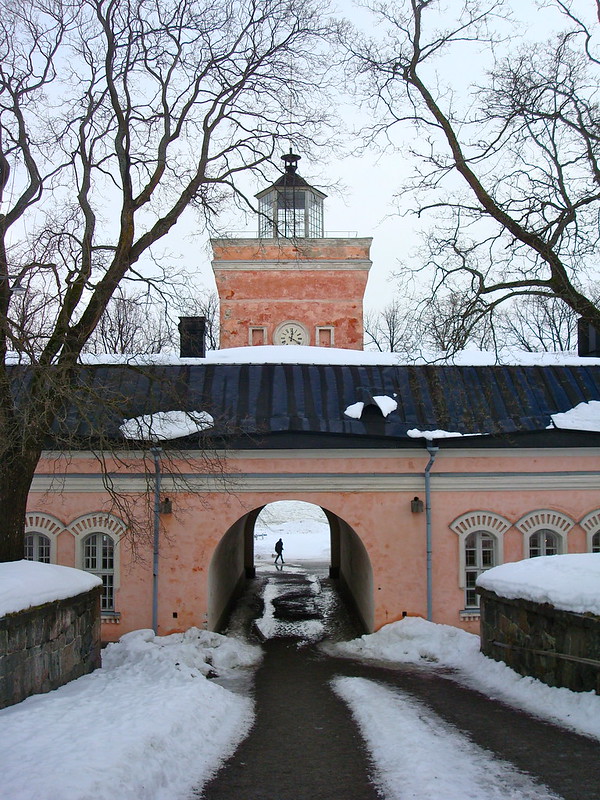
In many ways, Helsinki has the Swedish military to thank for its existence. During the eighteenth century, when the Kingdom of Sweden ruled much of what is now modern Finland, today's cultural and political capital was a relatively small town, with a population of roughly 1,000 citizens. Meanwhile, beginning in 1748, a massive stone fortress called Sveaborg (Viapori in Finnish) began to take shape on the nearby Susiluodot Islands in the Gulf of Finland. Built as a defense against Russia, the base at its peak contained close to six times as many people as the cluster of wooden buildings across the harbor. But Sveaborg and its garrison needed civilian goods and services, and over time they gave significance to the trading post on Sweden's eastern frontier.
Today the tables have turned, and Suomenlinna, as the eight fortified islands are collectively known, has a fraction of its former population—about 850 at last count. On any given afternoon, most of the people wandering around the gravel footpaths and cobblestone avenues are tourists, visitors from other cities and countries eager to explore this UNESCO World Heritage site and maybe learn something about its history. Not long ago I was one of those wanderers, contentedly roaming around the rocky landscape as winter's snow began to melt. I brought my point and shoot camera over with me on the ferry, and shot a bunch of pictures as I covered the distance between the main quay and Bastion Zander, a mile walk to the south. The sprawling, painstakingly-restored complex is a scenic place to be sure, and even more inviting during the warmer summer months. I only wish the little ravintola panimo (restaurant brewery) had been open on the day of my visit. A pint of porter would've been good company while I waited for the boat back to Helsinki's Market Square.
Border Hopping for Beer in Victoria, BC
With all of the attention lavished on Portland and Seattle, it's easy to forget that the Pacific Northwest has a third craft beer capital: Victoria. Just across the Puget Sound on Vancouver Island in British Columbia, this scenic city has quietly yet steadily added craft breweries and brewpubs, businesses that have earned themselves a loyal local following and more than a few Canadian Brewing Awards along the way. In the winter issue of HARBORS Magazine, I cover four of the eight in a short feature entitled "Brewing Up Business."
Of course I couldn't do a story on Victoria's beer scene without mentioning Spinnakers and Swans, two brewpubs that made a mark in the 80s, well before some of their current peers had even considered brewing professionally. But while they might be a venerable duo in the industry, neither is content to rest on their laurels. Spinnakers, for example, recently released Das Razz, a strong Belgian-style ale with raspberries (8.2% ABV), while Swans sold out of their new Saison (a 6.3% ABV spiced winter ale) in about three weeks. Not to be outdone, Lighthouse Brewing Company debuted their Belgian Black this month, a 9% ABV strong ale available in 650 mL bottles. Any one of these beers would be worth seeking out on its own. Considering the fact that all three can be sampled in the same city, I'd say it's time to start counting frequent flyer miles.
13 Frighteningly Good Halloween Beers
October can be a strange time for beer drinkers. Alongside any number of Oktoberfest lagers, you'll occasionally find a saison or a summer ale if the month starts off warmly, only to be replaced by a variety of pumpkin beers, redolent with pie spices and the flavors of fall. By the last week or two though, darker porters and stouts begin to creep into most draft lineups, signaling colder nights ahead. And of course October also brings Mischief Night and Halloween, two excellent opportunities for brewers to tap into their spooky side by giving their products creepy names and labels. With that spirit (pun intended) in mind, I've chosen to list some of my favorites:
- Vampire Ale—City Steam Brewery Cafe, Hartford, CT
- Dark o' the Moon—Elysian Brewing Company, Seattle, WA
- Evil Twin—Heretic Brewing Company, Pittsburg, CA
- Voo Doo American Stout—Left Coast Brewing Company, San Clemente, CA
- Certified Evil—Lucky Bucket Brewing Company, La Vista, NA
- Pendle Witches Brew—Moorhouse's Brewery, Burnley, UK
- Rosemary's Baby—The Peekskill Brewery, Peekskill, NY
- Three Skulls Poison—Pillager's Pub, Seattle, WA
- Black Cat Stout—The Portsmouth Brewery, Portsmouth, NH
- Zombie Dust—Three Floyds Brewing Company, Munster, IN
- Redrum Imperial Red Ale—Trinity Brewhouse, Providence, RI
- Hop Zombie—Uncle Billy's Brew & Que, Austin, TX
- Hobgoblin—Wychwood Brewery, Witney, UK
Beer for the Beach
For years, Corona has shrewdly marketed itself as the beer to order at any beach, anywhere, claiming to possess "the unparalleled flavor of relaxation." Whatever that means. Personally, television ads featuring tropical shorelines and a soundtrack of crashing surf won't persuade me to buy a bottle of fizzy corn juice disguised as alcohol. Besides, I'd rather drink something brewed locally. Which is why I was happy to share some of my recent beach beer finds in the September issue of Travel + Leisure Southeast Asia.
No, Grupo Modelo's popular lager isn't particularly hard to come by in Thailand, Cambodia, or Vietnam, but given the choice, I'll take a fruity Red Ale or a citrus-tinged Passion Beer at Nha Trang's Louisiane Brewhouse any day of the week. Reserve an umbrella and a beach chair with views of the South China Sea for 35,000 Vietnamese đồng (about $1.68) and spend a leisurely afternoon choosing a favorite by working your way through their tasting tray ($4.80 for four 200 ml glasses). Or, if you find yourself island hopping in Cambodia and craving some refreshment with a shade of bitterness, ask for Clouded Leopard Pilsener (usually around $2), made by Kingdom Breweries in Phnom Penh. The mildly spicy Saaz and Hallertau hops used in this beer mean that even without a wedge of lime, you can count on plenty of taste.
A Layover for Beer Lovers
My first visit to Berlin lasted all of 15 hours. Looking for flights from Bangkok to New York a few weeks earlier, I had found a decent fare on airberlin that involved a layover at Tegel Airport (TXL). Initially I was reluctant to purchase the one-way ticket, thinking a mere overnight stay in the German capital wouldn't necessarily be the best introduction to a city I hadn't been to before. But then an Internet search led me to Brauhaus in Spandau, a hotel and brewpub roughly 20 minutes from the airport by taxi.
For dinner I ordered currywurst (as if skipping Berlin's culinary emblem was ever an option) and a Havelbräu, named for the river that flows nearby. Dirty blond with a bready aroma and a creamy mouthfeel, this kellerbier or unfiltered lager is relatively strong (5.2% ABV) but low in bitterness with a somewhat sweet finish. It went well with the platter of fries that accompanied my sausage and made for a refreshing drink on an early spring evening. Available year round, Havelbräu might not be reason enough to plan a Tegel layover before Berlin's new Brandenburg Airport opens next year, but it isn't a bad way to break up a long trip either.
Beers, Blogs, and Birthdays
While in Panama City, I spent a very pleasant evening at the Istmo Brew Pub, a bar and restaurant that has been growing in popularity since opening in El Cangrejo in 2005. With 14 bottles (mostly imported lagers) and four of their own brews (Veraguas, Cócle, Colón, and Chiriquí) to pick from, Istmo definitely boasts the best selection in the capital, if not the country. Other than color however, their house styles differed little in flavor and body, and at $5 a pint, cost about four times as much as native brands like Atlas and Balboa.
That night the crowd was local, and yet the soundtrack consisted of hits from the US and the UK—"Under the Bridge," "D'yer Mak'er," "Love in an Elevator," and "Hurts so Good." The scene seemed a bit more Floridian than Latin American, but I liked the outdoor seating area, and was tempted to order one of their plantains smothered with toppings like cheese, guacamole, and pico de gallo. In the end I stuck with drinks though; I guess I'll have to go back if I really want to try the Isla Iguana or the Bocas del Toro. Who knows? It could make a nice birthday gift to myself in another 12 months.
Another Year, Another Beer
I look forward to coming home for Thanksgiving every year, although with gray skies in Baltimore, a part of me wishes my family could spend the holiday in San Antonio. The sun makes this Texan city particularly appealing when temperatures on the East Coast dip into the 40s, and on top of that, I discovered that it also has a youthful, yet accomplished beer scene.Trying all of the craft breweries in the area wasn't an option during my abbreviated visit this summer, but I'm glad I didn't skip Freetail, which celebrated its first anniversary this weekend. Located in a small shopping plaza off a beltway that's easy to drive by if—like me—you don't know San Antonio well, Freetail serves pizza and large, freshly-made sandwiches in addition to a rotating selection of beers.
An inexpensive sampler seemed like a great way to get a better sense of their full range so I asked for a small pour of Interloper Stout, Torper Porter, Tadarida IPA, and Verano Sin Fin Saison along with a half pint of their year-round Freetail Ale. While I did enjoy all five styles, if I found myself in the vicinity again soon, I'd probably go for the malty, medium-bodied porter with its notes of coffee and caramel over the slightly less successful saison. A stronger beer at 6.4% ABV (vs. the porter's 5.6%), the Verano Sin Fin poured a cloudy yellow and had the fruity aroma I would expect from a saison, but lacked in spiciness and struck me as overly bitter in the finish. Finally, while it wasn't exactly the ideal drink for a hot summer afternoon, with a deep, roasty aroma, smooth mouthfeel, and smoky-sweet finish, the 6.2% Interloper is definitely a stout worth trying. Happy brewing, Freetail—here's to another year of beer.
Of Fall and Fjords
The harshness of August's rays have softened and the temperature has happily hovered in the seventies for several days now. Walking down Houston Street on Monday morning, it felt positively Scandinavian outside. In fact, it made me nostalgic for past trips I've taken to Norway in September, most recently in 2007.
Besides the weather, a feature and slide show published in the New York Times a couple of weeks ago got me thinking about my last visit to Oslo. As the author observes in his opening sentence, the Norwegian capital is really expensive. Even so, it continues to be one of my favorite cities in Europe. If I had the money, I would go back immediately. But if I were only given 36 hours to reacquaint myself with Oslo's urban landscape, I'd probably deviate from many of The Gray Lady's sensible recommendations.
First of all, I adore Vigelandsparken and have often enjoyed a leisurely stroll along the waterfront. Actually, central Oslo is quite walkable, or if you prefer, bikable. But if, like me, you prefer history and nightlife to theater and art, I'd suggest one of the five museums on the Bygdøy Peninsula followed by a pint or two at the city's fine brewpub and later, maybe an indie band at Mono or some jazz at Blå on the Akerselva River. Then the next day, take your appetite to the end of Line 1 on the tram, shuffle down the path from the station, and prepare for a satisfying meal of reindeer fillet and apple cake, plus the single best view of the Oslo fjord.
As for the Royal Palace, my advice is to stop by at sunset, after the other tourists have deserted the plaza for one of the crowded bars on Karl Johans Gate. To me, it looks all the more majestic in the fading light of a fall evening.
The King of Hop
And that guy could get around. Traveling far and wide from his native Yorkshire to catalog, classify, and compare beers, he wrote the proverbial book on the subject while contributing articles to newspapers and magazines in the process. Since I was on my way to Scandinavia when I learned of Mr. Jackson's death, I decided to visit the Norwegian establishments listed in his Pocket Guide to Beer. I'd been to Norway twice before, but this time I convinced myself that I had a new purpose.
The recommendations he gives in the guide indicated to me that he hadn't ventured much beyond the capital, which was OK, because retracing his footsteps would then be that much easier. Disappointed to find that the Studenten Cafe was now a Hard Rock Cafe, I kept walking and ended up at Lorry, one of the oldest restaurants in Oslo.
"The Aass is done," a large bartender informed me, referring to the draft line, so I opted for the dark, toasty Mack Bok (6.5% ABV) followed by a similar Frydenlund Bok (6.5% ABV). Pairing nicely with my reindeer burger and lingonberries, each bottle was 53 kroner. But the service didn't impress me nearly as much as their eclectic decor. Chock-a-block with "antiques" from Europe, Asia, and Africa, Lorry also claims to have Norway's largest collection of stuffed animals. Because who hasn't wanted to dine under a taxidermic giraffe? The real reason to go, of course, is the beer list: nearly two dozen Norwegian brews appear alongside a range of styles from 26 other countries.
A short distance away on Bogstadveien, the Oslo Mikrobryggeri may be a more exciting destination for beer nerds though; it's the city's only brewpub. During my visit they were pouring a Pils, a Steamer, a Bitter, a London Porter, an Imperial Stout, as well as a Sesongøl. The pub opens daily at three except Saturdays when they welcome imbibers at 12 p.m. sharp. If you arrive in the afternoon as my friends and I did, you'll have the place to yourself, which means unhindered access to their "flavoursome ales and stouts" to quote from Mr. Jackson's description.
Subscribe to:
Posts (Atom)