Since I started writing about beer I've covered hop farming and hotels, restaurants, and style revivals. I've interviewed brewmasters and I've reviewed beer books. Well, as of this year, I'm proud to say that label art can also be added to the list of topics. In the current issue of Northwest Travel magazine I contributed a short piece entitled "The Art of Jubelale," a so-called "festive winter ale" that Deschutes Brewery of Bend, Oregon has made for the last 25 years. The story isn't about the beer though, it's about the packaging.
I wish I'd been given a longer word count, but editors decide these things, not hungry freelancers like me. I do however touch on the origins of the brewery's annual tradition and note the unique supplies used by this year's artist, Kaycee Anseth Townsend. Named "Revelers and Troubadours," it's bound to end up in the Jubel Hall of Fame at some point in 2013. Researching the story, I wondered how many other painters, illustrators, and cartoonists have found work in the beer industry. Plenty of other craft brewers rely on artists to convey something about the hoppy liquid inside their bottles, hoping a humorous, unusual, or arresting image will entice shoppers to part with hard earned cash. Some breweries even create the art themselves (here's looking at you, Pretty Things).
So which label art, holiday-themed or otherwise, stands out from the rest in your opinion? What about the design jumped off the shelf to you, and did you end up buying the beer? List your favorites in the comments section.
Showing posts with label ale. Show all posts
Liquid Souvenirs From Finland
I've never really been one to buy souvenirs on trips abroad. Usually I'm traveling light, on a budget, or (more frequently) both, and don't often feel the need to spring for trinkets and keepsakes. There are, of course, a few exceptions to this self-imposed rule. Local craft beer is one of them, and since I started regularly writing about it, I've been fortunate enough to receive the occasional bottle or two of gifted brew.
Returning from Finland in mid-March, I managed to fit several beers into my suitcase, two of which were given to me by Pekka Kääriäinen, founder and managing director of Lammin Sahti Oy, a small brewery in the town of Lammi in the southern part of the country. Pekka is best known for his sahti, but he's also made ales and ciders for over a decade. Thanks to his generosity, I tried Juhlaolut as well as another called Pöllö, which translates simply to "owl."
To my eyes, Juhlaolut (7% ABV) has the color of polished rosewood: brownish with red highlights. Transparent but possessing slightly more body than I expected, it produced virtually no head when poured from the bottle. The nose was subtle with a musty vegetal aroma and a somewhat dull suggestion of hops. As far as taste, this "celebration beer" struck me as fairly subdued, with a soft caramel sweetness through the center and a gentle bitterness around the edges. Overall, Juhlaolut is a pleasant beer and more quaffable than the alcohol content implies. There's something likable about its malty, woody character, but I'm not necessarily anxious for a second sampling.
Interestingly, Pöllö's label lists the same five ingredients (vesi, ohramallas, humala/vatten, humle) and yet I found this ale more enjoyable to drink. In terms of a style, I would probably compare Pöllö to a Classic English Bitter. The color of bright copper—medium to deep amber—it too created very little head when served, much like the celebration beer. After I emptied the bottle, only a minuscule ring of tight bubbles clung to the walls of my Nonic pint glass. I did pick up some hop aroma though, along with a walnut-like sweetness and a good whiff of bready malt.
Lightly carbonated and relatively low in gravity, Pöllö (4.5% ABV) has a toasty malt profile that balances against a modest level of hoppiness. It finishes a bit dry and struck me as very sessionable. And while similar in some ways to the Juhlaolut's flavor, I could see myself seeking out this beer again. On the other hand, I might be just as likely to go looking for one of Pekka's two varieties of cider on my next visit to the land of lakes and saunas.
To my eyes, Juhlaolut (7% ABV) has the color of polished rosewood: brownish with red highlights. Transparent but possessing slightly more body than I expected, it produced virtually no head when poured from the bottle. The nose was subtle with a musty vegetal aroma and a somewhat dull suggestion of hops. As far as taste, this "celebration beer" struck me as fairly subdued, with a soft caramel sweetness through the center and a gentle bitterness around the edges. Overall, Juhlaolut is a pleasant beer and more quaffable than the alcohol content implies. There's something likable about its malty, woody character, but I'm not necessarily anxious for a second sampling.
Lightly carbonated and relatively low in gravity, Pöllö (4.5% ABV) has a toasty malt profile that balances against a modest level of hoppiness. It finishes a bit dry and struck me as very sessionable. And while similar in some ways to the Juhlaolut's flavor, I could see myself seeking out this beer again. On the other hand, I might be just as likely to go looking for one of Pekka's two varieties of cider on my next visit to the land of lakes and saunas.
Beer Tasting in Moose Country
There's a moose for almost every 53 people in Finland. And yet during a recent six day stay I didn't spot a single one. Plenty of snow and ice, but not so much as a glimpse of the enormous antlered herbivore. Well, except this guy. I photographed him in Hollola, a little town just outside of Lahti, near Lake Päijänne.
I had found my way to this medieval church village with the help of Pekka Kääriäinen, a well-known sahti advocate, entrepreneur, and head of the Finnish Association for Small Breweries. After spending the morning showing me all around his hometown, he'd insisted on introducing me to his friend Ilkka Sipilä, the owner of a place called Maaseuturavintola Hollolan Hirvi, or Hollolan Moose Countryside Restaurant. A place with a very small on-site brewery. And while it technically wasn't open for the season, the parking lot had been plowed, and Pekka assured me that it was no problem to drop by on a Friday afternoon in late winter. Plus, he explained over the pop music spilling from his car radio, sahti is still brewed the traditional way at Hollolan Hirvi—by adding heated stones to the mash tun instead of hot water—and I simply couldn't leave the country without meeting Ilkka.
Unfortunately, there wasn't a drop of the aromatic, juniper-infused farmhouse beer to be had when we arrived, so I settled for a taste of Tumma Hirvi, or Dark Moose (4.5% ABV), instead. Ordinarily a glass with set you back €6 (about $7.80), but turn up with a respected Finnish brewer and you'll likely get a complimentary pour. A thick, creamy beige head emerged as soon as my goblet was full, and leaning in to appreciate the smell, I found the nose reminded me of date cake or sticky toffee pudding. Five types of malt including caramel, Munich, and smoked malt, give this dark ale a full body and an ebony color with rosy highlights. Magnum hops are used for bittering, and Saaz to impart aroma. The finish is quite dry.
Ilkka demurred when I asked him about Tumma Hirvi's style, maintaining that he brewed for himself, not judges or beer freaks. "When we are brewing, we don't think about what category it should be," he told me. Depending on the season, farm guests can choose from a number of other unfiltered, unpasteurized beers as well as a meat-heavy menu of Finnish food. Beer-wise, I would've liked to sample Kivipukki (steinbock), American Moose (a pale ale), or French Moose (ale aged in cognac casks) and from the kitchen I might have ordered moose soup or a beer-marinated venison steak. I guess I'll have to try those on my next visit though.
Sure, lots of people think March is the month to look for cheap holidays to Goa or a quick escape to Ireland, but I say Finland deserves to be in the running, too. Bring a warm coat, a good pair of boots, and just in case you want to venture (naked) into a sauna, plenty of self confidence. If you're lucky, you might even see a moose. Travel to Hollolan Hirvi, and you'll definitely be able to taste one.
Unfortunately, there wasn't a drop of the aromatic, juniper-infused farmhouse beer to be had when we arrived, so I settled for a taste of Tumma Hirvi, or Dark Moose (4.5% ABV), instead. Ordinarily a glass with set you back €6 (about $7.80), but turn up with a respected Finnish brewer and you'll likely get a complimentary pour. A thick, creamy beige head emerged as soon as my goblet was full, and leaning in to appreciate the smell, I found the nose reminded me of date cake or sticky toffee pudding. Five types of malt including caramel, Munich, and smoked malt, give this dark ale a full body and an ebony color with rosy highlights. Magnum hops are used for bittering, and Saaz to impart aroma. The finish is quite dry.
Ilkka demurred when I asked him about Tumma Hirvi's style, maintaining that he brewed for himself, not judges or beer freaks. "When we are brewing, we don't think about what category it should be," he told me. Depending on the season, farm guests can choose from a number of other unfiltered, unpasteurized beers as well as a meat-heavy menu of Finnish food. Beer-wise, I would've liked to sample Kivipukki (steinbock), American Moose (a pale ale), or French Moose (ale aged in cognac casks) and from the kitchen I might have ordered moose soup or a beer-marinated venison steak. I guess I'll have to try those on my next visit though.
Sure, lots of people think March is the month to look for cheap holidays to Goa or a quick escape to Ireland, but I say Finland deserves to be in the running, too. Bring a warm coat, a good pair of boots, and just in case you want to venture (naked) into a sauna, plenty of self confidence. If you're lucky, you might even see a moose. Travel to Hollolan Hirvi, and you'll definitely be able to taste one.
13 Frighteningly Good Halloween Beers
October can be a strange time for beer drinkers. Alongside any number of Oktoberfest lagers, you'll occasionally find a saison or a summer ale if the month starts off warmly, only to be replaced by a variety of pumpkin beers, redolent with pie spices and the flavors of fall. By the last week or two though, darker porters and stouts begin to creep into most draft lineups, signaling colder nights ahead. And of course October also brings Mischief Night and Halloween, two excellent opportunities for brewers to tap into their spooky side by giving their products creepy names and labels. With that spirit (pun intended) in mind, I've chosen to list some of my favorites:
- Vampire Ale—City Steam Brewery Cafe, Hartford, CT
- Dark o' the Moon—Elysian Brewing Company, Seattle, WA
- Evil Twin—Heretic Brewing Company, Pittsburg, CA
- Voo Doo American Stout—Left Coast Brewing Company, San Clemente, CA
- Certified Evil—Lucky Bucket Brewing Company, La Vista, NA
- Pendle Witches Brew—Moorhouse's Brewery, Burnley, UK
- Rosemary's Baby—The Peekskill Brewery, Peekskill, NY
- Three Skulls Poison—Pillager's Pub, Seattle, WA
- Black Cat Stout—The Portsmouth Brewery, Portsmouth, NH
- Zombie Dust—Three Floyds Brewing Company, Munster, IN
- Redrum Imperial Red Ale—Trinity Brewhouse, Providence, RI
- Hop Zombie—Uncle Billy's Brew & Que, Austin, TX
- Hobgoblin—Wychwood Brewery, Witney, UK
Crafting Beer in the Preseli Hills
Elsewhere in the Western Hemisphere, South America has joined the flavor revolution, and signs of change have begun to appear in Asia, too. Which isn't to say that the traditional brewing nations are standing idly by while the rest of the world races toward the future. In the U.K. for instance, where reports of shuttering pubs might be cause for concern among real ale campaigners, more than a few entrepreneurs have recently ventured into the business of beer.
I saw evidence of this phenomenon myself on a trip through Wales last September. Hand crafted cider had determined my driving route, but along the way I discovered determined Welsh brewers selling their small batch beers at farm shops, food festivals, and in some cases, right from the source. One of my favorites was the Gwaun Valley Brewery, a family operation in Pembrokeshire that opened in July 2009 near the town of Fishguard. I dropped by on my way to St Davids, and spent some time chatting with Sarah Davies while sampling the three beers brewed by her husband, Len. As a porter guy, I especially liked the mild Dark Ale (4.2% ABV) made with chocolate malt and local spring water.
Japanese Brewers Bounce Back
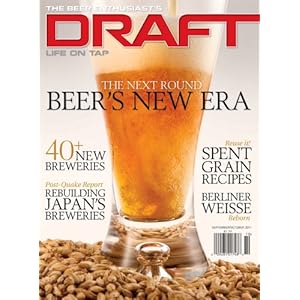
When the massive Tōhoku earthquake hit Japan in March, the destruction was immense. In addition to the thousands of lives lost, the 9.0 quake and subsequent tsunami destroyed roadways, ports, homes, and nuclear power plants—along with several craft breweries. To quote the Japan Beer Times, "few individuals and businesses were unaffected negatively." The good news, as I report in the September/October issue of DRAFT magazine, is that for damaged breweries like Kiuchi in Naka city, recovery has been relatively swift. Not only did Kiuchi immediately help the surrounding community by providing free meals and clean drinking water, they went on to open their first gastropub, True Brew Beer Cafe & Shop, a mere ten weeks after the fifth most powerful earthquake in world history.
Beer for the Beach
For years, Corona has shrewdly marketed itself as the beer to order at any beach, anywhere, claiming to possess "the unparalleled flavor of relaxation." Whatever that means. Personally, television ads featuring tropical shorelines and a soundtrack of crashing surf won't persuade me to buy a bottle of fizzy corn juice disguised as alcohol. Besides, I'd rather drink something brewed locally. Which is why I was happy to share some of my recent beach beer finds in the September issue of Travel + Leisure Southeast Asia.
No, Grupo Modelo's popular lager isn't particularly hard to come by in Thailand, Cambodia, or Vietnam, but given the choice, I'll take a fruity Red Ale or a citrus-tinged Passion Beer at Nha Trang's Louisiane Brewhouse any day of the week. Reserve an umbrella and a beach chair with views of the South China Sea for 35,000 Vietnamese đồng (about $1.68) and spend a leisurely afternoon choosing a favorite by working your way through their tasting tray ($4.80 for four 200 ml glasses). Or, if you find yourself island hopping in Cambodia and craving some refreshment with a shade of bitterness, ask for Clouded Leopard Pilsener (usually around $2), made by Kingdom Breweries in Phnom Penh. The mildly spicy Saaz and Hallertau hops used in this beer mean that even without a wedge of lime, you can count on plenty of taste.
Chicken and Beer in Bacolod City
The place was called Chicken House. My host, Lyn Balboa, had taken me there to try chicken inasal, a dish many Negrense, or Filipinos from the island of Negros, consider a delicacy. This is because it's the best barbecued poultry you will ever taste. Succulent, immensely flavorful (thanks to a lengthy marinade), and served with vinegar, it's a must try for anyone traveling to Bacolod City, the capital of Negros. Unsurprisingly, chicken inasal also goes well with beer.
Most of the suds you're likely to drink in the Philippines are made by the same giant brewery: San Miguel. By their own estimate they control about 95 percent of the domestic beer market. What I didn't know before visiting the City of Smiles however, is that for the past three years, one entrepreneur has quietly been producing his own beers and distributing them locally. As luck would have it, Lyn knew the brewer and invited him to join us at the Chicken House.
"I had this dream ever since college," Felix Hagad told me as he sat down at our table, "it's been a slow process and I had to make my friends taste bad beer in the beginning. I couldn't get it to bubble enough."
Fortunately for his friends—and globetrotting beer travelers like me— those days are well behind him. I didn't try the Bogsbrew Classic (somewhat confusingly offered as an IPA, a Canadian blonde ale, a European lager, and a Mexican-style cerveza), but I liked his Primo all-grain beer, a cloudy, light bodied drink that weighs in at about 4.5 % ABV. I detected a trace of hops in the nose, and it ended with a sweet finish, probably owing to the wild bee honey and organic muscovado sugar that Felix adds to his wort. Overall, Primo is mellow and sessionable, although it could benefit from a bit more carbonation.
Nevertheless, the popularity of his craft brews has only increased since he realized his dream, even attracting the attention of a Canadian beer blogger. "Business is picking up," Felix wrote in a recent email. "I now have to brew an extra batch of Primo in between my normal cycle of brewing malt extract beer." With a furniture manufacturing company to run in addition to Bogs, it must be challenging to keep up with the growing demand for his Filipino beers. And yet something tells me I'm not the only inasal devotee who wants to see his labor of love succeed.
Pairing Beer with the Great Outdoors
Which got me thinking—what would the beer sponsorship landscape look like if regional brewers got in on the action? How would they attract new drinkers if they were trying to partner with the Hawaii Surfing Association, or the American Hiking Society? Personally, I could see a scenario along these lines:
- Long Trail Ale, an easy drinking altbier made for long distance hikers.
- For the dedicated cyclist, New Belgium's popular amber ale, Fat Tire.
- Kona's Longboard Island Lager, a drink to grab after a day in the surf.
- Russian River's Damnation—meant for the kayaker who charges into rapids at full speed.
- Malty Hibernation Ale from Great Divide, a warming winter beer for serious snowboarders.
- The dry-hopped Hazed and Confused, brewed for bold rock climbers by Boulder Beer Company.
- Lake Erie Monster, a hoppy windsurfing lover's IPA from Great Lakes Brewing Company.
- Fresh Powder Milk Stout, Lake Placid's ode to skiing the Adirondacks.
So, what do you think? Is there a perfect craft beer out there for your outdoor activity of choice?
Split Thy Brooklyn Skull
Temperatures fell as the afternoon wore on at the eleventh annual tasting event, but good craft beer was never in short supply. I didn't have the wallet or the stamina to sample even half of the 47 possibilities available, but that didn't keep me from picking favorites:
- Brewdog Tokyo (18.2% ABV). Call it what you will, but Tokyo packs a punch, even in small servings. Classified as an imperial stout, this nearly black liquid resembles a barleywine in some ways and has a smell that reminded me of balsamic vinegar. This may be due to the addition of jasmine and cranberries.
- Green Flash Palate Wrecker (9.4% ABV). Unless you can handle 100 IBUs, keep your distance. Pouring a bright yellow-orange with a thick, foamy white head, this creation from Green Flash is probably the hoppiest beer I've tried yet. With an intensely resiny aroma and a bold, oily flavor, I found it uniquely deserving of the title imperial IPA.
- Weyerbacher Blasphemy 2007 (11.8% ABV). A quadruple aged in oak barrels, Blasphemy is certainly a complex drink that I'd describe as buttery and intoxicating. The amber color is alluring, and yet the aroma of bourbon signals that this isn't a beer to be trifled with. Outstanding in small quantities.
- Southern Tier Imperial Mokah (10.9% ABV). Just about the closest anyone's come to Hershey's syrup in a 22-ounce bottle. If, like me, you're a drinker with a sweet tooth, then this exceptionally silky, malty stout is deserving of your hard-earned cash. Although the brewery only releases it seasonally, Mokah could easily be enjoyed year round.
- Spring House Kerplunk (8.1% ABV). Named for the sound that chocolate makes when dropped into a brew kettle, Kerplunk has the ebony color you'd expect in an imperial stout but was less dense than some versions of this style. Caramel and bitter cocoa stood out right away, as did a hint of tobacco in the finish.
- Voodoo Grand Met (10.0% ABV). Dry, deceptively strong, and the color of polished brass, Voodoo Grand Met is a nice example of a French biere de garde or maybe a Belgian spiced ale. Made in Pennsylvania with German pilsner malt, cane and beet sugar, it stood out in a field crowded with big beers.
The Iron Santa Challenge
- Rogue Mogul Madness (7.0% ABV). A dark winter ale with a sweetish caramel aroma, citrus hops, and notes of berries and mocha.
- Flying Dog Gonzo Imperial Porter (9.5% ABV). This beer was on cask and tasted somewhat off to me. A strong, full-bodied ale, it ordinarily has a complex character with flavors of coffee beans and smoky molasses.
- Young's Double Chocolate Stout (5.2% ABV). The hops remain subtle in this silky brew which tastes like a melted candy bar. Indulgence in a glass.
- Mendocino Black Hawk Stout (5.0% ABV). Brewed with Black Patent malt and hops from North America, this is a very drinkable, rich beer with a dry finish.
- Two Brothers Red Eye (9.3% ABV). With strong flavors of bittersweet cocoa and roasted coffee, this deep brown ale was my favorite of the night. Or so I recall.
- Chelsea Frosty's Winter Wheat Wine (9.5% ABV). Described on the tap menu as a deceptively easy drink, I found this beer difficult to describe. Which I might have expected after downing five pints in relatively quick succession. It allegedly balances a hint of sour fruitiness with toasted wheat malt and just enough hops to keep things interesting.
A Brew With Bite
So it wasn't until my neighborhood beer merchant began to carry their malty products that I finally got to try BrewDog. But instead of choosing Punk IPA, their most popular style, I opted for the more unusual and enigmatic Dogma, a heather honey infused ale.
At 7.8% alcohol by volume, Dogma packs a punch, especially if you finish a 660ml bottle by yourself, as I did last night while watching the season premiere of "The Office." It didn't acquire much head when I poured a glass, and to my nose, smelled strongly of overripe fruit and honey. The malts came through in the flavor and although my taste buds did identify notes of bitter honey, they haven't yet learned to distinguish a kola nut from a guarana seed. Poppy seed on the other hand, really stood out in the lingering finish.
I'd definitely recommend trying this complex beer, ideally at pub like The Halfway House, Edinburgh's smallest (and one-time Scottish pub of the year). I'm guessing it could go well with an order of stovies and oat cakes.
Subscribe to:
Posts (Atom)