Showing posts with label Asia. Show all posts

Sticky Rice Ingenuity in Laos

My friends in Thailand told me I wouldn't like the food in Laos. Thai food was better they said; Laotian dishes were bland and couldn't compare to the flavorful, fiery cuisine of Isaan, just over the Mekong River. Not knowing any better, I trusted them: these same people had led me to some of my favorite meals ever. And so, as I boarded the overnight train from Bangkok's Hua Lamphong station, I lowered my expectations. Maybe my first trip to the Lao People's Democratic Republic would be a complete bust.

Fortunately, my friends were wrong. Very wrong, in fact. Eating my way through Vientiane while on assignment for Travel + Leisure Southeast Asia, I discovered charming restaurants serving intriguing national dishes (Lao Kitchen), vendors hawking delicious street food (I'm still a sucker for warm, sugary roti), and, to my surprise, a Belgian beer bar, too (Chokdee Cafe). My favorite find however, might have been an unassuming little family-run business in Phiawat Village called Kung's Cafe. 

I arrived around 1pm, just as the lunchtime regulars were returning to work. Choosing a table close to an oscillating fan, I ordered ginger chicken with rice, iced coffee with coconut milk to combat the heat, and to satisfy my curiosity, the mango sticky rice pancake. Dense, chewy, and expertly browned, the large doughy envelope arrived curled around a juicy chunk of fresh tropical fruit and drizzled with sweet Laos honey. Big enough to share and good enough for seconds, Kung's sticky rice pancake was the highlight of my last day in Vientiane. I raved about it to my Thai friends as soon as I got back to Bangkok.

Bangkok as a Beer Destination

Two and a half years ago, I boxed up my things, packed a pair of bags, and moved to Bangkok. The food—as expected—was phenomenally good, the omnipresent heat took some getting used to, and the beer, well, I hadn't counted on any surprises. Then I discovered the Belgian beer bar in Ari, my new neighborhood. I couldn't afford to drop by as often as I wanted to, but just knowing a place with Leffe on tap existed in Thailand made me that much happier to be there.

Earlier this year, I returned to Southeast Asia to see friends and research several assignments for a few different magazines. One of these articles covers Bangkok's beer scene and appears in issue#78 of BeerAdvocate (July 2013). Not only did I enjoy going back to old favorites like House of Beers, I also happily spent time at newer bars and beer focused restaurants like Brew Beers & Ciders and Shuffle at Rain Hill, a recommendation from Brian Bartusch and Aaron Grieser, the guys behind Beervana Trading Company. Sitting around their busy Bang Na office while drinking a Poleeko Pale Ale, I got the sense that craft beer had become more than something trendy to add to menus catering to a moneyed clientele. Slowly but surely it's earning a place in Thailand's sophisticated food culture. I can't wait to see what's changed the next time I visit.

Surf, Sand, and Beer: Island Hopping for Vagabondish

For me, one of the perks of travel is the chance to try ales and lagers that aren't available at my local bar or bottle shop. Every beer isn't always remarkable of course, but once in a while I return home still thinking about a memorable pint. Earlier this month, Vagabondish published a feature I wrote entitled Island Hopping for the Beer Lover. In it, I recommend eight places to go in Asia, Europe, the United States, and Australia. For more of my travel advice served with a general splash of beer, read this post from last year.

Exploring Quang Ngai for Perceptive Travel

Early last year, intrigued by a headline in a Korean newspaper, I struck up an email correspondence with a historian in Hanoi. I was fascinated by his discovery of a nearly 80-mile long wall in central Vietnam, and eventually decided to travel to Quang Ngai province to see it myself. Perceptive Travel published my story about the trip in their September issue. To see a few more pictures of the wall and the countryside it passes though, check out this photo set on Flickr.

Intoxicating Bangkok

Not long after I moved to Thailand's capital city in late 2010, I discovered something I hadn't counted on: a beer scene on the rise. With each week that went by, another European import (and even the occasional microbrew) would turn up on a menu or tap list somewhere. For a beer advocate like me, this was good news. Last summer, Beer Connoisseur published a feature story I wrote on the growing number of brewpubs and trendy beer bars in Bangkok. In it I mention Tawandang German Brewery and Est. 33 by Singha, two businesses that have since opened new branches at Siam Discovery Center and The Nine on Rama 9 Road.

As far as I can tell, the pace of change hasn't slowed much, if at all. Chris Foo, of House of Beers, or HOBS, recently launched BREW Beers & Ciders in Thong Lor, while Silom has added The Pintsman and The Nine made room for Einstein Café, yet another place to find witbier and pale European lager on tap. American brands haven't joined the party yet, but friends tell me that it is possible to track down an IPA (by which I mean Carlow Brewing's dry-hopped Irish Pale Ale). My article isn't online, but here's a brief excerpt:  
"Built to be the "ultimate lifestyle design district" with dozens of showrooms peddling fine furniture, expensive kitchen and bath products, luxury house ware, and modern home entertainment accessories, CDC [the Crystal Design Center] has surprisingly emerged as an oasis for beer buffs as well. Restaurants soon followed interior design companies to this shopping complex, and then at the beginning of the year, Est. 33 was joined by the Aston Gastro Bar and Beerology. These specialty bars aren't trying to compete with the typical Thai beer garden crowded with tin tables and taste-alike beer; they're aiming to attract tastemakers. In a city where a bottle of Chang is usually about 70 Thai baht of $2.30, they charge closer to $8 for a bottle of Tripel Karmeliet."

Need a Physician? Bring a Passport

No, that's not a hotel interior. It's a VIP suite at a medical facility in Southeast Asia. And not even the most expensive inpatient accommodation available at Bumrungrad International Hospital—that would be the Premiere Royal Suite. Honestly, I found it difficult not to be a little gobsmacked the first time I saw rooms like this in person.

I mention this because I wrote a short article on Thailand's medical tourism industry last year. My editor at Tropical magazine called it "Comfort and Care: Thailand's Perennial Allure to Health Travelers," and at the end, I quoted a source who claimed that countries such as Poland, Hungary, and Costa Rica are challenging heavyweight healthcare destinations like Thailand. Many months later, flipping through the "Journeys" issue of the New Yorker, I found myself reading James Surowiecki's financial column before any of the longer travel features. This in spite of the fact that I hadn't eaten dinner yet and the magazine included an intriguing story on Russia's lost culinary heritage.

Hiking Muka Head in Penang

For many travelers—including me—Penang is a place to go to eat. When I visited last spring, the tempting edibles on nearly every corner made it hard to resist spending my time snacking from dawn til dusk. Long considered a culinary paradise by foodies, this small Malaysian island in the Malacca Strait has seen its popularity spike since UNESCO added the historic city of George Town to their World Heritage List in 2008. And yet a short distance from the city and its heavenly food, Penang's green lung and Malaysia's smallest national park beckons to those in search of a bit of calm and quiet.

Occupying the northwestern corner of the island, the adjacent Teluk Bahang Forest Preserve and Penang National Park (Taman Negara Pulau Pinang) offer a number of hiking trails that lead to secluded beaches, mangrove forests, an unusual meromictic lake, and an impressive nineteenth century lighthouse. Along the way, park guests might also be lucky enough to spot Rhesus monkeys, a variety of exotic bird species, and one of the world's largest squirrels. I caught a glimpse of the latter from afar, and it was remarkable. Think cat-sized.

To reach the main entrance, take bus route 101 or 102 on Rapid Penang and exit at the Teluk Bahang roundabout. Entrance to the park is free and a small color brochure with map (in English and Bahasa Malaysia) is available at the interpretation center or from the Wildlife Department's website. You'll cross a small suspension bridge just beyond the gate, and then two trails guide hikers either northwest to the Muka Head light, or southwest across the peninsula to a pair of more remote beaches, one of which is a nesting-ground for green sea turtles. According to the map, this second route is longer and more difficult.

The Truth About Elephant Trekking

Few experiences can compare with meeting one of the world’s largest vegetarians. Up to ten feet tall at the shoulder, Elephas maximus, better known as the Asian elephant, is the very definition of a gentle giant, happy to accept a spiny pineapple or a bunch of ripe bananas from an awestruck two-legged visitor. According to biologists, perhaps as many as 100,000 members of this species occupied Southeast Asia in the early 1900s, but in the century since, these animals have seen their range steadily shrink as logging, slash and burn agriculture, and a growing human population encroach on the tropical and subtropical forests pachyderms depend on for survival. Poaching and habitat fragmentation further threaten the small numbers that exist in the wild in Thailand today, now largely limited to national parks such as Khao Yai and Khao Cha Mao, as well as isolated tracts of land along the Cambodian, Laotian, and Myanmar borders.

While their numbers in the wild have decreased, their popularity as a tourist attraction has only grown, due in part to the government ban on logging that effectively put many domesticated elephants out of work. At present, the Tourism Authority of Thailand (TAT) lists nearly four dozen tour operators that offer short rides or longer treks. Clearly elephants are big business. But what kind of business exactly? These highly social animals require lots of fresh water and about 330 pounds
(150 kg) of food per day, not to mention quite a bit of space. So how are they trained and cared for? A phrase on the TAT website offers a telling if disappointing clue: “the treatment of Thai elephants varies from elephant camp to elephant camp, some using more humane methods to look after their elephants than others.”

According to Timothy Gorski, director of the documentary How I Became an Elephant, the boom in elephant tourism began in the 1980s and has risen with "the so-called ‘eco-tourism’ phenomenon. Elephant treks are being marketed as eco-friendly conservation tours.” Problematically though, the definition of eco-tourism often differs from company to company, and training methods—rarely witnessed but captured in Gorski’s documentary—are often cruel. The pajaan, a practice that involves caging a young elephant and depriving it of food, sleep, and even contact with its mother, is one such method. In addition, some say that health and safety regulations are minimal and inadequately enforced. As a result, Catherine Bodry, co-author of the last edition of Lonely Planet Thailand, maintains that the long-term well being of elephants in Thailand is largely up to tourists and the general public. But if the future of the Asian elephant depends on public awareness and action, education must be a part of any trek. Unfortunately, this isn’t something that every camp provides.

A Year Afoot

For me, 2011 was anything but typical. After spending Christmas on Ko Samet in the Gulf of Thailand, I watched January quietly arrive from a sixth floor balcony in Bangkok. By February I had made two short trips to Cambodia—one to Siem Reap and another to the capital. A month later I was hiking up an active volcano in the Philippines and then in May, I huffed and puffed along a winding jungle trail in Penang, Malaysia (pictured at right) to reach Muka Head and its impressive nineteenth century lighthouse. Meanwhile, in the United States, FalconGuides published Best Hikes Near New York City, my first book since going freelance two years ago.

At the start of summer I was back on the carriage roads and footpaths of New York and New Jersey, leading groups of nature-deprived urbanites for Outdoor Bound. A friend's June wedding in Kentucky was my chance to explore a fraction of the Red River Gorge Geologic Area, although I didn't make it to the state's well known natural bridge. Then in September I spent some time in Vietnam's central provinces trying to learn what I could about the pre-colonial history of the region. I was only back on the East Coast for three weeks before I dashed off to Denver for the 30th annual Great American Beer Festival, a trip that also included a day hike through the red rocks at Roxborough State Park. Finally, just before Thanksgiving, a brief magazine assignment took me to Idaho, where I got a crash course in trout fishing and stopped at the Riverport Brewing Company.

All told, I covered a lot of territory last year, and from this vantage point, 2012 doesn't look like it will involve much sitting still. I've already begun to make plans for a trip to Europe, and once the snow melts in the northeast, I'll get going on my next book, another outdoor recreation guide. In fact, as I peer into the future and consider the amount of travel I'm likely to do in the next 12 months, I have to wonder whether 2011 was really so atypical after all.

Beer for the Beach

For years, Corona has shrewdly marketed itself as the beer to order at any beach, anywhere, claiming to possess "the unparalleled flavor of relaxation." Whatever that means. Personally, television ads featuring tropical shorelines and a soundtrack of crashing surf won't persuade me to buy a bottle of fizzy corn juice disguised as alcohol. Besides, I'd rather drink something brewed locally. Which is why I was happy to share some of my recent beach beer finds in the September issue of Travel + Leisure Southeast Asia.

No, Grupo Modelo's popular lager isn't particularly hard to come by in Thailand, Cambodia, or Vietnam, but given the choice, I'll take a fruity Red Ale or a citrus-tinged Passion Beer at Nha Trang's Louisiane Brewhouse any day of the week. Reserve an umbrella and a beach chair with views of the South China Sea for 35,000 Vietnamese đồng (about $1.68) and spend a leisurely afternoon choosing a favorite by working your way through their tasting tray ($4.80 for four 200 ml glasses). Or, if you find yourself island hopping in Cambodia and craving some refreshment with a shade of bitterness, ask for Clouded Leopard Pilsener (usually around $2), made by Kingdom Breweries in Phnom Penh. The mildly spicy Saaz and Hallertau hops used in this beer mean that even without a wedge of lime, you can count on plenty of taste.

Road Tripping From Bangkok

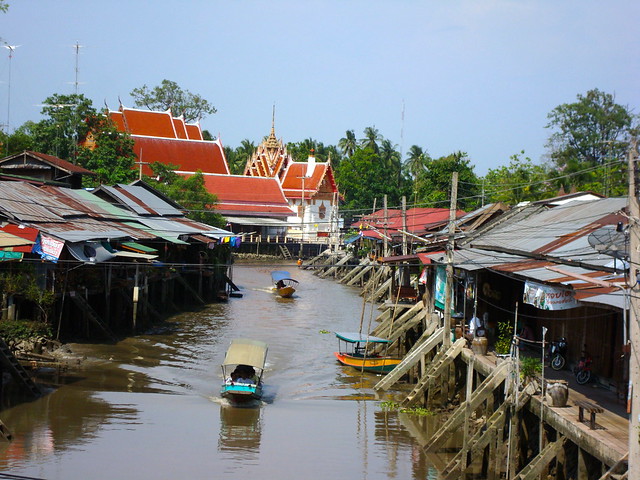
Every year millions of tourists flock to the Kingdom of Thailand, eager to see the Grand Palace, snorkel in the Andaman Sea, or maybe expand their culinary horizons. Well, whether or not they're aware of it, most of these people end up covering the same well-worn tourist trail: Bangkok, Chiang Mai, Phuket, Ko Samui, and Ko Phi Phi. Which isn't to say that these places aren't worth visiting, it's just that there's so much more to this country that you'll never really see from the window seat of a puddle jumper. I made more than a few overland journeys during the months I spent in Thailand, but one of my favorite trips was a drive south from the capital along the Gulf coast to Khao Sam Roi Yot National Park. Over the course of a long weekend, I learned a bit more about the region's history, tried a ton of incredible food at the Amphawa floating market (pla meuk yang anyone?), and documented my stops with a smattering of photographs.

Chicken and Beer in Bacolod City

The place was called Chicken House. My host, Lyn Balboa, had taken me there to try chicken inasal, a dish many Negrense, or Filipinos from the island of Negros, consider a delicacy. This is because it's the best barbecued poultry you will ever taste. Succulent, immensely flavorful (thanks to a lengthy marinade), and served with vinegar, it's a must try for anyone traveling to Bacolod City, the capital of Negros. Unsurprisingly, chicken inasal also goes well with beer.

Most of the suds you're likely to drink in the Philippines are made by the same giant brewery: San Miguel. By their own estimate they control about 95 percent of the domestic beer market. What I didn't know before visiting the City of Smiles however, is that for the past three years, one entrepreneur has quietly been producing his own beers and distributing them locally. As luck would have it, Lyn knew the brewer and invited him to join us at the Chicken House.

"I had this dream ever since college," Felix Hagad told me as he sat down at our table, "it's been a slow process and I had to make my friends taste bad beer in the beginning. I couldn't get it to bubble enough."

Fortunately for his friends—and globetrotting beer travelers like me— those days are well behind him. I didn't try the Bogsbrew Classic (somewhat confusingly offered as an IPA, a Canadian blonde ale, a European lager, and a Mexican-style cerveza), but I liked his Primo all-grain beer, a cloudy, light bodied drink that weighs in at about 4.5 % ABV. I detected a trace of hops in the nose, and it ended with a sweet finish, probably owing to the wild bee honey and organic muscovado sugar that Felix adds to his wort. Overall, Primo is mellow and sessionable, although it could benefit from a bit more carbonation.

Nevertheless, the popularity of his craft brews has only increased since he realized his dream, even attracting the attention of a Canadian beer blogger. "Business is picking up," Felix wrote in a recent email. "I now have to brew an extra batch of Primo in between my normal cycle of brewing malt extract beer." With a furniture manufacturing company to run in addition to Bogs, it must be challenging to keep up with the growing demand for his Filipino beers. And yet something tells me I'm not the only inasal devotee who wants to see his labor of love succeed.

The Daang Kastila Trail

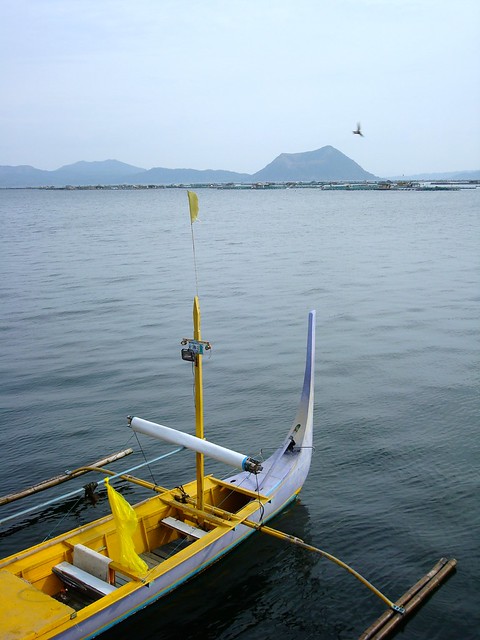
The boat knifed across the lake, sending a steady spray of water over the gunwales and drenching the two passengers huddled near the rear. Gradually, the hazy gray shape I'd seen in the distance became a landmass, and my girlfriend and I would soon reach its shore. Up ahead, at the water's edge, other small, colorful boats waited for the return of their captains like dogs leashed outside a bodega. Beyond the rickety docks, a large sign welcomed new arrivals to Taal Lake and drab single-storey buildings clustered together to form some semblance of a town. Before long, we hoped, we'd be staring down into the beating heart of this volcanic island.

What we didn't know at the time was that Taal is one of the most active volcanoes in the Philippines, and one of the most destructive. In 1911, one hundred years before our visit, a massive eruption killed more than a thousand people and caused extensive damage to surrounding areas in the province of Batangas. We had been drawn here by a geographic oddity: an island on a lake inside an island on a lake. Roughly five kilometers across, Volcano Island is essentially a collection of craters and cones created by over 30 eruptions since 1572, when Father Gaspar de San Augustin wrote "there is a volcano of fire which is wont to spit forth many and very large rocks, which are glowing and destroy the crops of the natives." The island has grown in size by 25% in the centuries since this first account, and to reach it, travelers must cross Taal Lake, a body of water that is itself a caldera, or massive crater.

For 1,500 pesos (about $35) we had been brought this far from the bus stop in Tagaytay. Upon landing, the third passenger on our boat—a native of the island's village—explained that we would need to pay several hundred pesos more to rent scrawny ponies to carry us up the side of the volcano. And that was in addition to the tourist's fee of 50 pesos per person. The young women staffing the welcome center reiterated the supposed terms of entrance to us again, but eventually gave up when we kept insisting on hiking to the top. Although my girlfriend and I knew little about the volcano's history, we were well aware that several paths led to the edge of the smaller of the two crater lakes.

Given that it was already late afternoon, we chose to follow the Daang Kastila Trail, the busiest and most direct route to the center of the island. Ticket stubs in hand, we walked back outside and proceeded up the dusty track to the summit. Moving past a small corral, we followed a train of ponies through the village where dogs, chickens, and children scrambled to get out of the way of oncoming traffic. No signs marked the trail, but it wasn't difficult to find—groups of mounted tourists trotted by regularly, busily texting friends or twisting in their saddles to snap a photo during their bumpy descent. We completed the climb in less than an hour, and fortunately managed to time our return trip with the sunset. 

As eerie as it was to feel heat radiating from beneath my boots and to catch the occasional whiff of sulfur on the breeze, I'm glad to have hiked Daang Kastila, especially when I did. According to the Philippine Institute of Volcanology and Seismology, Taal has recently experienced a series of volcanic earthquakes and the crater lake has become more acidic, even as its temperature has risen by nearly four degrees Fahrenheit. As of last week, Volcano Island was off limits to tourists. Before making your own plans to undertake a volcano hike in the Philippines, be sure to consult the Department of Tourism's website for relevant travel advisories.

A Spring Cleaning

Two weeks ago I found myself running for my life. The day before, my friends and I had turned up in Sangkhlaburi, a sleepy little town near the Burmese border at the northern end of the Khao Laem Reservoir. Only we were arriving during the one time that the entire country of Thailand happens to be wide awake: the Thai New Year. Better known as Songkran, this famously boisterous holiday can trace many of its traditions back to the fourteenth century and the kingdom of Ramathibodi in Ayutthaya.

Flash forward to the present however, and I'm sprinting from a pack of heavily armed, Hawaiian shirt-wearing assailants in a futile attempt to stay dry. Because while Thais do observe the holiday in a variety of ways, the celebration today is defined by a prolonged, nationwide water fight. And I hadn't brought anything to defend myself with. Far from menacing, the kids in town nonetheless knew how to use their squirt guns and water buckets, and took great pleasure in drenching a conspicuous group of farang. View more pictures from the Songkran Festival in my Kanchanaburi photo set.

A Dispatch for DestinAsian

Thailand has roughly 450 kilometers of expressways. Occasionally, it can feel like every other person in the country is using them to get somewhere at the same time. For that reason, driving here is not always a pleasant experience. As for the rules of the road, the Rough Guide to Thailand helpfully remarks that "there are few rules that are generally followed—you'll need to keep your concentration up and expect the unexpected." Fodor's meanwhile, sums up the situation much more bluntly: "Driving in Thailand is not for the faint of heart."

Traffic and safety concerns aside, a road trip through this complicated nation does yield rewards, as I discovered while on assignment for DestinAsian magazine. In a piece entitled "Thailand Uncorked," I traveled to Khao Yai, where several members of the Thai Wine Association are working together to promote a wine trail. Driving between the three vineyards featured in my story, I got a glimpse of Thailand that you'll never see by sticking to bus routes and train lines. In fact, if it weren't for my road trip to wine country, I might never have discovered Palio Khao Yai.

Southeast Asia's Little Italy

Last Sunday was a strange day. Following an afternoon spent puttering around the oldest national park in Thailand, I ended up eating dinner at one of the country's newest attractions: Palio Khao Yai, a "walking street shopping center in Italian-style village mall." Got that? A personal recommendation had led my friends and I to hunt for a burger joint south of the town of Pak Chong, and after mistakenly driving past a vaguely European complex, we found ourselves paying 20 baht each to enter this warren of terracotta-colored buildings. Call it the Little Italy of Southeast Asia.

As out of place as it seemed architecturally, what struck me about Palio was its obvious allure to amateur Thai photographers. While we were there, dozens of people streamed through the gate, usually in couples, and always with cameras. I smirked as they posed in front of the fountain in the piazza, and shook my head in disbelief as they led tiny dogs in sweaters down faux-cobblestone streets. Apparently the ability to shoot portraits against a "Tuscan" backdrop trumped the appeal of creatively-named cafes like Fries Me To The Moon.

It seemed silly to me at the time, but when I thought about it later, I realized that I'd misjudged things. After all, whether or not it's international, a big part of travel is making memories, and for most of us, taking pictures is part of that process. Did I really think that my images of waterfalls and wildlife somehow showed a more authentic side of Thailand? True, I'm the kind of person who prefers hiking to shopping, but a park is a tourist attraction too, and in the end, they're all competing for visitors. In that sense, maybe Palio Khao Yai isn't such a strange place to spend a Sunday.

Beer-Themed Travel Guides

Above all, I travel to taste. In every country I've visited, from Canada to Panama, Scotland to Thailand, my goal is almost always to find a beguiling beer that captures something about the essence of a particular place. Because even though the internet has made it possible to see parts of the world that we could once only imagine, we still have to travel farther than our well-provisioned kitchens to truly experience foreign flavors. If you ask me though, the pursuit of good food and beer are two of the best reasons to leave home in the first place.

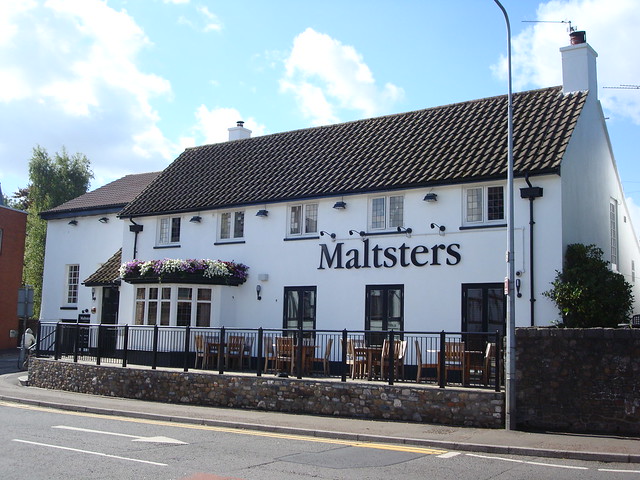
Earlier this month, I published two stories about beer-themed travel. The first, entitled "Rooms with a Brew," was inspired by a trip to Texas that included a stop at the Fredericksburg Brewing Company in Hill Country. Roughly a year later, I found myself spending two nights at Maltsters, a pub in Llandaff on the northern edge of Cardiff, Wales. Built in 1310, it's probably the oldest licensed pub in the city, but you'd never know it from the look of their rooms or the taste of their breakfast menu. In the second story, I list "Eight of the Best German-Style Beer Halls Outside of Germany." Of course I could have included more than eight locations, but I figured one rule of beer drinking should probably also apply to list-making: Know your limits.