Founded in 1969 and recognizable by its wrought iron roadside statue, Titcomb’s Bookshop has evolved from a small antiquarian book dealer into a three-story business with an international following. Stop in to flip through A History of Chowder, grab a game for the kids, or pick up a paperback to bring to Sandy Neck Beach Park just up the road. Lifeguarded from Memorial Day to Labor Day, the beach is accessible with a parking sticker or a day pass ($15-20). Go for a dip, read under your umbrella, or take a short hike on the nature trail to look for signs of deer, reptiles, and wading birds. After a little sun, continue into Barnstable for a visit to Cape Cod Beer, a craft brewery that proudly advertises “a vacation in every pint.” Cape Cod Red, a full-flavored amber ale is their bestseller, but on a hot day, Beach Blonde, a golden-hued easy drinker might be a better choice. Time your stop with a tour and tasting (Monday-Saturday), or grab a growler to go (from $11).
Showing posts with label beach reading. Show all posts
Sights and Bites Along Cape Cod's Old King's Highway
Founded in 1969 and recognizable by its wrought iron roadside statue, Titcomb’s Bookshop has evolved from a small antiquarian book dealer into a three-story business with an international following. Stop in to flip through A History of Chowder, grab a game for the kids, or pick up a paperback to bring to Sandy Neck Beach Park just up the road. Lifeguarded from Memorial Day to Labor Day, the beach is accessible with a parking sticker or a day pass ($15-20). Go for a dip, read under your umbrella, or take a short hike on the nature trail to look for signs of deer, reptiles, and wading birds. After a little sun, continue into Barnstable for a visit to Cape Cod Beer, a craft brewery that proudly advertises “a vacation in every pint.” Cape Cod Red, a full-flavored amber ale is their bestseller, but on a hot day, Beach Blonde, a golden-hued easy drinker might be a better choice. Time your stop with a tour and tasting (Monday-Saturday), or grab a growler to go (from $11).
Bangkok as a Beer Destination
Two and a half years ago, I boxed up my things, packed a pair of bags, and moved to Bangkok. The food—as expected—was phenomenally good, the omnipresent heat took some getting used to, and the beer, well, I hadn't counted on any surprises. Then I discovered the Belgian beer bar in Ari, my new neighborhood. I couldn't afford to drop by as often as I wanted to, but just knowing a place with Leffe on tap existed in Thailand made me that much happier to be there.Earlier this year, I returned to Southeast Asia to see friends and research several assignments for a few different magazines. One of these articles covers Bangkok's beer scene and appears in issue#78 of BeerAdvocate (July 2013). Not only did I enjoy going back to old favorites like House of Beers, I also happily spent time at newer bars and beer focused restaurants like Brew Beers & Ciders and Shuffle at Rain Hill, a recommendation from Brian Bartusch and Aaron Grieser, the guys behind Beervana Trading Company. Sitting around their busy Bang Na office while drinking a Poleeko Pale Ale, I got the sense that craft beer had become more than something trendy to add to menus catering to a moneyed clientele. Slowly but surely it's earning a place in Thailand's sophisticated food culture. I can't wait to see what's changed the next time I visit.
Straight Outta Okemah
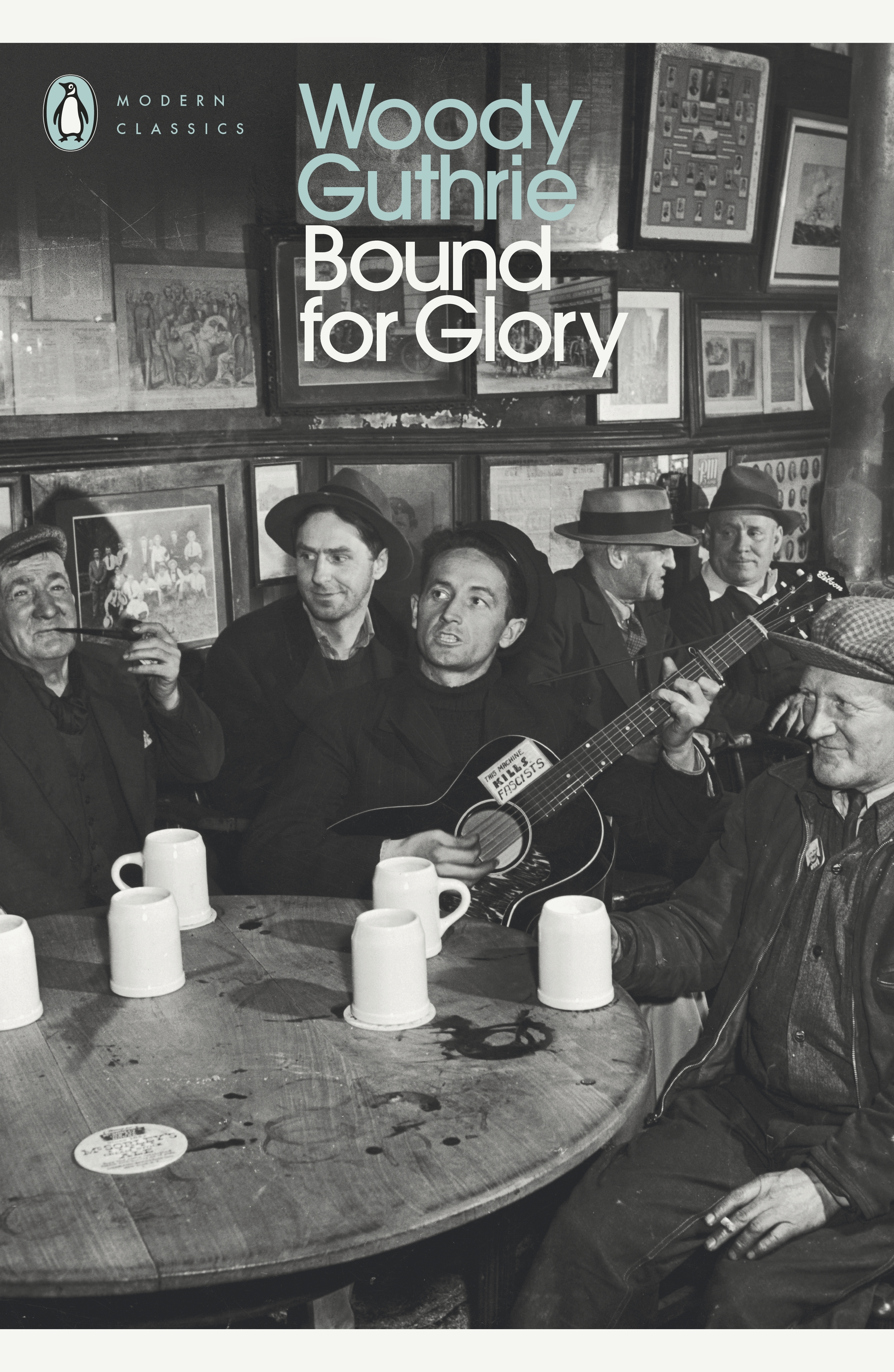
Driven West by drought, dust, and economic opportunity, a young
Woodrow Wilson Guthrie set out from home in 1936, scribbling folk songs,
letters, and memories that were published seven years later as the
autobiographical novel Bound for Glory. "I was always a big hand to walk along and look at the things along the
side of the road," he wrote. "Too curious to stand and wait for a ride. Too nervous
to set down and rest. Too struck with the traveling fever to wait."
In his book, Guthrie described the people he met as well as the societal ills he observed, but he also wrote about the beauty of America, a country the musician would cross again and again after his "traveling fever" originally took him from Texas to California by foot, car, and train. I first heard Dust Bowl Ballads in college, and since reading Bound for Glory I've decided that someday I'd like to follow in Guthrie's footsteps—using the book as a guide—to survey how much the landscape and lifestyle of the American Southwest has changed, and to learn what today's ribbon of highway might have in common with that of the late 1930s.
Until then, I'll have to explore his legacy in other ways. Fortunately, the Grammy Museum and Woody Guthrie Publications (with help from several other centennial sponsors) have joined forces to celebrate the life of one of the country's most influential singer-songwriters. All year long they've hosted conferences, theatrical performances, and concerts, and with a number of events remaining before the end of the year, there's still time to wish Woody a Happy Hundredth. I'd definitely like to make it to one of the last shows; hopefully other fans are planning to get their tickets, too.
In his book, Guthrie described the people he met as well as the societal ills he observed, but he also wrote about the beauty of America, a country the musician would cross again and again after his "traveling fever" originally took him from Texas to California by foot, car, and train. I first heard Dust Bowl Ballads in college, and since reading Bound for Glory I've decided that someday I'd like to follow in Guthrie's footsteps—using the book as a guide—to survey how much the landscape and lifestyle of the American Southwest has changed, and to learn what today's ribbon of highway might have in common with that of the late 1930s.
Until then, I'll have to explore his legacy in other ways. Fortunately, the Grammy Museum and Woody Guthrie Publications (with help from several other centennial sponsors) have joined forces to celebrate the life of one of the country's most influential singer-songwriters. All year long they've hosted conferences, theatrical performances, and concerts, and with a number of events remaining before the end of the year, there's still time to wish Woody a Happy Hundredth. I'd definitely like to make it to one of the last shows; hopefully other fans are planning to get their tickets, too.
The 5 Best-Kept Secrets About Ko Phi Phi
One of the most popular destinations in Thailand, Ko Phi Phi Don might also be one of world’s best-known islands. Every day ferries deposit scores of sun-worshippers and partygoers on the shores of this limestone landmass in the Andaman Sea. I made my own trip there with some friends a few years ago, and plan to go back before 2011 is over. It really deserves the hype. And although you don't have to stay long to appreciate its appeal, Phi Phi also has a few secrets to reveal to those who come looking.
- The Soundtrack. Forget the beach—well, not entirely—and acquaint yourself with the marine life inhabiting the lagoons of Ko Phi Phi Leh, Phi Phi Don’s little brother next door. While tour groups crowd the strip of sugary white sand seen in The Beach, grab fins and a snorkel to hear one of the most remarkable sounds beneath the waves: hundreds of blue parrotfish munching and crunching on coral.
- The View. Sure, cocktails and camaraderie are great for a while, but don’t fall into the trap of spending all your time in Ton Sai Village. Swap out your flip flops for sturdier footwear and head uphill for stunning views above Ao Loh Dalum and Ao Ton Sai. The walk to the top is no more than 25 minutes and adventurous visitors can descend the east side of the island to reach a trio of secluded beaches.
- The Scenery. Sunbathing and swimming definitely have their merits, and Phi Phi doesn’t lack for nightlife. Yet with its tranquil coves, busy docks, plentiful sea birds, and favorable lighting, it’s also a photographer’s dream. Do some scouting when you arrive, and then wake up early the next morning for an hour or two of shooting.
- Peace and Quiet. Given the crowds, Phi Phi might not seem like a place to get away from it all. But many day-trippers and overnighters stick to the sandbar connecting the cliffs of Ko Nok with those of Ko Nai. For a more relaxed environment, hire a longboat to Laem Tong at the north end of the island, where the accommodations offer a refreshing alternative to the busy bungalows in the south.
- Its History. Not far from Laem Tong a community of chao ley, or sea gypsies, have established a small village just beyond the hotels. For several hundred years these nomadic people have made a living fishing, collecting shells, and bird-nesting in the waters of the Andaman. The chao ley retain a distinct language and culture in spite of efforts by the Thai government to promote assimilation.
David Farley's Irreverent Curiosity
A couple of weeks ago I sat down with David Farley at Jack's Coffee in the West Village to talk about travel, writing, and Restless Legs, his ever-expanding support group for the wanderlust stricken. This week my Q&A with the author of An Irreverent Curiosity appears in Time Out New York. Here's an outtake from our conversation.
You’ve given advice on how to write a bad travel story. Which kinds of travel writing are you tired of reading? What makes you cringe?
Good question. One thing I really like about good travel writing is when the writer puts the place or the thing they’re writing about into a context. In travel writing, the best stories will entertain us and educate us at the same time. And when they’re just writing about what they did it’s neither entertaining nor educating at all. I want that nice balance of understanding the place and being able to see the place. I want the person to describe the landscape and interpret the landscape.
Pick up a copy of the magazine for my full interview with Farley or, if you're allergic to paper, read it online.
You’ve given advice on how to write a bad travel story. Which kinds of travel writing are you tired of reading? What makes you cringe?
Good question. One thing I really like about good travel writing is when the writer puts the place or the thing they’re writing about into a context. In travel writing, the best stories will entertain us and educate us at the same time. And when they’re just writing about what they did it’s neither entertaining nor educating at all. I want that nice balance of understanding the place and being able to see the place. I want the person to describe the landscape and interpret the landscape.
Pick up a copy of the magazine for my full interview with Farley or, if you're allergic to paper, read it online.
Wordy Wandering
With iTunes, YouTube, and Twitter to entertain us around the clock, I suppose a bundle of paper glued together and perfect bound can seem like a rather old-fashioned form of escapism. But I like my books anyway. Because even though a shrinking bank account has limited my wandering to the lower 48 this summer, my little library of travel literature still affords me plenty of opportunities for vicarious globe-trotting. A few titles that I've recently added to my collection really impressed me with their honest wit and wisdom so I thought I'd post about them today:
- The last great book I finished was Jeffrey Tayler's Angry Wind, a riveting account of his journey across the Sahel from Chad to Senegal. The small sounds, smells, and sensations that he captures as he navigates the landscapes and customs of Muslim Black Africa greatly enhanced my understanding of the region.
- For reasons that I'll explain in another post, I've been steadily working my way through a sizable stack of graphic novels. One my favorites is called Pride of Baghdad by Brian K. Vaughan and Niko Henrichon. Inspired by a true story, it imagines Iraq's chaotic liberation in 2003 through the eyes of a family of lions.
- The next hardcover I'm eager to crack open is David Farley's An Irreverent Curiosity, a zany tale that could accurately be described as The Curious Case of the Missing Foreskin. His chapter entitled "The Semi-Retard's Guide to Learning Italian" got plenty of laughs at the last Restless Legs night on the Lower East Side.
Cup of Gold
John Steinbeck was a 27-year-old aspiring writer when his first novel, Cup of Gold, was published in 1929. Supporting himself on money earned as a laborer, a journalist, and a caretaker, he had visited Panama several years earlier and likely drew on some of his own experiences while penning this romanticized biography of Sir Henry Morgan. And yet, passages like that above still resonate 80 years later. In spite of spending such a short time in and around the isthmus between North and South America, he described this part of the world with convincing detail. For all of his determined effort and raw young talent, he received a $250 advance from his publisher, Robert M. McBride & Company.
I wasn't familiar with the book when I started planning my trip to the country this winter, but I happened upon a paperback copy at Idlewild Books and bought it on a whim. Reading it on the Pacific island of Taboga a few weeks ago, I learned something about Panama's piratical past and rediscovered an author I hadn't paid much attention to since high school. Add this book to your beach reading list now—especially if the stretch of sand you have your eye on happens to be an hour-long ferry ride from Panama City.
Subscribe to:
Posts (Atom)