- How has travel influenced the music of Las Cafetaras? Do you or other members of the band have an especially poignant travel memory (music-related or not)? Our travel experience has really allowed us to recognize the importance of our musical trajectory. We have been really supported here in East Los Angeles, but we were somewhat nervous about taking our music outside of the Mexican capitol of the United States, Los Angeles. When we visited places like Chicago, northern California, Tejas, New York, or Arizona, we were truly honored by the young folks at our shows, considering us representatives of a newer generation of young people of color. We began to view our role as cultural ambassadors. Folks all over the country, and the world, have an image of what Los Angeles, or East Los Angeles, represents. We want to represent our communities in a more positive light, to remind others of the rich cultural diversity that we represent. And there is great responsibility in that. As Chicanos, we also try to represent an alternative image of cultural pride. We are a unique people, from both sides of the border. We feel we’ve been given a unique opportunity to build bridges.
Showing posts with label california. Show all posts
Two Minute Interview: Las Cafeteras
One of the first licks I learned to play on the guitar was the opening riff of "La Bamba". As soon as I got home from the used CD store with a copy of the Ritchie Valens Greatest Hits album, I listened to it over and over until my fingers knew their positions on the fretboard. Which is one of the reasons why I liked what I heard when I tuned in to All Things Considered late last year. On the show a group called Las Cafeteras was about to release their debut album, and by the time their version of the song ("La Bamba Rebelde") ended, I wanted more. More, I learned from NPR, of Son Jarocho, a style of folk music from Veracruz, Mexico. My wish was granted about a month later; the ten track recording is now available on iTunes, eMusic, Amazon, and the band's own website. In my seventh Two Minute Interview, Las Cafeteras made time to share their thoughts on performing live, musical activism, and the cultural diversity of Los Angeles.
Straight Outta Okemah
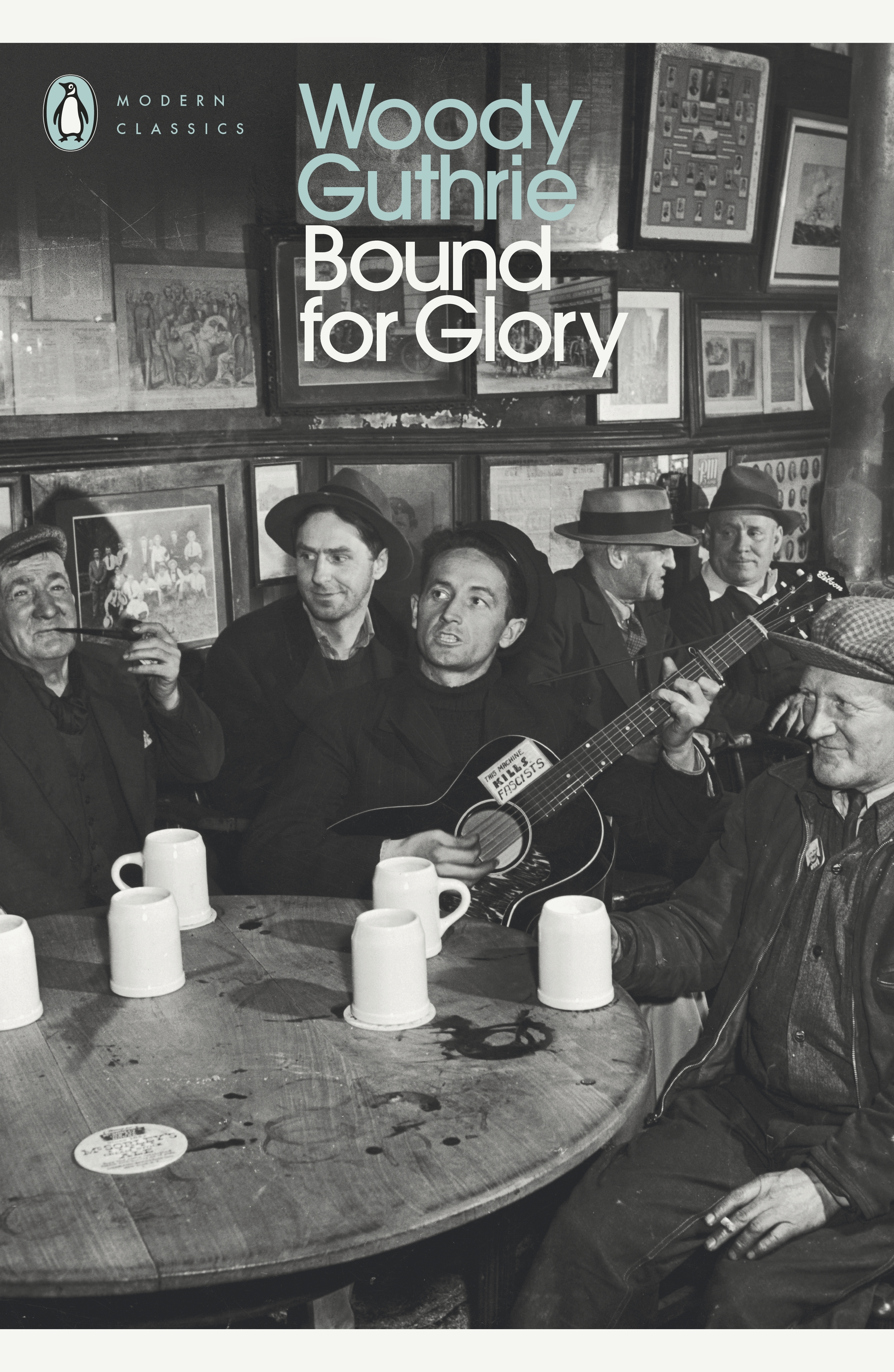
Driven West by drought, dust, and economic opportunity, a young
Woodrow Wilson Guthrie set out from home in 1936, scribbling folk songs,
letters, and memories that were published seven years later as the
autobiographical novel Bound for Glory. "I was always a big hand to walk along and look at the things along the
side of the road," he wrote. "Too curious to stand and wait for a ride. Too nervous
to set down and rest. Too struck with the traveling fever to wait."
In his book, Guthrie described the people he met as well as the societal ills he observed, but he also wrote about the beauty of America, a country the musician would cross again and again after his "traveling fever" originally took him from Texas to California by foot, car, and train. I first heard Dust Bowl Ballads in college, and since reading Bound for Glory I've decided that someday I'd like to follow in Guthrie's footsteps—using the book as a guide—to survey how much the landscape and lifestyle of the American Southwest has changed, and to learn what today's ribbon of highway might have in common with that of the late 1930s.
Until then, I'll have to explore his legacy in other ways. Fortunately, the Grammy Museum and Woody Guthrie Publications (with help from several other centennial sponsors) have joined forces to celebrate the life of one of the country's most influential singer-songwriters. All year long they've hosted conferences, theatrical performances, and concerts, and with a number of events remaining before the end of the year, there's still time to wish Woody a Happy Hundredth. I'd definitely like to make it to one of the last shows; hopefully other fans are planning to get their tickets, too.
In his book, Guthrie described the people he met as well as the societal ills he observed, but he also wrote about the beauty of America, a country the musician would cross again and again after his "traveling fever" originally took him from Texas to California by foot, car, and train. I first heard Dust Bowl Ballads in college, and since reading Bound for Glory I've decided that someday I'd like to follow in Guthrie's footsteps—using the book as a guide—to survey how much the landscape and lifestyle of the American Southwest has changed, and to learn what today's ribbon of highway might have in common with that of the late 1930s.
Until then, I'll have to explore his legacy in other ways. Fortunately, the Grammy Museum and Woody Guthrie Publications (with help from several other centennial sponsors) have joined forces to celebrate the life of one of the country's most influential singer-songwriters. All year long they've hosted conferences, theatrical performances, and concerts, and with a number of events remaining before the end of the year, there's still time to wish Woody a Happy Hundredth. I'd definitely like to make it to one of the last shows; hopefully other fans are planning to get their tickets, too.
Trailing the Wilderness Prophet
Muir left his mark on California and the West in many ways though, and it's possible to travel to some of the other places that were significant to him during his lifetime, too. I wrote about five of them for the San Francisco Chronicle, but many more certainly exist. Quite a few are worth seeing. Wherever you ultimately decide to go yourself, consider this sentence from My First Summer: "Nature as a poet, an enthusiastic workingman, becomes more and more visible the farther and higher we go; for the mountains are fountains—beginning places, however related to sources beyond mortal ken."
Photography courtesy of the John Muir National Historic Site
Subscribe to:
Posts (Atom)